

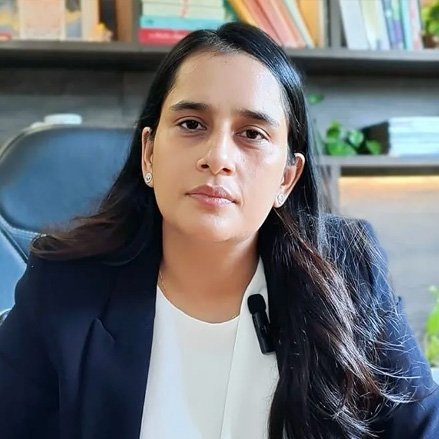
Dr. Sneha Sharma
Consultant Psychiatrist | De-Addiction Specialist
MBBS, MD (Psychiatry)
VIEW PROFILEDr. Sneha Sharma
Consultant Psychiatrist | De-Addiction Specialist
MBBS, MD (Psychiatry)
Experience: 14+ Years
TALK TO US
info@anvayahealthcare.com
+91-9810659825
Just like the Gym is for your body, Therapy is for your Mind
Dr. Sneha Sharma
Psychiatrist, Anvaya Healthcare
EMDR is a structured, evidence-based psychotherapy used to help the brain process traumatic memories so they become less vivid and distressing. At Anvaya Healthcare, trained clinicians work at a pace that feels secure, with careful preparation, bilateral stimulation, progress monitoring, and follow-up tailored to the individual's trauma history and recovery needs.
📅 Book Consultation
Certain experiences arrive with more force than the mind can absorb, and rather than settling into the past as ordinary memories do, they stay raw. They break through as flashbacks and nightmares, and the body can go on responding as though the danger never lifted, sometimes years afterwards. EMDR is a proven, structured means of helping the brain work through memories that have become stuck, so their hold can weaken and a person can move forward.
EMDR stands for Eye Movement Desensitisation and Reprocessing. It is a widely used, evidence-based psychotherapy built specifically for trauma and is recognised internationally as a first-line treatment for post-traumatic stress. What sets it apart is that it uses the brain’s capacity to reprocess memories rather than depending on a person talking through every painful detail.
During EMDR, a traumatic memory may be held briefly in mind while the therapist guides bilateral stimulation, commonly side-to-side eye movements or tapping. This is thought to help the brain reprocess and store the memory as something that happened in the past rather than something still occurring. Distress associated with the memory can fall, while unhelpful beliefs such as “it was my fault” or “I am not safe” may move toward more balanced beliefs.
The therapy can be used across a range of trauma-related presentations, including PTSD, complex trauma, childhood trauma, trauma-linked anxiety, panic attacks, phobias, depression related to trauma, and complicated or traumatic grief.
In Kolkata, trauma can remain unspoken for years because people may be reluctant to describe what happened or discuss it outside the family. EMDR can require less verbal recounting of traumatic details than many talking therapies, which may lower one barrier to seeking treatment.
EMDR is internationally recognised as a first-line treatment for post-traumatic stress.
EMDR is used across PTSD, complex trauma, childhood trauma, anxiety disorders, panic attacks, phobias, trauma-related depression, and grief/loss.
Consultations start from โน2,000 per session, with pricing varying by clinician experience and seniority.
Conduct comprehensive psychiatric assessments, evaluate trauma-related symptoms and co-occurring concerns such as anxiety or depression, and develop personalised treatment plans, including medication management when clinically appropriate.
Provide evidence-based trauma-focused therapy, including EMDR when appropriately trained, helping people process distressing memories, manage trauma-related symptoms, rebuild a sense of safety, and develop healthier coping strategies.
Where these symptoms linger after a distressing event and begin affecting sleep, work, relationships, or ordinary functioning, a professional assessment can help determine whether EMDR is appropriate.
Going out of your way to avoid people, places, activities, or reminders connected with what happened, sometimes narrowing daily life considerably.
Distressing dreams, difficulty sleeping, or repeated waking after a traumatic experience, leaving you worn down and on edge.
The event seems to play out again, or unwanted recollections arrive without warning and pull you back into the experience.
Feeling permanently tense, braced, easily startled, or as though danger is close even when you are actually safe.
Feeling detached, flattened, or shut off from your own feelings and from people around you.
Anxiety, unease, or difficulty returning to ordinary work, relationships, and routines after something distressing has happened.
The need for EMDR usually follows a difficult experience rather than one single cause. Several forms of trauma and related vulnerability can play a part.
Road accidents and other sudden life-threatening events can leave memories that remain highly distressing after the immediate danger has passed.
Physical, emotional, or other forms of abuse can leave lasting effects on safety, trust, emotions, and relationships.
Early traumatic experiences may continue to shape how a person feels, behaves, and relates to others well into adulthood.
Sudden or traumatic deaths can leave memories that remain acutely painful rather than gradually becoming less intense.
Some anxiety, panic, or phobic reactions are closely connected to frightening events or memories that have not been fully processed.
Trauma that is repeated or sustained over long periods may require careful preparation, stabilisation, and a slower treatment pace before deeper processing begins.
Approach the team to arrange a confidential first consultation. The initial discussion establishes the main concerns and whether EMDR may be appropriate.
The clinician explores what happened, the symptoms that followed, the impact on everyday life, and whether the person is ready for trauma-processing work. Any need for stabilisation is identified first.
The therapist settles which memories and difficulties to work on and makes sure the person has grounding and coping resources in place before processing begins.
During processing, guided eye movements, tapping, or another form of bilateral stimulation is used while the target memory is held briefly in mind. Distress is monitored across sessions, followed by closure, coping strategies, and further sessions where needed.
Before trauma is touched, the therapist establishes coping tools and helps the person feel grounded and secure. This foundation is not skipped.
A specific memory is selected along with the feelings, physical sensations, and negative beliefs connected with it, giving the processing a clear focus.
The clinician guides short repeated sets of eye movements or tapping while the memory is held briefly in mind and the person remains anchored in the present.
As sets continue, the memory can become less vivid and less emotionally charged while healthier associations form.
The therapist keeps the work within a manageable range, slowing or pausing when needed so the process does not become overwhelming.
Every session finishes with grounding and stabilisation, so the person leaves settled and has strategies to use before the next session.
Consultant Psychiatrist | De-Addiction Specialist
MBBS, MD (Psychiatry)
VIEW PROFILEConsultant Psychiatrist | De-Addiction Specialist
MBBS, MD (Psychiatry)
Experience: 14+ Years
TALK TO US
Clinical Psychologist
PsyD, RCI (Psychology)
Experience: 3+ Years
TALK TO US
Clinical Psychologist
M.A & M.Phil (Clinical Psychology)
Experience: 3+ Years
TALK TO US
Child Psychologist
M.A (Psychology)
Experience: 9+ Years
TALK TO US
Consultation Psychiatrist
MBBS, MD (Psychiatry)
Experience: 6+ Years
TALK TO US
Consultant Psychiatrist
MBBS, MD (Psychiatry)
Experience: 15+ Years
TALK TO US
Counselling Psychologist & Behavioral Therapist
MA - Psychology
Experience: 13+ Years
TALK TO US
Clinical Psychologist
MA & M.Phil (Clinical Psychology)
Experience: 3+ Years
TALK TO US
Counselling Psychologist
M.Phil.Ed, M.S.Ed
Experience: 5+ Years
TALK TO US
Clinical Psychologist
MA & M.Phil (Clinical Psychology)
Experience: 7+ Years
TALK TO US
Clinical Psychologist
MA (Clinical Psychology), RCI Registered
Experience: 5+ Years
TALK TO US
Clinical Psychologist
M.Phil. | MA | PG Diploma in Counselling & Family Therapy (LHMC)
VIEW PROFILEClinical Psychologist
M.Phil. | MA | PG Diploma in Counselling & Family Therapy (LHMC)
Experience: 3+ Years
TALK TO US
Psychiatrist & De-Addiction Specialist
MBBS | DPM (Psychiatry) | DNB (Neuropsychiatry)
VIEW PROFILEPsychiatrist & De-Addiction Specialist
MBBS | DPM (Psychiatry) | DNB (Neuropsychiatry)
Experience: 8+ Years
TALK TO US
Clinical Psychologist
M.Phil (Clinical Psychology)
Experience: 15+ Years
TALK TO US
Psychiatrist
MBBS, DNB (Psychiatry)
Experience: 8+ Years
TALK TO US
Clinical Psychologist
M.Phil in Clinical Psychology (IHBAS, Delhi University)
VIEW PROFILEClinical Psychologist
M.Phil in Clinical Psychology (IHBAS, Delhi University)
Experience: 2+ Years
TALK TO US
Counselling Psychologist
M.A. Clinical Psychology | PG Diploma in Guidance & Counselling (PGDGC)
VIEW PROFILECounselling Psychologist
M.A. Clinical Psychology | PG Diploma in Guidance & Counselling (PGDGC)
Experience: 3+ Years
TALK TO US
Clinical Psychologist
M.Phil. Clinical Psychology (IHBAS)
Experience: 2+ Years
TALK TO US
Counselling Psychologist
MA - Psychology | Diploma in Guidance and Counseling
VIEW PROFILECounselling Psychologist
MA - Psychology | Diploma in Guidance and Counseling
Experience: 6+ Years
TALK TO US
Drama & Movement Therapist
BA Hons. | MA | PG Diploma, Trauma Focused Therapy
VIEW PROFILEDrama & Movement Therapist
BA Hons. | MA | PG Diploma, Trauma Focused Therapy
Experience: 6+ Years
TALK TO US
Counselling Psychologist
B.Sc, MA - Psychology
Experience: 4+ Years
TALK TO US
Unlike most talking therapies, EMDR does not require the trauma to be recounted in depth or spoken aloud at length. Where what happened took place inside a family and was never once discussed beyond its walls, that single difference is frequently what makes beginning treatment possible at all
EMDR is a recognised, researched psychotherapy rather than an experimental approach, giving patients a structured treatment framework.
As processing advances, flashbacks, nightmares, anxiety, and distress may reduce, with response reviewed across sessions.
As traumatic memories become less charged, the intense reactions they trigger can lessen and daily emotional control can improve.
Reducing the burden of unresolved trauma can free attention and energy for work, relationships, sleep, and ordinary functioning.
Treatment is fitted to the individual's history, symptoms, readiness, and pace rather than applying one fixed formula.
EMDR requires proper training and careful clinical handling. Our psychiatrists and clinical psychologists are trained at India’s leading institutions, including AIIMS, NIMHANS, IHBAS, Lady Hardinge Medical College, and VIMHANS, and hold RCI or MCI/NMC registration.
A multidisciplinary team matters in trauma care because depression, anxiety, and disturbed sleep can occur alongside trauma. Coordinating psychiatric and psychological care allows those concerns to be addressed alongside EMDR rather than left separate.
Each plan at Anvaya Healthcare is built around the individual and their history. Trauma may follow one event, repeated childhood experience, abuse, bereavement, or another difficult situation, and the clinical approach is adjusted accordingly.
Care proceeds patiently and without pressure. Trauma recovery should follow a secure tempo, with preparation and stabilisation before deeper processing. Nobody is pushed to confront more than they are ready for.
For Kolkata residents, access to a trained clinician and regular sessions can be important because trauma treatment often requires structured work over time. Consultations start from โน1,500 per session, with pricing varying by clinician experience and seniority. Physical centres in Delhi NCR are available for in-person care where preferred.
Our psychiatrists and clinical psychologists include professionals trained at leading Indian institutions and experienced in evidence-based trauma care.
Treatment is tailored to the person's trauma history, symptoms, readiness, pace, and specific recovery goals.
EMDR provides a structured approach to trauma processing with preparation, bilateral stimulation, progress monitoring, and follow-up.
Where depression, anxiety, sleep problems, or other mental-health concerns accompany trauma, psychological and psychiatric care can be coordinated.
Care emphasises safety, confidentiality, pacing, and allowing you to remain in control of how much you disclose and process.
EMDR is one of the best-established treatments for PTSD and is internationally recognised as a first-line option. Whether it is appropriate depends on an individual’s clinical presentation and assessment.
It depends on the trauma. A single recent event may be addressed in a few sessions, while layered or long-established trauma can require considerably longer treatment. The pace is reviewed jointly rather than fixed in advance.
No. EMDR is a psychotherapy and does not itself require medication. If a person already takes medication for depression, anxiety, or another condition, that prescription can continue to be managed separately by a psychiatrist.
EMDR is used for childhood and complex trauma, with careful preparation, safety, and stabilisation before processing where the trauma is repeated or longstanding.
EMDR is also used for anxiety disorders, panic attacks, and phobias where these difficulties are connected to past frightening experiences.
Yes. Kolkata residents can contact Anvaya Healthcare to arrange an initial assessment and discuss whether EMDR is appropriate and which clinician best fits the person’s needs.
Chats continue on WhatsApp. Please avoid sharing clinical details here.