

Just like the Gym is for your body, Therapy is for your Mind
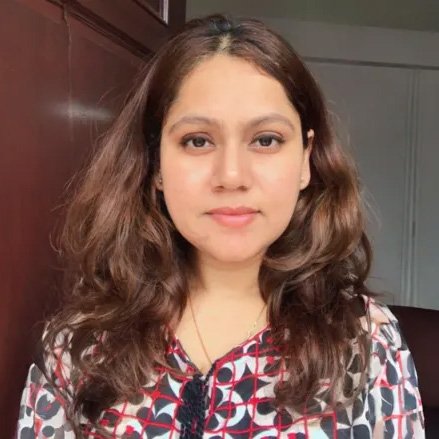
Dr. Sneha Sharma
Psychiatrist, Anvaya Healthcare
Psychiatrists and psychologists trained at leading institutions like AIIMS, LHMC, and NIMHANS deliver evidence-based care from the comfort of your home. Services are available across India, fully confidential, and supported by insurance.
Patients Helped
Specialists
Online Access
Satisfaction Rate
Most people who’ve been through something traumatic don’t walk around saying they have PTSD. They say they can’t sleep. They say they’ve been irritable lately. They say they just don’t feel like themselves anymore.
That gap between what’s happening and what gets named is part of why PTSD goes untreated for so long. India’s National Mental Health Survey 2015-16 put the general population prevalence at 0.2% — but researchers openly flag this as an undercount. A 2025 study among college students in Mysore found PTSD symptoms in 20.8% of participants. The 84.5% treatment gap for mental disorders in India applies here too: most people carrying trauma don’t reach a professional who can actually help.
The good news, and it matters: PTSD responds well to treatment. Trauma-Focused CBT and EMDR are two of the most evidence-backed therapies in all of psychiatry. Getting to them requires getting to the right person — and that’s where platforms like Anvaya Healthcare make a difference for people across India who wouldn’t otherwise have a realistic path.
PTSD significantly affects daily functioning — sleep, mood, relationships, and overall sense of self are often disrupted when left untreated.
India faces an 84.5% treatment gap in mental health care, meaning most individuals with trauma-related conditions never receive professional help.
India’s National Mental Health Survey estimated PTSD prevalence at 0.2%, but newer studies show rates as high as 20.8% in specific populations, indicating underdiagnosis.
A psychiatrist — MBBS plus MD in Psychiatry — assesses severity, diagnoses PTSD, and manages medication where it helps. Sleep disruption, severe hyperarousal, depression running alongside the trauma symptoms — these are presentations where medication meaningfully lowers the baseline before therapy begins. Only a psychiatrist can prescribe.
A clinical psychologist — M.Phil. plus RCI registration — delivers the trauma-focused therapies that actually process what happened. TF-CBT and EMDR aren’t interchangeable with general support. They require specific training, careful pacing, and clinical judgment about when the person is stable enough for active trauma work. Moving too fast causes harm. Getting that calibration right is the skill.
For most moderate to severe presentations, both working in parallel produces better outcomes than either alone. One managing physiological intensity, one doing the processing work.
PTSD often doesn’t look the way people expect. It’s not limited to combat — in India, it can follow road accidents, domestic violence, loss, workplace incidents, disasters, or even childhood experiences that surface later. What defines it is this: the mind and body keep reacting to a past event as if it’s still happening.
Flashbacks and intrusive memories that arrive without invitation. Nightmares that replay events with the intensity of reality. A nervous system stuck on alert — hypervigilance, exaggerated startle response, and an inability to feel safe even in safe environments. Ongoing sleep disturbance.
Avoiding anything connected to the trauma — people, places, thoughts, or conversations. While this may reduce distress short-term, it gradually restricts daily life and narrows the person’s world.
Symptoms continuing for more than a month and affecting sleep, work, relationships, and overall functioning. The mind and body remain in a past threat state, interfering with normal life — signalling the need for professional assessment.
Numbness, detachment, and difficulty feeling positive emotions. Persistent shame or guilt that doesn’t respond to logic. Internal confusion about what one is feeling or experiencing.
You book a session — at Anvaya Healthcare, by phone or online. For PTSD, starting with a psychiatric assessment helps map severity, identify co-occurring conditions, and determine if medication may be useful.
You schedule a session online or by phone. The first step is getting connected to the right clinician who can guide the process and determine the appropriate starting point.
The first session focuses on assessment, not treatment. The clinician evaluates symptoms, their duration and intensity, triggers, and how daily functioning is affected. Co-occurring conditions like depression are also identified.
Based on the assessment, a diagnosis is made. Medication is prescribed where needed, in line with India’s Telemedicine Practice Guidelines (2020). Treatment planning begins with a focus on safety and stabilisation.
Therapy starts with stabilisation, followed by trauma-focused work. Regular follow-ups track symptoms and progress — essential since PTSD recovery is non-linear and requires ongoing monitoring.
Trauma-Focused CBT works on two things simultaneously: the cognitive distortions trauma creates — the beliefs about safety, blame, and self-worth that form in the aftermath of something terrible — and the traumatic memories themselves, processed through structured exposure until they lose their grip.
EMDR is the other gold-standard treatment. Eye Movement Desensitisation and Reprocessing uses bilateral stimulation — usually eye movements — while the person holds the traumatic memory in mind. It sounds strange. The evidence for it is decades deep and consistently strong, including for trauma that feels too intense to approach through talking. Many people find it reaches things that words don’t.
Exposure therapy is embedded in both — graded, systematic confrontation of what’s been avoided, so the nervous system gradually learns that the threat belongs to the past and not the present.
Grounding and relaxation techniques come early in treatment. Breathing exercises, sensory grounding, stabilisation practices. Not the therapy itself — but what makes the therapy possible by giving the person tools to manage arousal between sessions.
Consultant Psychiatrist | Co-Founder
Psychiatrist
Psychiatrist & Addiction Specialist
Psychiatrist
Consultant Psychiatrist
Clinical Psychologist
Loading booking form…
Home is where many people with PTSD feel safest. That’s not a small thing. Accessing care from a familiar, private space removes stress that clinics themselves can create — the travel, the waiting room, the exposure. For some people those environments are themselves triggering. Online treatment sidesteps all of that. Privacy matters intensely for trauma. What happened to a person is often something they’ve never told anyone in full. An online consultation — no reception desk, no passing the same building regularly — changes the calculation around disclosure for a lot of people.
Flexible scheduling fits how PTSD actually affects people: the fatigue, the disrupted sleep, the days where functioning is harder than others. Pan India accessibility via Anvaya Healthcare means someone in a smaller city — where trauma-specialist therapists are essentially unavailable — gets access to the same expertise as someone in South Delhi. That’s the entire point of building an online system. Continuous monitoring between sessions is built in, not optional. What happens between sessions matters as much as the sessions themselves.
Affordable, transparent pricing. The Mental Healthcare Act 2017 mandates insurance parity for mental health — check your policy’s OPD clause.
₹1500 – ₹2,500 per session
₹1,500 – ₹5,500 per session
The psychiatrists and psychologists at Anvaya Healthcare trained at AIIMS, NIMHANS, IHBAS, Lady Hardinge Medical College, and VIMHANS. NIMHANS has been a leading centre for trauma research and clinical practice in India. That lineage matters specifically for PTSD — not every mental health professional is trained in EMDR or TF-CBT, and not every professional who claims to do trauma work has had supervised clinical experience doing it properly.
Treatment is built around the individual. A person processing a single traumatic event is in a different situation from someone carrying layered trauma across years. The approach is calibrated to that — not templated. Confidential. Secure. Easy to book. And available to patients across India, not just those within commuting distance of the clinics.
For PTSD Treatment, where medication management over years requires careful clinical judgement, training depth matters in ways that are hard to overstate.
Treatment is built around the individual — history, symptoms, family context, and goals for recovery. Not a standard protocol applied to everyone.
Consult from home. The stigma around PTSD in India often keeps people from seeking help early. Privacy isn’t just a convenience here, it’s essential to feeling safe enough to begin treatment.
When both work in coordination, outcomes are substantially better. At Anvaya, that coordination actually happens — both are within the same clinical setting.
A family in Kanpur, Bhopal, or any smaller city gets the same quality of psychiatric expertise as someone in South Delhi. That's the whole point.
Before the first session, note your current symptoms in practical terms — not what happened, but how you’re being affected now. What triggers you? What have you started avoiding? How is sleep? Having that clear makes the session more useful from the start.
Note any previous therapy or medication — what it involved, how long, what helped or made things worse. Any previous diagnosis, include that too.
Choose a space where you feel genuinely comfortable and won’t be overheard. If anything in the session feels like too much, say so. A skilled trauma clinician won’t push through. The pace is yours to set. Earphones. Stable internet. A few minutes early.
Yes. Multiple meta-analyses show TF-CBT and EMDR delivered online produce outcomes comparable to in-person therapy. For some people the home environment helps — they're in the space where they feel safest, which matters for trauma work.
Yes. The psychiatrists are qualified medical doctors registered with state medical councils, legally permitted to prescribe under India's Telemedicine Practice Guidelines (2020).
A standard TF-CBT or EMDR programme runs 16 to 24 sessions. Complex or childhood trauma usually takes longer. Your clinician should give you a realistic picture after the initial assessment — not an open-ended "we'll see."
Yes. EMDR adapts well to online delivery. The bilateral stimulation is delivered through on-screen visual prompts or audio. Research supports its effectiveness in this format.
Yes, online counselling is confidential.
If the symptoms are primarily psychological and you feel stable enough for therapy — start with a clinical psychologist specifically trained in TF-CBT or EMDR. If there's significant depression, severe sleep disruption, or the symptoms are highly disruptive — start with a psychiatrist, or see both. The clinical picture determines the pathway.
Second floor, Plot No 28,
Sector-12A Rd, Block A,
Sector 12 Dwarka
Call Now: +91-9810659825
Ground Floor, Plot No. - E-7/5, Block E,
Vasant Vihar, South Delhi
Call Now: +91-9650277301
1 in every 5 individuals
suffers from some form of mental health illness