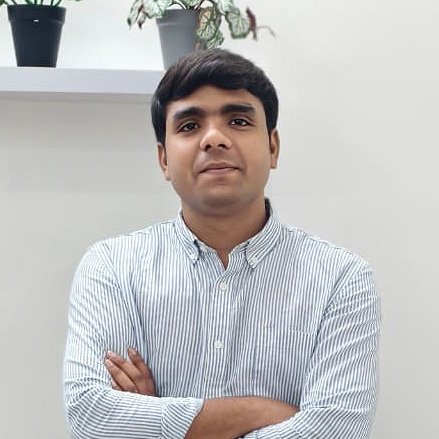


Dr. Sneha Sharma
Consultant Psychiatrist | De-Addiction Specialist
MBBS, MD (Psychiatry)
VIEW PROFILEDr. Sneha Sharma
Consultant Psychiatrist | De-Addiction Specialist
MBBS, MD (Psychiatry)
Experience: 14+ Years
TALK TO US
info@anvayahealthcare.com
+91-9810659825
Just like the Gym is for your body, Therapy is for your Mind
Dr. Sneha Sharma
Psychiatrist, Anvaya Healthcare
Get expert anxiety treatment, therapy, and counselling in Mumbai from AIIMS, LHMC, and NIMHANS-trained psychiatrists and psychologists. Receive evidence-based, confidential care through secure online consultations or in-person appointments, tailored to your individual needs.
📅 Book Consultation
Worry is normal. Everyone worries — about money, about work, about relationships, about what the future holds. Normal worry is proportionate, it passes, and it doesn’t stop a person from getting on with their day. Anxiety disorder is different. The worry is excessive relative to the actual situation, it’s persistent rather than occasional, and over time it starts to narrow what feels manageable — the things a person will try, the places they’ll go, the risks they’ll take.
The difference isn’t about how serious someone’s life circumstances are. Anxiety disorder is a clinical condition involving a nervous system that has calibrated its threat-detection too high, and it maintains itself through avoidance — each time a feared situation is avoided, the fear grows rather than shrinks. Left untreated, anxiety disorders tend to expand rather than resolve on their own.
The data from India makes the scale of this clear. India’s National Mental Health Survey 2016 found a current anxiety disorder prevalence of 2.57% nationally, with urban metro residents identified as a high-risk group. Around 60% of people with anxiety disorders reported disability of varying severity. The overall treatment gap was 82.9% — meaning more than four in five people with anxiety disorders in India are not receiving any treatment at all. A 12-month prevalence of 3.41% was found in an earlier World Mental Health Survey conducted at eight Indian sites, confirming that anxiety disorders are consistently underdiagnosed and undertreated across the country.
For Mumbai’s working population, anxiety doesn’t look like a dramatic breakdown. It looks like someone who never fully relaxes, who replays conversations long after they’re over, who dreads the workday before it starts, who can’t sleep on Sunday nights.
India's mental health data shows that 82.9% of people with anxiety disorders do not receive treatment, highlighting the need for greater awareness and timely professional care.
Around 60% of people with anxiety disorders report some level of disability, with symptoms impacting work, relationships, and everyday life.
National survey data found that 2.57% of Indians experience an anxiety disorder, with people living in urban metro cities identified as a higher-risk group.
Psychiatrists (MBBS, MD Psychiatry) diagnose anxiety disorders, assess symptom severity, and prescribe medication when clinically appropriate. For moderate to severe anxiety, including panic disorder, obsessive-compulsive disorder (OCD), or generalized anxiety disorder (GAD) that significantly affects daily life, consulting a psychiatrist is often the recommended first step. They can also identify and rule out underlying medical conditions that may cause symptoms similar to anxiety.
(M.Phil. + RCI Registered) psychologists provide structured, evidence-based therapy for anxiety disorders. Cognitive Behavioural Therapy (CBT) is one of the most effective and well-researched treatments for anxiety, with strong evidence supporting its long-term benefits. While psychologists do not prescribe medication, therapy alone is often highly effective for people with mild to moderate anxiety and can deliver lasting improvements.
Worry that's present most days, that cycles through multiple areas of life, and that the person can't switch off despite recognising it as disproportionate. The classic "what if" thinking that runs on a loop through the working day, the commute home, and the hours before sleep
Intense episodes of physical symptoms — racing heart, shortness of breath, dizziness — that arrive unexpectedly. Some people with anxiety disorders experience panic attacks; some don't
A persistent background tension that makes it hard to settle, be still, or enjoy moments of quiet. Irritability that other people notice but the person experiencing it often attributes to something else
Difficulty falling asleep because the mind won't stop, waking in the early hours with anxious thoughts, or never feeling fully rested regardless of hours slept
Anxiety consumes cognitive resources. Work that should be manageable feels overwhelming; deadlines create disproportionate stress; the ability to focus on a single task has diminished
Headaches, muscle tension (particularly in the neck, jaw, and shoulders), stomach issues, and fatigue without another clear medical explanation. These are genuine physiological responses to sustained anxiety, not imagination
Declining invitations, avoiding tasks, putting off decisions — not out of laziness, but because engaging with certain situations produces anxiety the person is trying not to feel
Sustained, high-level occupational pressure is one of the most consistent contributors to anxiety disorder in urban India. Mumbai's competitive professional culture, long hours, and a work environment that frequently rewards constant availability over recovery create ideal conditions for chronic anxiety to take hold.
Ongoing tension in close relationships, marital conflict, or the pressure of managing complex family dynamics — which in joint family households can be significant — are common anxiety drivers that often go unacknowledged as clinical triggers.
Board exam anxiety, competitive entrance pressure, and parental expectations create a distinctive form of anxiety in students that can persist well into adulthood. India's academic culture produces anxiety that begins early and is rarely addressed clinically.
Anxiety disorders run in families. A parent or sibling with an anxiety disorder meaningfully increases personal risk, suggesting that vulnerability to anxiety has both biological and environmental components.
Past experiences involving threat, loss, or significant instability can leave the nervous system in a state of heightened alertness that manifests as an anxiety disorder, sometimes years after the original experience.
Thyroid dysfunction, cardiac conditions, chronic pain, and other ongoing medical issues all have documented associations with anxiety. The reverse is also true: anxiety worsens the experience and management of physical illness.
Contact our team and briefly describe your symptoms. We'll match you with the most suitable psychiatrist or psychologist based on your concerns and treatment needs.
Your first 60–90 minute consultation includes a detailed evaluation of your symptoms, triggers, medical history, and how anxiety is affecting your work, relationships, and daily life.
Based on your assessment, our specialists develop a tailored treatment plan that may include evidence-based therapy, medication (if clinically appropriate), or a combination of both.
Receive regular therapy sessions and follow-up consultations to monitor your progress, adjust your treatment plan when needed, and support your long-term recovery.
The most extensively researched psychological therapy for anxiety disorders. Works on the specific thought patterns and avoidance behaviours that maintain anxiety, building practical tools for managing anxious thinking that the person can use long after treatment ends. For anxiety, CBT typically involves identifying the thoughts that drive anxiety, testing them against evidence, and gradually reducing avoidance through structured practice between sessions.
A newer approach that works differently from CBT: rather than challenging anxious thoughts, ACT builds the ability to observe them without acting on them, and to move toward meaningful activity despite anxiety rather than waiting until anxiety disappears. Useful for people who've tried to "think their way out" of anxiety without lasting success.
A broader, more exploratory approach for understanding the deeper patterns driving anxiety, useful for people whose anxiety connects to long-standing relational patterns or early experiences that CBT's structured format doesn't fully address.
Structured mindfulness practices that reduce the overall level of physiological and cognitive arousal that sustains anxiety, and build the capacity to observe anxious thoughts without being pulled into them.
For specific phobias, social anxiety, and avoidance patterns, structured gradual exposure to feared situations or stimuli at a pace the person can manage. Avoidance maintains anxiety; carefully paced exposure reduces it reliably.
For moderate to severe anxiety, or where therapy alone isn't sufficient, medication is a clinically appropriate addition. SSRIs, SNRIs, and other medication classes are effective for anxiety and are available through online psychiatric consultation under India's Telemedicine Practice Guidelines.
Consultant Psychiatrist | De-Addiction Specialist
MBBS, MD (Psychiatry)
VIEW PROFILEConsultant Psychiatrist | De-Addiction Specialist
MBBS, MD (Psychiatry)
Experience: 14+ Years
TALK TO US
Clinical Psychologist
PsyD, RCI (Psychology)
Experience: 3+ Years
TALK TO US
Clinical Psychologist
M.A & M.Phil (Clinical Psychology)
Experience: 3+ Years
TALK TO US
Psychiatrist
MBBS, MD (Psychiatry)
Experience: 6+ Years
TALK TO US
Consultant Psychiatrist
MBBS, MD (Psychiatry)
Experience: 15+ Years
TALK TO US
Counselling Psychologist & Behavioral Therapist
MA - Psychology
Experience: 13+ Years
TALK TO US
Psychiatrist
MBBS, DNB (Psychiatry)
Experience: 8+ Years
TALK TO US
Clinical Psychologist
MA & M.Phil (Clinical Psychology)
Experience: 3+ Years
TALK TO US
Clinical Psychologist
MA & M.Phil (Clinical Psychology)
Experience: 7+ Years
TALK TO US
Clinical Psychologist
MA (Clinical Psychology), RCI Registered
Experience: 5+ Years
TALK TO US
Clinical Psychologist
M.Phil. | MA | PG Diploma in Counselling & Family Therapy
VIEW PROFILEClinical Psychologist
M.Phil. | MA | PG Diploma in Counselling & Family Therapy
Experience: 3+ Years
TALK TO US
Psychiatrist & De-Addiction Specialist
MBBS | DPM (Psychiatry) | DNB (Neuropsychiatry)
VIEW PROFILEPsychiatrist & De-Addiction Specialist
MBBS | DPM (Psychiatry) | DNB (Neuropsychiatry)
Experience: 8+ Years
TALK TO US
Clinical Psychologist
M.Phil (Clinical Psychology)
Experience: 15+ Years
TALK TO US
Clinical Psychologist
M.Phil in Clinical Psychology (IHBAS, Delhi University)
VIEW PROFILEClinical Psychologist
M.Phil in Clinical Psychology (IHBAS, Delhi University)
Experience: 2+ Years
TALK TO US
Counselling Psychologist
M.A. Clinical Psychology | PG Diploma in Guidance & Counselling (PGDGC)
VIEW PROFILECounselling Psychologist
M.A. Clinical Psychology | PG Diploma in Guidance & Counselling (PGDGC)
Experience: 3+ Years
TALK TO US
Clinical Psychologist
M.Phil. Clinical Psychology (IHBAS)
Experience: 3+ Years
TALK TO US
For someone whose anxiety has already begun to narrow what feels manageable, requiring them to travel across Mumbai to access care can itself become a barrier. Online consultation removes this before it becomes one
No clinic, no waiting room, no risk of being seen. For anxiety that involves significant shame or concern about others' judgment, the privacy of online care removes a real barrier to seeking help
Evenings and weekends, fitted around Mumbai's working culture without requiring leave or visible absence from the workplace
Mumbai residents can consult psychiatrists and psychologists trained at India's leading institutions without those specialists being physically based in the city
Removing the commute matters particularly when anxiety is already consuming cognitive and physical energy
For Mumbai residents who travel for work or relocate, online treatment continues uninterrupted
Package plans can help lower the cost per session and offer better value for ongoing treatment. Explore our transparent pricing for anxiety therapy in Mumbai and ask about available packages before booking individual sessions.
Our psychiatrists and psychologists are trained at AIIMS, NIMHANS, IHBAS, Lady Hardinge Medical College, and VIMHANS, holding MCI/NMC or RCI registration as required. The depth of specialist training matters particularly for anxiety, where the specific type of anxiety disorder determines which approach is most appropriate — and getting this wrong waste time and can reinforce the very avoidance the treatment is meant to address. A psychologist who doesn’t distinguish between generalised anxiety and social anxiety will apply the same technique to both, and that matters clinically.
Every care plan at Anvaya Healthcare is personalized and the treatment reflects those differences rather than applying a single anxiety programme to everyone who books.
Our multidisciplinary team allows psychiatrists and psychologists to work together where both are needed — medication management and therapy delivered as a coordinated plan rather than in isolation. Sessions are conducted on a fully secure, confidential platform.
For Mumbai residents comparing their options, government mental health services — while important — are typically constrained by long waiting times, high patient volumes, and limited time per session. For anxiety, which requires consistent specialist attention over weeks and months for meaningful change to occur, these constraints are particularly limiting. Anvaya Healthcare offers consistent access to the same specialist, adequate session time, and ongoing monitoring throughout treatment.
Online consultations start from ₹1,500 per session, with pricing varying by specialist experience and seniority. In-person care at our Dwarka, Vasant Vihar, and Gurugram centres is available where clinically appropriate.
For Anxiety Treatment, where medication management over years requires careful clinical judgement, training depth matters in ways that are hard to overstate.
Treatment is built around the individual — history, symptoms, family context, and goals for recovery. Not a standard protocol applied to everyone.
Consult from home. The stigma around Anxiety Treatment in India is among the harshest. Privacy is a clinical necessity, not just a feature.
When both work in coordination, outcomes are substantially better. At Anvaya, that coordination actually happens — both are within the same clinical setting.
A family in Kanpur, Bhopal, or any smaller city gets the same quality of psychiatric expertise as someone in South Delhi. That's the whole point.
If worry is present most days, is difficult to control, and is affecting your sleep, concentration, physical health, or ability to engage with daily life — and this has been going on for several weeks or months — that’s worth a clinical assessment rather than continuing to manage it alone. A proper evaluation with a trained clinician is far more reliable than a self-assessment checklist.
Yes. Online CBT for anxiety disorders produces outcomes well-supported by clinical evidence, comparable to in-person treatment. The structure of CBT — identifying thought patterns, practising skills between sessions, and gradually reducing avoidance — translates effectively to online delivery with consistent attendance.
For generalised anxiety or social anxiety, a structured CBT course typically runs for 12 to 16 weekly sessions, with meaningful improvement often visible earlier. More complex presentations or long-standing anxiety may require a longer course, sometimes alongside medication management.
Yes — for mild to moderate anxiety, therapy alone is often sufficient and is typically tried first. Medication is considered where therapy alone isn’t producing adequate improvement, where anxiety is severe and significantly impairing functioning, or where a co-occurring condition warrants it. The decision is made collaboratively with the clinician.
Yes — online consultations are available for people anywhere in India, including all of Mumbai and the wider MMR. Contact us to book an initial assessment and the team will match you with the right specialist for your presentation.
Chats continue on WhatsApp. Please avoid sharing clinical details here.