

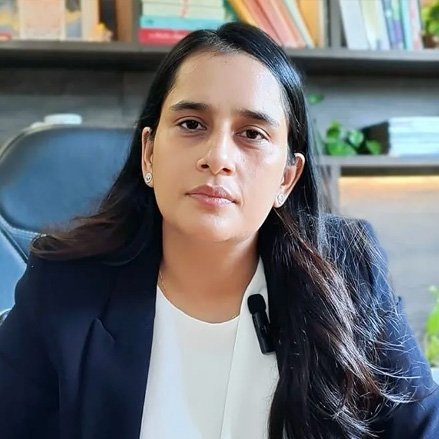
Dr. Sneha Sharma
Consultant Psychiatrist | De-Addiction Specialist
MBBS, MD (Psychiatry)
VIEW PROFILEDr. Sneha Sharma
Consultant Psychiatrist | De-Addiction Specialist
MBBS, MD (Psychiatry)
Experience: 14+ Years
TALK TO US
info@anvayahealthcare.com
+91-9810659825
Just like the Gym is for your body, Therapy is for your Mind
Dr. Sneha Sharma
Psychiatrist, Anvaya Healthcare
Get personalised, evidence-based ADHD assessment and treatment in Kolkata at Anvaya Healthcare. Our care is tailored to children, adolescents, and adults, with psychiatric evaluation, therapy, behavioural support, executive function coaching, parent training, medication management when appropriate, and regular follow-up to support better daily functioning and well-being.
📅 Book Consultation
Few conditions are read as wrongly as ADHD. It presents differently from one person to the next and slips past unnoticed for years — above all in adults, and in anyone whose trouble is attention rather than visible restlessness. Understanding it correctly alters lives at any age, and the relief people describe on finally making sense of themselves is frequently profound.
Attention-Deficit/Hyperactivity Disorder is a neurodevelopmental condition affecting the brain systems governing attention, impulse control, and activity. It has nothing to do with laziness, weak discipline, or poor parenting — it is a real difference in how a brain handles focus and self-control, with firm biological and hereditary foundations. It frequently persists into adult life, surfacing less as obvious hyperactivity than as disorganisation, unfinished tasks, chronic lateness, inner restlessness, and continual difficulty at work. Many adults build coping methods that disguise it, generally at a considerable price in stress and exhaustion.
It helps to separate the two central features: inattention and hyperactivity-impulsivity. Inattention appears as difficulty holding focus, being pulled away easily, mislaying things, and rarely finishing what was started. Hyperactivity-impulsivity appears as restlessness, difficulty sitting still, interrupting, or acting before thinking. The inattentive presentation is missed with striking regularity, particularly in quiet children who trouble nobody and adults who spent years concluding they were disorganised or insufficiently committed.
The condition is common in India. A Coimbatore study found it in roughly 11.3% of school children, and Indian research repeatedly reports prevalence between 5 and 12%. A great many, adults especially, are never identified — called careless, lazy, or unwilling to apply themselves, they can carry that verdict for decades without learning that a genuine, treatable explanation exists.
In Kolkata the first label a restless child receives is rarely a clinical one. He may be called dushtu, a naughty boy; she may be called careless and told she does not listen. Families may reconsider only when academic demands expose how difficult it is to sit with a book or sustain attention. Quiet, inattentive girls can be missed altogether because nobody complains about them.
Assessment and continuing care can be easier to reach across Kolkata when repeated clinic visits are not the main barrier. For adults managing demanding jobs alongside families, and parents who cannot keep pulling a child from school, expert care that fits around daily responsibilities can make specialist assessment more accessible.
Indian research has repeatedly reported ADHD prevalence estimates of approximately 5–12% among children, highlighting how common this neurodevelopmental condition can be.
A study conducted among school children in Coimbatore reported ADHD in approximately 11.3% of children, highlighting the importance of recognising symptoms early and providing appropriate assessment and support.
ADHD may go unnoticed for years, particularly when symptoms mainly involve inattention rather than visible hyperactivity. Adults may experience ongoing difficulties with organisation, focus, time management, unfinished tasks, and daily functioning without recognising ADHD as the underlying cause.
Conduct comprehensive psychiatric assessments, establish or clarify diagnosis, oversee treatment, and manage medication when clinically appropriate while monitoring progress over time.
Provide evidence-based therapy, behavioural interventions, psychoeducation, executive function support, and parent guidance tailored to the person's age, symptoms, and day-to-day difficulties.
Where these patterns reach back into childhood and continue to shape daily life, a structured assessment can help determine whether ADHD is contributing to the difficulties.
Attention will not hold on tasks, conversation, or reading, particularly anything not immediately engaging, while occasionally locking onto something absorbing with unusual intensity.
Attention is pulled away by a sound, movement, or unrelated thought, so staying on task is difficult and the thread of the activity slips easily.
Trouble planning, prioritising, tracking belongings, managing time, and handling deadlines despite considerable effort.
In children this can appear as perpetual movement or difficulty staying seated; in adults, more often as an interior restlessness that will not switch off.
Speaking or acting before thinking, cutting across others, or making hasty decisions that are regretted soon after.
Performance may fall below evident ability, deadlines are missed, or anything demanding sustained concentration becomes disproportionately difficult.
The strain forgetfulness, distractibility, and impulsivity place on relationships with partners, family, and colleagues
ADHD is a neurodevelopmental condition with biological and hereditary foundations. The difficulties it creates can be influenced by development, environment, and co-occurring concerns, but they are not caused by laziness or poor parenting.
ADHD reflects differences in brain systems involved in attention, impulse control, activity, and executive functioning.
The provided source describes ADHD as having firm hereditary foundations, which helps explain why it can occur across family members.
People whose main difficulty is attention rather than visible hyperactivity may remain unidentified for years, particularly quiet children and adults.
Anxiety or depression can accompany ADHD and may complicate assessment when symptoms overlap, making careful clinical evaluation important.
The way ADHD appears can change with age. A child's school difficulties may later become adult disorganisation, lateness, unfinished tasks, or difficulty managing work demands.
School, work, family responsibilities, deadlines, and the need to manage multiple tasks can make underlying executive-function difficulties more visible.
Arrange an ADHD assessment at a time that fits your routine. The first stage focuses on current difficulties, what they take from the day, and concerns such as anxiety or depression that may accompany ADHD.
A detailed psychiatric evaluation considers symptoms, impairment, developmental history, and the way difficulties appear across different parts of life rather than relying on one setting alone.
Because ADHD begins in childhood, early years matter enormously. Parents can provide this history for a child, while adults may revisit school years with relatives who remember. Diagnosis follows established DSM-5 criteria.
A treatment plan is assembled around age, symptom profile, circumstances, and goals. Depending on needs it may include medication management, CBT, behavioural therapy, executive function coaching, parent training, and regular review.
Showing parents how to structure the home, respond consistently, and support development, among the most effective interventions in childhood ADHD. It does something else too: it moves the conversation away from whose fault the child is.
Structured strategies reinforcing useful behaviour and reducing difficult behaviour, the spine of non-medication treatment for children and used alongside medication rather than instead.
Working on the thinking that accumulates around it, from relentless self-criticism to avoidance, with practical coping strategies alongside. Years undiagnosed leave people convinced they are simply not good enough, and CBT goes at that directly.
Building concrete systems for tasks, belongings, and information, addressing one of the genuinely disabling parts of daily life.
Practical methods for planning, prioritising, and following through, aimed at the trouble with time the condition reliably produces.
The condition frequently brings difficulty managing feeling, and these techniques address the frustration, overwhelm, and impulsive reactions following.
Giving person and family a real understanding, which reduces self-blame and often marks a turning point, particularly for adults diagnosed late who at last have an explanation that fits.
Consultant Psychiatrist | De-Addiction Specialist
MBBS, MD (Psychiatry)
VIEW PROFILEConsultant Psychiatrist | De-Addiction Specialist
MBBS, MD (Psychiatry)
Experience: 14+ Years
TALK TO US
Clinical Psychologist
PsyD, RCI (Psychology)
Experience: 3+ Years
TALK TO US
Clinical Psychologist
M.A & M.Phil (Clinical Psychology)
Experience: 3+ Years
TALK TO US
Consultation Psychiatrist
MBBS, MD (Psychiatry)
Experience: 6+ Years
TALK TO US
Consultant Psychiatrist
MBBS, MD (Psychiatry)
Experience: 15+ Years
TALK TO US
Counselling Psychologist & Behavioral Therapist
MA - Psychology
Experience: 13+ Years
TALK TO US
Psychiatrist
MBBS, DNB (Psychiatry)
Experience: 8+ Years
TALK TO US
Clinical Psychologist
MA & M.Phil (Clinical Psychology)
Experience: 3+ Years
TALK TO US
Counselling Psychologist
M.Phil.Ed, M.S.Ed
Experience: 5+ Years
TALK TO US
Clinical Psychologist
MA & M.Phil (Clinical Psychology)
Experience: 7+ Years
TALK TO US
Clinical Psychologist
MA (Clinical Psychology), RCI Registered
Experience: 5+ Years
TALK TO US
Clinical Psychologist
M.Phil. | MA | PG Diploma in Counselling & Family Therapy
VIEW PROFILEClinical Psychologist
M.Phil. | MA | PG Diploma in Counselling & Family Therapy
Experience: 3+ Years
TALK TO US
Psychiatrist & De-Addiction Specialist
MBBS | DPM (Psychiatry) | DNB (Neuropsychiatry)
VIEW PROFILEPsychiatrist & De-Addiction Specialist
MBBS | DPM (Psychiatry) | DNB (Neuropsychiatry)
Experience: 8+ Years
TALK TO US
Clinical Psychologist
M.Phil (Clinical Psychology)
Experience: 15+ Years
TALK TO US
Counselling Psychologist
M.A. Clinical Psychology | PG Diploma in Guidance & Counselling (PGDGC)
VIEW PROFILECounselling Psychologist
M.A. Clinical Psychology | PG Diploma in Guidance & Counselling (PGDGC)
Experience: 3+ Years
TALK TO US
Clinical Psychologist
M.Phil. Clinical Psychology (IHBAS)
Experience: 2+ Years
TALK TO US
Treatment runs on regular appointments over long periods, and consulting remotely removes the repeated burden of crossing Kolkata for each, which for somebody with ADHD is itself an obstacle capable of derailing everything
Appointments around work and school, at hours suiting Kolkata's demanding routines, evenings and weekends included
No clinic waiting room, which matters where people worry how a diagnosis will be regarded at work or school, given how tightly professional circles overlap here
Residents reach clinicians trained at India's leading institutions without needing them based here, and without being confined to whichever clinic is nearby
For those who travel or move away, treatment carries on uninterrupted, which counts for a condition managed across years
With follow-up continuing indefinitely, removing the commute makes consistent care far more sustainable
ADHD demands proper specialist evaluation. It is overlooked, misinterpreted, and sometimes mistaken for anxiety or a lack of discipline, so reaching the right clinical understanding takes care. A rushed assessment can miss someone whose difficulty is mainly attention, while an overly broad label can create a different problem. Our psychiatrists and psychologists are trained at India’s leading institutions, including AIIMS and NIMHANS, alongside IHBAS, Lady Hardinge Medical College, and VIMHANS, and hold MCI/NMC or RCI registration.
Psychiatrists and psychologists working together matter because ADHD can involve both medical management and therapy, and it can arrive alongside anxiety, depression, learning difficulties, or other concerns requiring attention. A multidisciplinary team can handle the wider picture as one piece of work.
Each plan at Anvaya Healthcare is personalised. A small child, a floundering teenager, and an adult identified decades late may require genuinely different handling, so treatment follows the individual rather than arriving pre-assembled. The needs of a schoolchild can differ substantially from those of an exhausted professional managing demanding work and family responsibilities.
Families also receive clear information about medication. Where prescriptions are being considered, the clinician explains what the evidence shows, what it does not, what alternatives may look like, and what monitoring is required, so decisions are informed rather than driven by fear.
For residents weighing options, public mental health services remain important, while long waits or infrequent appointments can make the regular monitoring ADHD often requires difficult to sustain. Anvaya Healthcare provides access to specialist assessment, structured treatment, and continuing follow-up.
Consultations start from ₹1,500 per session, with pricing varying by the specialist’s experience and seniority. Physical centres in Delhi NCR handle in-person care wherever clinically required, including medication management, with monitoring and review continuing throughout.
ADHD assessment and treatment require careful clinical evaluation. Anvaya Healthcare's specialists include professionals trained at leading Indian institutions and experienced in mental health care.
Treatment is adapted to age, symptom profile, daily demands, co-occurring concerns, and individual goals rather than applying the same plan to everyone.
Treatment can include psychiatric evaluation, medication when clinically appropriate, CBT, behavioural therapy, executive function coaching, parent training, and psychoeducation.
Where anxiety, depression, learning difficulties, or other concerns accompany ADHD, psychiatric and psychological care can be coordinated.
Kolkata residents can access specialist ADHD assessment and continuing support, with in-person sessions at Delhi NCR centres when required.
A full clinical evaluation considers current symptoms, developmental history, impairment, and how difficulties appear across settings, with diagnosis following established DSM-5 criteria. A clinician determines whether the overall pattern is consistent with ADHD.
ADHD is generally managed over time rather than through a short course with a fixed finishing point. Once symptoms and routines are stable, the intensity of appointments may reduce, with periodic review continuing as circumstances change.
Yes. ADHD care can be tailored across the lifespan, including children, adolescents, and adults. The assessment and treatment plan are adapted to the person’s age, symptoms, responsibilities, and support needs.
No. Medication is one treatment option and not everyone needs it or wants it. Depending on the presentation, treatment may also include CBT, behavioural therapy, executive function coaching, parent training, psychoeducation, and organisational strategies. Where medication is considered, a psychiatrist supervises it and explains the relevant prescribing requirements.
Yes. Executive function coaching and practical skills work can focus on planning, prioritising, managing time, tracking tasks and belongings, and building systems that make everyday functioning easier.
Yes. Kolkata residents can contact Anvaya Healthcare to arrange an initial ADHD assessment and discuss the most appropriate specialist and treatment approach. In-person assessment can be arranged at Delhi NCR centres when clinically required.
Chats continue on WhatsApp. Please avoid sharing clinical details here.