

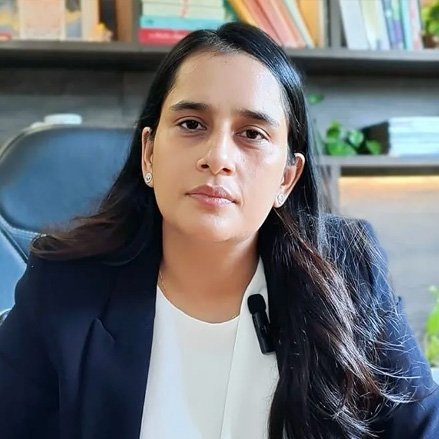
Dr. Sneha Sharma
Consultant Psychiatrist | De-Addiction Specialist
MBBS, MD (Psychiatry)
VIEW PROFILEDr. Sneha Sharma
Consultant Psychiatrist | De-Addiction Specialist
MBBS, MD (Psychiatry)
Experience: 14+ Years
TALK TO US
info@anvayahealthcare.com
+91-9810659825
Just like the Gym is for your body, Therapy is for your Mind
Dr. Sneha Sharma
Psychiatrist, Anvaya Healthcare
Find compassionate, evidence-based panic attack treatment in Kolkata at Anvaya Healthcare. Our personalised therapy and counselling help you manage sudden fear, physical symptoms, and anxiety while developing effective coping strategies. Whether you're experiencing recurring panic attacks, intense worry, or fear of future episodes, our experienced mental health professionals provide confidential, non-judgmental support tailored to your needs. With the right guidance and a structured treatment plan, lasting improvement and greater confidence in daily life are possible.
📅 Book Consultation
A panic attack gives no warning, and few experiences are as physically overpowering. The heart hammers, the chest clamps shut, breath shortens, and the mind reaches certainty that something catastrophic is underway โ a cardiac event, suffocation, collapse. Most crest inside ten minutes, then end, leaving exhaustion and dread the episode hardly accounts for.
The experience is real. Not anxiety being theatrical, not simply stress. What occurs is a genuine physiological event: the body’s alarm firing as though danger were imminent when nothing threatens. It responds to treatment, and with proper clinical support most people improve substantially, often inside a few months.
One distinction repays understanding. A panic attack is a single episode. Panic disorder develops when attacks recur and dread of the next reshapes a life โ avoiding packed buses and suburban trains, lifts, crowds, anywhere leaving quickly is hard. It interferes substantially with functioning and is diagnosed once the pattern has run a month and is causing real disruption.
India’s National Mental Health Survey 2016 recorded a lifetime prevalence of 0.5% and a current prevalence of 0.3%. Urban metro residents โ the category Kolkata sits squarely inside โ showed markedly higher odds than the national figure. The treatment gap stood at 71.7%, so close to three-quarters of those affected receive nothing. Around 80% reported disability of some degree and nearly 31% had depression alongside, a reminder that this seldom arrives alone.
Much of that gap in Kolkata is spent in the wrong department. A tight chest and a galloping heart send people to a physician first, then a cardiologist, while the family reaches for the nearest explanation: gas, acidity, something eaten late. An antacid is swallowed, an ECG comes back entirely normal, then another a fortnight on. Somewhere in there a relative decides the person has a weak heart and should avoid exertion, narrowing life further, and the real diagnosis waits months behind all of it.
For those living with panic attacks here, consulting remotely clears the most immediate obstacle: travelling to a clinic while managing a condition that has already narrowed where you will go.
India's National Mental Health Survey 2016 reported a lifetime prevalence of 0.5% for panic disorder.
The survey reported a current panic disorder prevalence of 0.3% among adults in India.
Approximately 71.7% of individuals with current panic disorder did not receive formal mental health treatment.
Conduct comprehensive assessments for panic attacks, evaluate anxiety-related symptoms, and provide personalised treatment plans, including medication when clinically appropriate.
Provide Cognitive Behavioural Therapy (CBT), panic management techniques, and personalised counselling to help individuals understand triggers, manage anxiety, and develop effective coping strategies.
The heart thudding and a band tightening across the chest, severe enough that a first episode routinely ends at a hospital emergency counter with the person certain the heart is giving way
These episodes are defined by their speed of arrival and height of peak, usually in surroundings nobody would call frightening: a queue, a lift, an ordinary afternoon at a desk
No full breath to be had, or breathing running away with itself, which through hyperventilation drives every other symptom higher
The floor tilting underfoot, legs unreliable, hands shaking or the body shivering
An absolute conviction, while it lasts, that you are losing your mind or about to die. That belief belongs to the attack, and it departs when the attack does
Once dread of the next episode rules out the bus, the lift, the market, this has hardened from symptom into pattern. Ordinary days here are built from exactly those settings โ jammed stations, small lifts, lanes packed shoulder to shoulder โ so the shrinking happens fast
Long-term stress, demanding work, financial concerns, and daily responsibilities can increase vulnerability to panic attacks.
Having close relatives with anxiety or panic disorder may increase the likelihood of developing similar concerns.
Accidents, medical emergencies, violence, or significant loss can contribute to increased anxiety and panic symptoms.
Excessive caffeine, alcohol, and certain medications may trigger or worsen panic attacks in susceptible individuals.
Job changes, relocation, financial difficulties, and bereavement can increase stress and contribute to panic symptoms.
Phobias, social anxiety, depression, and other anxiety disorders may occur alongside panic attacks and require comprehensive assessment and care.
Begin with a confidential consultation to understand your panic attacks, frequency, triggers, symptoms, and impact on daily life.
Identify whether you're experiencing isolated panic attacks, panic disorder, or symptoms linked to other anxiety conditions, while assessing potential physical causes when appropriate.
Develop a tailored treatment plan based on your symptoms, triggers, and individual needs, incorporating CBT and medication when clinically appropriate.
Receive regular professional support to manage panic symptoms, reduce avoidance, build coping skills, and adjust treatment as your progress is reviewed.
Nothing for this condition has been researched more thoroughly. It goes after the catastrophic readings powering an attack โ a racing heart taken for cardiac failure, dizziness for imminent collapse โ and rebuilds a realistic relationship with what the body is doing.
A structured, graded return to the places, sensations, and situations tangled up with the attacks, taken at a pace the person can bear. Avoidance is what keeps panic disorder alive; measured exposure is what takes it apart.
Deliberate, controlled breathing to interrupt the hyperventilation running through most attacks, with relaxation work bringing down the general arousal that invites them.
Learning to register the first physical signals without immediately reading disaster into them, which changes a person's footing with those sensations before matters escalate.
Where the condition is moderate or severe, or therapy on its own has not delivered enough, medication can reduce both the attacks and the background anxiety sustaining them. That judgement is made jointly with the person and never treated as an automatic opening move.
Woven into the closing stages, so somebody finishes treatment holding a clear plan for setbacks and for recognising the old pattern early.
Consultant Psychiatrist | De-Addiction Specialist
MBBS, MD (Psychiatry)
VIEW PROFILEConsultant Psychiatrist | De-Addiction Specialist
MBBS, MD (Psychiatry)
Experience: 14+ Years
TALK TO US
Clinical Psychologist
PsyD, RCI (Psychology)
Experience: 3+ Years
TALK TO US
Clinical Psychologist
M.A & M.Phil (Clinical Psychology)
Experience: 3+ Years
TALK TO US
Consultation Psychiatrist
MBBS, MD (Psychiatry)
Experience: 6+ Years
TALK TO US
Consultant Psychiatrist
MBBS, MD (Psychiatry)
Experience: 15+ Years
TALK TO US
Counselling Psychologist & Behavioral Therapist
MA - Psychology
Experience: 13+ Years
TALK TO US
Psychiatrist
MBBS, DNB (Psychiatry)
Experience: 8+ Years
TALK TO US
Clinical Psychologist
MA & M.Phil (Clinical Psychology)
Experience: 3+ Years
TALK TO US
Clinical Psychologist
MA & M.Phil (Clinical Psychology)
Experience: 7+ Years
TALK TO US
Clinical Psychologist
MA (Clinical Psychology), RCI Registered
Experience: 5+ Years
TALK TO US
Clinical Psychologist
M.Phil. | MA | PG Diploma in Counselling & Family Therapy (LHMC)
VIEW PROFILEClinical Psychologist
M.Phil. | MA | PG Diploma in Counselling & Family Therapy (LHMC)
Experience: 3+ Years
TALK TO US
Psychiatrist & De-Addiction Specialist
MBBS | DPM (Psychiatry) | DNB (Neuropsychiatry)
VIEW PROFILEPsychiatrist & De-Addiction Specialist
MBBS | DPM (Psychiatry) | DNB (Neuropsychiatry)
Experience: 8+ Years
TALK TO US
Clinical Psychologist
M.Phil (Clinical Psychology)
Experience: 15+ Years
TALK TO US
Counselling Psychologist
M.A. Clinical Psychology | PG Diploma in Guidance & Counselling (PGDGC)
VIEW PROFILECounselling Psychologist
M.A. Clinical Psychology | PG Diploma in Guidance & Counselling (PGDGC)
Experience: 3+ Years
TALK TO US
When the condition has already driven somebody off buses and away from crowds, asking them to cross Kolkata to a clinic makes treatment its own obstacle. Meeting from home dissolves that, so a first assessment need not demand defeating the avoidance before help has started
Nobody sits in a corridor, nobody is spotted arriving, which counts heavily given the embarrassment attached to episodes most people expect their relatives to dismiss as melodrama
Evening and weekend appointments, arranged around the hours this city actually works, so no one has to explain an absence
Psychiatrists and psychologists trained at India's foremost institutions become reachable without any need for them to hold a clinic down your road
Progress here depends on turning up month after month, and attending from home survives a Kolkata schedule far better than a standing clinic appointment ever does
For somebody whose condition has made travel itself a trial, cutting out the journey is worth as much clinically as it is practically
Our psychiatrists and psychologists trained at AIIMS, NIMHANS, IHBAS, Lady Hardinge Medical College, and VIMHANS, and hold MCI/NMC or RCI registration as appropriate. Everything used here is evidence-based: whatever takes place in a session rests on clinical research, never on improvisation.
Each plan at Anvaya Healthcare is assembled for one person. Panic growing out of unrelenting work pressure and panic following a frightening medical episode are not the same problem, and the plan answers to that rather than imposing a single framework on both.
Our multidisciplinary team lets psychiatrists and psychologists work in step, medication and therapy coordinated rather than siloed, on a secure platform. It also means the physical symptoms are taken seriously rather than waved away โ the reassurance that a normal ECG really is normal, and that this has a name and a treatment, is often where recovery begins.
For residents weighing options, government services exist but labour under long waits and brief appointments, making the sustained work this condition needs hard to deliver. Private remote care through Anvaya Healthcare gives consistent access to one specialist, adequate session time, and continuous monitoring.
Consultations start from โน1,500 per session, varying by specialist experience and seniority. In-person care at our Dwarka, Vasant Vihar, and Gurugram centres remains available wherever it is wanted.
For panic attack treatment, effective symptom management and long-term recovery require the expertise and clinical judgement of experienced mental health professionals.
Panic attack treatment is personalised to your symptoms, triggers, medical history, and recovery goalsโensuring care that's tailored to your unique needs.
Consult from the comfort of your home. Panic attack treatment offers privacy, convenience, and expert support when you need it most.
When psychotherapy and psychiatric care work together, recovery is often faster and more effective. At Anvaya Healthcare, our integrated team provides coordinated, evidence-based care tailored to your needs.
Same quality of psychiatric care wherever you are, with continuity over years.
Where episodes recur without warning and you have spent a month or more bracing for the next, or have rearranged your life to keep clear of places one might strike, that is the clinical picture. Confirming it means a formal assessment with a psychiatrist or psychologist rather than deciding from what you have read.
Yes. CBT for this condition holds up well delivered remotely and produces results on a par with meeting in a room. Breathing work, relaxation, and graded exposure all carry across to video appointments, given a clinician who knows how to guide them.
An uncomplicated presentation usually answers to between 10 and 16 weekly CBT sessions, with noticeable improvement inside the first few. Where avoidance has spread widely, or depression runs alongside it, the work takes longer.
For a great many, yes. CBT alone carries a substantial proportion through, particularly where attacks stay mild to moderate and avoidance has not taken root. Medication enters consideration when therapy alone proves insufficient, when attacks are frequent and severe, or when something accompanying them warrants it.
Certainly โ appointments are open to anyone across India, this city and the districts surrounding it included. Write or call to arrange an opening assessment and we will pair you with whichever specialist suits your circumstances.
Chats continue on WhatsApp. Please avoid sharing clinical details here.