


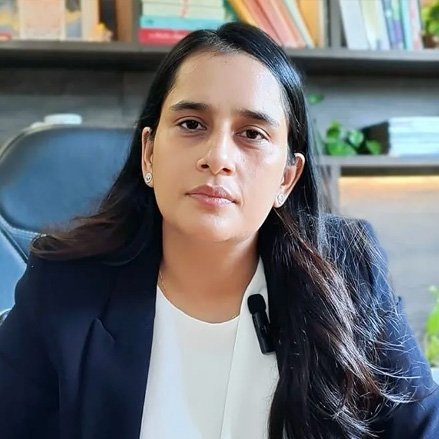
Dr. Sneha Sharma
Consultant Psychiatrist | De-Addiction Specialist
MBBS, MD (Psychiatry)
VIEW PROFILEDr. Sneha Sharma
Consultant Psychiatrist | De-Addiction Specialist
MBBS, MD (Psychiatry)
Experience: 14+ Years
TALK TO US
info@anvayahealthcare.com
+91-9810659825
Just like the Gym is for your body, Therapy is for your Mind
Dr. Sneha Sharma
Psychiatrist, Anvaya Healthcare
Expert bipolar disorder treatment in Kolkata from psychiatrists and psychologists trained at AIIMS, NIMHANS & IHBAS. From accurate diagnosis to mood-stabiliser management, therapy, and long-term follow-up, we provide comprehensive, evidence-based care. Treatment is personalised to your needs, confidential, and focused on supporting long-term mood stability.
📅 Book Consultation
Bipolar disorder involves real movement between two states: stretches of raised mood, energy and activity, whether full mania or milder hypomania, and stretches of depression. Nobody means the ordinary swings everyone knows. A poor day, low after a setback and buoyant on good news, is simply life. These episodes run days or weeks, mark a visible departure from how somebody normally is, and damage their functioning. Degree, duration and consequence divide the two, not the force of feeling.
The Indian numbers carry weight. Lifetime prevalence of bipolar affective disorder came to 0.5% in the National Mental Health Survey, between 5 and 10 million people affected. The attached disability is considerable: NMHS data put two-thirds of those living with it reporting disability at work, social life, and family life. The treatment gap for severe mental disorders exceeds 76%, so most receive nothing adequate — and of those reaching care, being labelled with depression alone is common, occasionally for years before the right answer surfaces.
That misdiagnosis can take a particular shape. Almost nobody books an appointment during the elevated phase; the crash afterwards brings a family to a doctor, and what gets described is the low mood alone. Months of barely sleeping, talking fast, planning enormously, working through the night, or spending unusually can be received at home as productivity or simply personality. If those elevated periods are not described, a clinician may end up treating only half the pattern.
Consistency is what makes bipolar disorder manageable, and consistency is also what can prove hardest to sustain. Long-term psychiatric review requires regular monitoring, and repeated travel across Kolkata can become difficult during periods when energy, sleep, or motivation are already affected. Care that fits more easily into everyday life can reduce a practical barrier to continuity.
The National Mental Health Survey reported a lifetime prevalence of 0.5% for bipolar affective disorder in India, corresponding to an estimated 5–10 million people affected.
National Mental Health Survey data found that 63% of people living with bipolar disorder reported disability affecting their work, highlighting the potential impact of the condition on daily functioning.
The treatment gap for severe mental disorders in India exceeds 76%, meaning many people do not receive adequate mental healthcare despite experiencing significant symptoms and functional difficulties.
Assess mood episodes, establish diagnosis, manage medication including mood stabilisers when appropriate, monitor response and side effects, and provide long-term psychiatric oversight.
Provide evidence-based therapy, psychoeducation, relapse-prevention work, emotional coping strategies, and support for individuals and families managing the condition.
The illness presents across two entirely different kinds of episode, and catching both is what permits accurate diagnosis. Here is precisely where diagnosis in Kolkata goes wrong: the depressive episodes get treated while the elevated ones are written off as somebody being productive or unusually energetic:
Mood may become unusually raised or irritable, energy rises sharply, sleep need falls, thoughts race, speech quickens, confidence increases, and judgement can change. Hypomania may feel positive enough to pass unnoticed.
Episodes of flattened mood, lost interest, exhaustion, hopelessness and failing function, generally outnumbering and outlasting the elevated phases. Usually this is what finally sends somebody looking for help
The person moves from one distinct state into another over weeks or sometimes much faster, in a way that is different from ordinary day-to-day mood variation.
Hardly any sleep wanted in elevated phases, sleep in excess or flat exhaustion in depressive ones. Disrupted sleep ranks among the earliest signals that something has begun
In elevated phases, money spent freely, hazardous decisions, rash commitments, conduct unlike the person and regretted afterwards
What these episodes do to a career, to friendships and to family can be considerable, and it ranks among the chief arguments for early treatment
Several factors combine here, with biology carrying particular weight:
Hardly any condition in psychiatry is more strongly inherited. A first-degree relative carrying it lifts an individual's risk substantially.
Past the condition itself, relatives with depression, other mood disorders, or a history of suicide raise the likelihood, pointing to genetic and environmental vulnerability held in common.
The neurobiological systems regulating mood, energy, and sleep behave differently in bipolar disorder. The condition is not caused by weak willpower or personality.
Stress causes none of this, yet serious upheaval, routine thrown over and sleep badly disrupted will each set off episodes in anyone predisposed, which is why holding a stable routine belongs inside the treatment rather than beside it.
Each triggers episodes, worsens them, and complicates whatever treatment is running. Substance use also appears more often among people carrying this diagnosis, commonly as an attempt at managing symptoms alone.
Anxiety disorders, ADHD and substance use disorders accompany this one regularly, and each must be identified and handled inside one plan rather than parcelled out to providers who never confer. Establishing the whole picture at assessment is what permits everything to be managed together.
Contact our team and provide a brief account of what has been happening. This helps identify the appropriate psychiatrist and the concerns that need to be explored first.
The assessment covers every relevant mood episode — depressive and elevated — alongside family history, previous treatments, current functioning, sleep changes, and information relatives can provide.
The clinician determines whether bipolar disorder is present and, where applicable, which pattern fits best. Treatment is then built around the individual's history, symptoms, medication needs, therapy goals, and daily routine.
Mood stabiliser management and other clinically appropriate medication are monitored over time alongside therapy, psychoeducation, family support, lifestyle strategies, and regular psychiatric review.
Everything rests here: fixing the diagnosis, beginning and adjusting medication, keeping psychiatric oversight in place long term.
These sit at the centre of treatment. Arriving at the right one at the right dose, then following response and side effects across years, calls for regular review, and little suits remote follow-up so well.
Reworked for this illness, CBT teaches a person to spot an episode's opening signals, manage the thoughts and behaviour accompanying a shift in mood, and keep hold of steadying routines. It runs beside medication rather than replacing it, the condition being biological at root and requiring medical management.
Structured instruction for patient and relatives together, shown repeatedly to improve adherence and cut relapse. Grasping what sets episodes off, what early signals look like and why medication continues while a person feels well is part of managing this.
The whole household lives with this, and family sessions sharpen communication, lower conflict, and teach relatives to spot warning signs early.
Constructing the routine, sleep and stress management that render episodes less likely, with a personal plan for answering the first signs.
The condition is lifelong, and steady monitoring yields stability measured in years rather than months. This portion of the work never concludes.
Consultant Psychiatrist | De-Addiction Specialist
MBBS, MD (Psychiatry)
VIEW PROFILEConsultant Psychiatrist | De-Addiction Specialist
MBBS, MD (Psychiatry)
Experience: 14+ Years
TALK TO US
Clinical Psychologist
PsyD, RCI (Psychology)
Experience: 3+ Years
TALK TO US
Clinical Psychologist
M.A & M.Phil (Clinical Psychology)
Experience: 3+ Years
TALK TO US
Consultation Psychiatrist
MBBS, MD (Psychiatry)
Experience: 6+ Years
TALK TO US
Consultant Psychiatrist
MBBS, MD (Psychiatry)
Experience: 15+ Years
TALK TO US
Psychiatrist
MBBS, DNB (Psychiatry)
Experience: 8+ Years
TALK TO US
Clinical Psychologist
MA & M.Phil (Clinical Psychology)
Experience: 3+ Years
TALK TO US
Clinical Psychologist
MA & M.Phil (Clinical Psychology)
Experience: 7+ Years
TALK TO US
Clinical Psychologist
MA (Clinical Psychology), RCI Registered
Experience: 5+ Years
TALK TO US
Clinical Psychologist
M.Phil. | MA | PG Diploma in Counselling & Family Therapy
VIEW PROFILEClinical Psychologist
M.Phil. | MA | PG Diploma in Counselling & Family Therapy
Experience: 3+ Years
TALK TO US
Psychiatrist & De-Addiction Specialist
MBBS | DPM (Psychiatry) | DNB (Neuropsychiatry)
VIEW PROFILEPsychiatrist & De-Addiction Specialist
MBBS | DPM (Psychiatry) | DNB (Neuropsychiatry)
Experience: 8+ Years
TALK TO US
Clinical Psychologist
M.Phil (Clinical Psychology)
Experience: 15+ Years
TALK TO US
Counselling Psychologist
M.A. Clinical Psychology | PG Diploma in Guidance & Counselling (PGDGC)
VIEW PROFILECounselling Psychologist
M.A. Clinical Psychology | PG Diploma in Guidance & Counselling (PGDGC)
Experience: 3+ Years
TALK TO US
Clinical Psychologist
M.Phil. Clinical Psychology (IHBAS)
Experience: 2+ Years
TALK TO US
This needs long-term, regular psychiatric follow-up, and consulting remotely removes the recurring burden of crossing Kolkata for each appointment. Across the years of treatment involved, that saving is far from trivial
No clinic waiting room, no risk of being spotted, which counts given the stigma still surrounding serious mental illness in Indian families and workplaces
Sessions arranged around work at hours suiting Kolkata's demanding schedules, with no repeated leave taken for what is lifelong care
Family members take part from wherever they are, which matters where their observations are clinically important to catching episodes early
Kolkata residents reach psychiatrists trained at the country's foremost institutions with no requirement that any of them practise locally, and no confinement to whichever clinic sits nearest
For a condition needing regular follow-up for life, what accumulates in saved time and travel is substantial
Bipolar disorder demands specialist psychiatric evaluation because identifying the full pattern — not just the depressive phase that often brings someone in — is central to accurate diagnosis. Our psychiatrists are trained at AIIMS, NIMHANS, IHBAS, Lady Hardinge Medical College, and VIMHANS, and hold MCI/NMC registration.
This is long-term clinical work. Medication needs careful monitoring, mood changes need to be recognised early, and therapy and psychoeducation have to sit alongside psychiatric treatment rather than being treated as separate pieces. Where more than one discipline is useful, the care plan is coordinated.
No plan is standard. A person with frequent mood shifts, someone stabilised on a long-term regimen, and someone recently recovering from a depressive episode may require different priorities and different monitoring intervals. Treatment follows the individual’s history and clinical picture.
A second part of specialist care is asking about the elevated half of the illness. When somebody presents with low mood alone, questions about past periods of very little sleep, unusually high energy, rapid speech, large plans, spending, or changes in judgement can reveal the pattern that determines whether this is depression alone or bipolar disorder.
For Kolkata residents, government psychiatric services remain important, while high patient volumes, waiting times, and limited continuity can make the regular monitoring this condition needs more difficult to sustain. Anvaya Healthcare provides specialist assessment, structured treatment, and ongoing review.
Consultations start from ₹1,500 per session, with pricing varying by the psychiatrist’s experience and seniority. Centres in Dwarka, Vasant Vihar, and Gurugram are available for in-person care when clinically needed, with progress monitored throughout treatment.
Bipolar disorder requires careful specialist assessment and long-term psychiatric management. Anvaya Healthcare's psychiatrists include professionals trained at leading Indian institutions.
Treatment is shaped around the person's episode pattern, symptoms, medication needs, family context, routine, and recovery goals.
Care can combine psychiatric assessment, mood stabiliser management, therapy, psychoeducation, family support, lifestyle planning, and relapse prevention according to clinical need.
Where therapy, family work, or management of co-occurring anxiety, depression, ADHD, or substance use is needed, care can be coordinated across disciplines.
Kolkata residents can access specialist bipolar disorder consultations and ongoing support, with in-person care at Delhi NCR centres when clinically required.
Bipolar disorder is a long-term condition that can be managed with appropriate treatment. Care commonly combines psychiatric monitoring and medication with therapy, psychoeducation, family support, lifestyle planning, and relapse-prevention strategies according to individual needs.
Follow-up frequency depends on the clinical situation. During diagnosis, medication changes, or periods of instability, reviews may be needed more frequently. Once a person is stable on an established plan, the psychiatrist may space appointments further and adjust the interval as needed.
Yes, where appropriate. Relatives can provide valuable observations about changes in sleep, energy, speech, spending, or behaviour, especially because a person may not always recognise the beginning of an elevated episode.
The provided source describes medication, particularly mood stabiliser management, as the bedrock of bipolar treatment. Therapy, psychoeducation, family support, and lifestyle strategies are important parts of care alongside psychiatric management.
Depression involves depressive symptoms, while bipolar disorder includes distinct periods of elevated or unusually energised mood as well as depression. Asking about past periods of very little sleep, increased energy, rapid speech, unusually large plans, or risky behaviour is important when making the distinction.
Yes. Kolkata residents can contact Anvaya Healthcare to arrange an initial bipolar disorder assessment and discuss the most appropriate psychiatrist, treatment approach, and follow-up plan.
Chats continue on WhatsApp. Please avoid sharing clinical details here.