

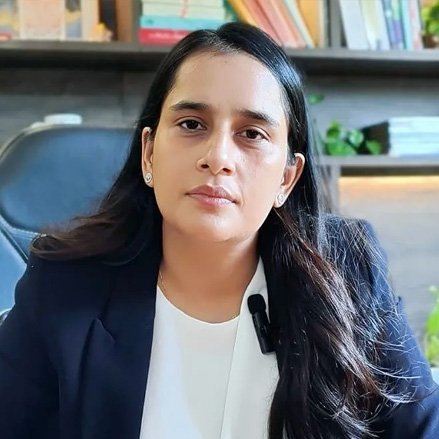
Just like the Gym is for your body, Therapy is for your Mind
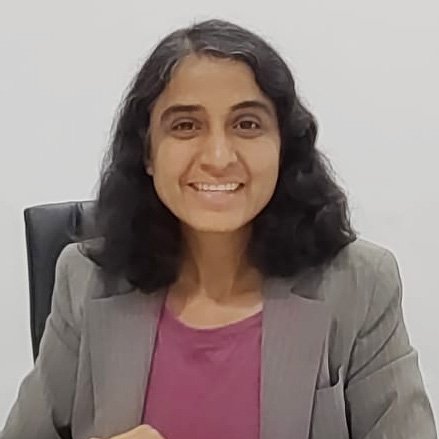
Dr. Sneha Sharma
Psychiatrist, Anvaya Healthcare
AIIMS, LHMC & NIMHANS-trained psychiatrists and psychologists providing evidence-based Stress treatment from the comfort of your home. Available across India, fully confidential, and insurance-supported.
Patients Helped
Specialists
Online Access
Satisfaction Rate
India has a stress problem. Not the occasional kind — the chronic, grinding, nobody-talks-about-it kind.
The McKinsey Health Institute’s 2023 survey found that 59% of Indian respondents reported burnout symptoms — among the highest rates globally. A Deloitte report put the financial cost of poor employee mental health at ₹1.1 lakh crore per year for Indian employers. And 30% of employees report experiencing stress every single day, with nearly half actively looking for a new job because of it.
Stress isn’t a vague feeling. It’s a clinical concern when it becomes chronic — when the body and mind stay in a state of threat response well past the point where any actual threat exists. Left unaddressed, chronic stress feeds into anxiety, depression, sleep disorders, and a range of physical health conditions. It doesn’t resolve on its own because the source is often structural — the way someone works, thinks, and relates to the demands around them.
Online stress treatment makes it easier to access the professional support that most people in India never reach. Platforms like Anvaya Healthcare put qualified psychiatrists, psychologists, and counsellors within reach — without the barriers that stop most people from starting.
McKinsey Health Institute (2023) found 59% of Indians report burnout, placing India among the highest globally and highlighting widespread chronic stress.
Around 30% of employees face stress daily, and nearly 50% consider job changes due to it, showing its strong impact on retention and satisfaction.
Deloitte estimates poor mental health costs Indian employers ₹1.1 lakh crore yearly, affecting productivity and workforce stability.
Long-term stress can lead to anxiety, depression, sleep issues, and physical symptoms. Anvaya Healthcare helps improve access to care.
A psychiatrist (MBBS + MD in Psychiatry) is the right starting point when stress has escalated into something more — severe burnout with depression, persistent anxiety that isn’t responding to anything, or physical symptoms with no clear medical cause. They assess, diagnose, and can prescribe medication where it’s clinically indicated.
A clinical psychologist (M.Phil. + RCI registration) delivers structured therapy. For most stress and burnout presentations, CBT, mindfulness-based approaches, and behavioural strategies are the first line of treatment — and these are what qualified psychologists provide. No prescription needed; what’s needed is the right technique applied consistently.
When the presentation calls for it, psychiatrist and psychologist work together — one managing medication, one delivering therapy — rather than each operating in a silo.
Stress becomes a problem worth addressing professionally when it’s no longer proportionate to the situation — when it persists after the stressor has passed, or when the stressor is constant, and the coping has run out. Chronic exhaustion that doesn’t respond to rest. Irritability and mood swings that are out of character — snapping at people for small things, feeling overwhelmed by tasks that felt manageable a year ago. Sleep is going wrong: taking too long to fall asleep, waking at 3 am with thoughts running, or using sleep to escape. Low productivity and focus — reading the same paragraph three times, losing track of conversations, and making small mistakes you wouldn’t normally make. Physical symptoms: persistent headaches, tension across the neck and shoulders, tight chest, digestive upset. These aren’t separate from stress — they’re stress, expressed in the body. Detachment — that feeling of going through the motions without really being present. That’s burnout taking hold. When these patterns have been running for weeks, the window for easy intervention is closing.
Persistent tiredness that doesn’t improve with rest. Even after sleep or breaks, energy levels remain low, making daily tasks feel draining.
Difficulty falling asleep, waking up in the middle of the night with racing thoughts, or oversleeping to escape stress. Sleep no longer feels restorative.
Struggling to concentrate, rereading things, forgetting tasks, or making small mistakes. Mental clarity drops, affecting work efficiency and daily functioning.
You book a consultation. At Anvaya Healthcare, if you’re not sure whether you need a psychiatrist, psychologist, or counsellor, the team will help you work that out before the first session. The initial assessment covers what’s happening in detail — the pattern of symptoms, how long they’ve been present, what your work and life situation looks like, and what you’ve already tried. Stress presentations are rarely simple; the assessment is where the complexity gets mapped. From there, a stress management plan is built around your specific situation. Therapy sessions, structured techniques, lifestyle guidance — the components depend on what the assessment reveals. If medication is indicated (for co-occurring anxiety or sleep disruption, for example), the psychiatrist can prescribe legally under India’s Telemedicine Practice Guidelines (2020). Follow-up sessions check what’s shifting. The plan gets adjusted when something isn’t working. That ongoing monitoring is what turns a consultation into actual treatment.
Book online or call us. Our team guides you on the right starting point — psychiatrist or psychologist — based on your stress level, symptoms, and support needs.
A thorough stress assessment — not a quick checklist. A detailed conversation covering stress triggers, symptoms, lifestyle factors, family context, and current functioning.
Diagnosis follows DSM-5 / ICD-11 criteria to assess stress conditions. If needed, medication is introduced carefully with clear explanation, and prescribed legally via online consultation.
Psychoeducation, Cognitive Behavioural Therapy (CBT), and regular follow-ups are introduced gradually to support stress recovery. The focus is on consistent, long-term care rather than a one-time consultation.
CBT — Cognitive Behavioural Therapy — is the most evidence-backed approach for chronic stress. It identifies the thought patterns that amplify stress responses — catastrophising, perfectionism, black-and-white thinking — and systematically replaces them with more accurate and functional patterns. It also addresses behavioural habits that sustain stress, like overcommitment and avoidance. Stress management techniques are practical tools: time management frameworks, prioritisation strategies, and communication skills for high-pressure environments. Not generic wellness advice — structured, taught, and practised within sessions.
Mindfulness and relaxation exercises — diaphragmatic breathing, body scan, progressive muscle relaxation — target the physiological arousal that chronic stress produces. They don’t eliminate stressors but they change how the body responds to them, reducing the baseline activation that makes everything feel harder.
Behavioural therapy approaches tackle the patterns — overworking, people-pleasing, inability to switch off — that keep someone in chronic stress even when the external situation eases.
Focuses on identifying and changing negative thought patterns like catastrophising and perfectionism, while also correcting behaviours that maintain stress.
Practical strategies such as time management, prioritisation, and communication skills to handle high-pressure situations effectively.
Includes breathing techniques, body scan, and muscle relaxation to reduce physical stress response and calm the nervous system.
Targets unhealthy habits like overworking, people-pleasing, and inability to switch off, helping break the cycle of chronic stress.
Consultant Psychiatrist | Co-Founder
Psychiatrist
Psychiatrist
Psychiatrist & Addiction Specialist
Consultant Psychiatrist
Clinical Psychologist
Counselling Psychologist & Behavioral Therapist
Clinical Psychologist
Counselling Psychologist
Clinical Psychologist
Child Psychologist
Loading booking form…
The irony of stress treatment is that stress makes it harder to access. You’re too busy, too exhausted, too overwhelmed to make an appointment and get across town. Online therapy removes that logic entirely. Privacy matters here too. Your DOST’s 2024 survey found that 45% of employees experience anxiety every Sunday evening, dreading the return to work, but most don’t say anything. The fear of being seen as weak, or of word reaching managers, keeps people from seeking help they genuinely need. Consulting from home removes that exposure. Flexible scheduling means the session fits around work rather than competing with it. Affordable compared to in-person equivalents, because the overhead is lower. Continuous support via Anvaya Healthcare means the monitoring between sessions — not just the sessions themselves — is built into the process. Accessible across India means someone in a city without strong mental health infrastructure gets the same quality of care as someone in the metros, where most qualified professionals are concentrated.
Affordable, transparent pricing. The Mental Healthcare Act 2017 mandates insurance parity for mental health — check your policy’s OPD clause.
₹1,500 – ₹2,500 per session
₹1,500 – ₹5,500 per session
The clinical team at Anvaya Healthcare trained at institutions including AIIMS, NIMHANS, IHBAS, Lady Hardinge Medical College, and VIMHANS. For stress and burnout — where the picture ranges from situational stress to burnout overlapping with depression and anxiety — that training depth makes a real difference in getting the assessment right. Treatment is holistic and personalised. Sessions are secure, confidential, and pan India accessible. Positive outcomes come from clinicians who have the time to properly understand what’s going on.
For chronic stress, where long-term management requires careful clinical judgement, the depth of therapeutic expertise makes a significant difference.
Treatment is personalised to each individual — considering their history, symptoms, lifestyle context, and recovery goals, rather than using a one-size-fits-all approach.
Consult from home. Stress often goes unnoticed or minimised—privacy isn’t just a convenience, it’s essential for open, effective care.
When both work in coordination, outcomes are substantially better. At Anvaya, that coordination actually happens — both are within the same clinical setting.
A family in Kanpur, Bhopal, or any smaller city gets the same quality of psychiatric expertise as someone in South Delhi. That's the whole point.
Before the session, map your stress. Not clinically — just jot down the main triggers. What consistently makes things worse? What time of day is hardest? What thought keeps coming up? Prepare your work and personal history in rough outline: current role, workload, major life events in the past year or two. Any previous attempts at managing stress — what helped, what didn’t. List what you most want to change. What would “better” actually look like? That specificity gives the clinician something concrete to work with from session one. Private space. Stable internet. Earphones. And be straight about how bad it actually is. Minimising in these sessions leads to undertreated stress. Open communication is what makes the whole thing work.
Yes. CBT, mindfulness-based approaches, and behavioural therapy for stress all show strong outcomes in research settings, and online delivery produces comparable results to in-person for most presentations.
Yes. The clinical team includes psychiatrists and psychologists with experience in burnout, workplace stress, and the overlap between chronic stress and anxiety or depression. Both therapy and, where indicated, medication are available.
8 to 12 sessions covers most stress and burnout presentations. Where stress has led to clinical depression or anxiety, more may be needed. Your clinician will give you a realistic estimate early on.
Yes. Professional ethical guidelines apply regardless of format. Nothing leaves the session without your consent.
CBT has the strongest evidence base. Mindfulness-based stress reduction (MBSR) has good research support for chronic stress specifically. Behavioural approaches for the patterns sustaining stress. The best choice depends on the individual presentation.
If stress is the primary issue — psychologist first. If there's significant overlap with depression, severe anxiety, or physical symptoms without a clear medical cause — start with a psychiatrist. When unsure, book a psychiatric assessment and let the clinician guide the pathway.
Second floor, Plot No 28,
Sector-12A Rd, Block A,
Sector 12 Dwarka
Call Now: +91-9810659825
Ground Floor, Plot No. - E-7/5, Block E,
Vasant Vihar, South Delhi
Call Now: +91-9650277301
1 in every 5 individuals
suffers from some form of mental health illness