

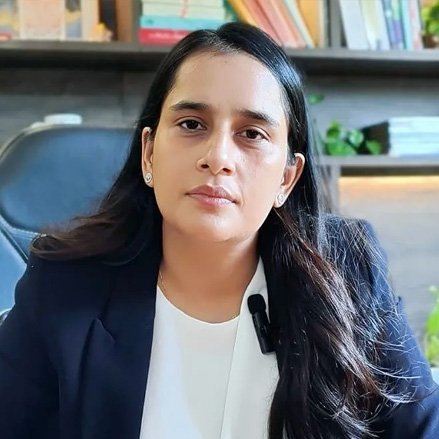
Just like the Gym is for your body, Therapy is for your Mind
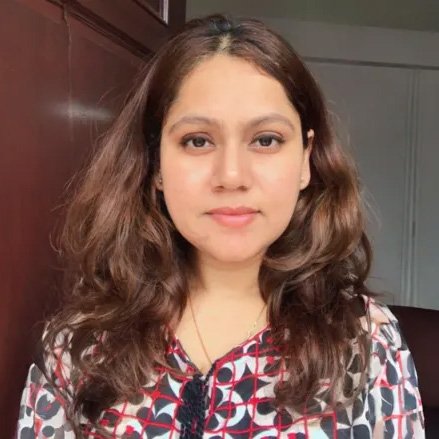
Dr. Sneha Sharma
Psychiatrist, Anvaya Healthcare
Psychiatrists and psychologists trained at leading institutions like AIIMS, LHMC, and NIMHANS deliver evidence-based care from the comfort of your home. Services are available across India, fully confidential, and supported by insurance.
Patients Helped
Specialists
Online Access
Satisfaction Rate
One in four Indians has insomnia. Nearly four in ten have obstructive sleep apnea. Restless legs syndrome affects roughly one in ten. These numbers come from a 2023 meta-analysis of 100 Indian studies — and they sit alongside another number that puts everything in context: only 0.3% of people with sleep disorders in India actually seek treatment.
That gap isn’t laziness or indifference. It’s that most people with sleep problems have never been told there’s a clinical treatment more effective than pills and better than generic sleep hygiene advice. CBT-I — Cognitive Behavioural Therapy for Insomnia — consistently outperforms sleeping medication in controlled trials, produces results that last after treatment ends, and carries zero dependence risk. Most people have never heard of it.
Getting to that treatment means getting to the right professional. Platforms like Anvaya Healthcare connect people across India to psychiatrists and psychologists — and, where physiological assessment is needed, to sleep specialists — without the barriers of geography or long waiting times.
One in four Indians has insomnia. Nearly four in ten have obstructive sleep apnea. Restless legs syndrome affects roughly one in ten.
Only 0.3% seek treatment Despite high prevalence, just 0.3% of people with sleep disorders in India actually seek clinical care.
Not indifference — lack of awareness Most people are unaware that effective, evidence-based treatments exist beyond pills or basic sleep hygiene advice.
A psychiatrist — MBBS plus MD in Psychiatry — handles the overlap between sleep and mental health. Insomnia maintained by untreated depression or anxiety. Hypersomnia in bipolar disorder. Sleep disruption from psychiatric medications. Where pharmacological support is indicated — short-term sleep aids, or medications specifically for restless legs syndrome — only a psychiatrist can prescribe it.
A clinical psychologist — M.Phil. plus RCI registration — delivers CBT-I. This is the gold-standard treatment for chronic insomnia and requires specific training to implement correctly. Sleep restriction, stimulus control, cognitive restructuring of beliefs about sleep — these are clinical techniques, not wellness advice.
A sleep specialist is relevant for conditions requiring physiological assessment: obstructive sleep apnea, narcolepsy, RLS. Where a sleep study is indicated, the team can guide referral to the appropriate diagnostic facility.
Sleep problems often go unnoticed as people gradually adapt to feeling tired and unfocused.
Sleep disorders have a way of being normalised. People adjust downward — lower expectations for how alert they can be, how well they can concentrate, how they feel by 3pm. The adjustment is so gradual that most people don't realise how far they've drifted from functioning well.
What to pay attention to: taking more than 30 minutes to fall asleep most nights. Waking in the early hours and lying there, mind running, unable to get back down. Waking feeling as though you never really slept.
Daytime fatigue that a coffee doesn't touch. Falling asleep without intending to — during a meeting, watching something, in the car. Mood that tracks directly with sleep quality. Concentration that has quietly become unreliable.
Snoring or gasping during sleep that a partner notices, or waking with a headache and dry mouth — signs pointing toward obstructive sleep apnea. An uncomfortable crawling or pulling sensation in the legs, worst when sitting or lying still, that only movement relieves — restless legs syndrome.
You book a session by phone or online. At Anvaya Healthcare, the team can guide who aren’t sure where to begin. For eating disorders, starting with a psychiatrist makes sense: medical safety needs to be established first, co-occurring conditions need to be identified, and the full clinical picture needs to be mapped before therapy begins.
You book a session at Anvaya Healthcare, by phone or online. For most sleep presentations, the team will help identify the right starting point: psychologist for primary insomnia, psychiatrist if there's significant mood or anxiety overlap.
The initial session is a detailed sleep history, not a quick intake — covering when the problem started, a typical night, sleep schedule, naps, caffeine and alcohol use, and what’s been tried before. This depth helps correct issues often missed in shallow assessments.
Treatment follows: CBT-I structured across 6 to 8 sessions, medication where clinically indicated and prescribed legally under India's Telemedicine Practice Guidelines (2020), relaxation techniques introduced early.
Follow-ups track concrete sleep metrics — onset time, wake frequency, total sleep time — not just general impressions of how things are going.
Most people arrive at insomnia treatment having already tried the generic version. Cut out caffeine. No screens before bed. Keep the room dark. They did all of that. Still can’t sleep.
CBT-I targets the mechanisms keeping chronic insomnia going after the original cause resolves. It uses sleep restriction to rebuild sleep pressure, stimulus control to re-associate the bed with sleep, and cognitive restructuring to dismantle beliefs like “I must get 8 hours” or “I’ll never function otherwise,” which worsen insomnia.
Psychotherapy works on what’s underneath: perfectionism that turns food into a domain of control, shame that resists direct challenge, relational wounds CBT doesn’t always reach. For some people, this is what makes CBT sustainable rather than a temporary fix.
Behavioural approaches address the compensatory habits that worsen insomnia: early bedtimes, weekend lie-ins, hours in bed awake. Each disrupts the sleep system further. Changing them is part of the work.
Consultant Psychiatrist | Co-Founder
Psychiatrist
Psychiatrist & Addiction Specialist
Psychiatrist
Consultant Psychiatrist
Clinical Psychologist
Counselling Psychologist & Behavioral Therapist
Clinical Psychologist
Counselling Psychologist
Clinical Psychologist
Child Psychologist
Loading booking form…
Here’s a specific irony: in-person insomnia treatment typically happens during daytime clinic hours — when someone with chronic sleep deprivation is often at their worst. Online sessions can be scheduled for the time of day when the person actually functions. That’s not a trivial difference.
Privacy matters in a different way for sleep. The habits people develop around insomnia — the midnight phone use, the sleeping on the sofa, the rituals that have taken over — are often embarrassing to describe. Talking about them from home, privately, changes what people are willing to disclose.
Flexible scheduling. Affordable compared to equivalent in-person private care. Pan India accessibility via Anvaya Healthcare means someone in a smaller city — where sleep medicine specialists are essentially absent — reaches the same quality of evidence-based treatment as someone in the metros. Continuous monitoring between sessions is built into CBT-I specifically: the weekly sleep diary data is what allows the treatment to be calibrated as it progresses.
Affordable, transparent pricing. The Mental Healthcare Act 2017 mandates insurance parity for mental health — check your policy’s OPD clause.
₹1500 – ₹2,500 per session
₹1,500 – ₹8,000 per session
The psychiatrists and psychologists at Anvaya Healthcare trained at AIIMS, NIMHANS, IHBAS, Lady Hardinge Medical College, and VIMHANS. For sleep disorders at the clinical level — particularly where insomnia overlaps with depression, anxiety, or medication effects — the training these institutions provide is what makes an accurate assessment possible. Most people with chronic insomnia have seen someone before and been told to improve their sleep hygiene. What they needed was someone who actually understood why the insomnia was persisting.
For sleep disorders at the clinical level — particularly where insomnia overlaps with depression, anxiety, or medication effects — the training these institutions provide is what makes an accurate assessment possible.
Treatment is built around the individual. Shift-work-driven insomnia looks completely different from insomnia that developed after a period of grief and never resolved. The approach reflects that. Confidential. Easy to book. Available across India.
Consult from home. The stigma around schizophrenia in India is among the harshest. Privacy is a clinical necessity, not just a feature.
When both work in coordination, outcomes are substantially better. At Anvaya, that coordination actually happens — both are within the same clinical setting.
A family in Kanpur, Bhopal, or any smaller city gets the same quality of psychiatric expertise as someone in South Delhi. That's the whole point.
Start a sleep diary the week before the session. It doesn’t need to be elaborate — just note when you got into bed, roughly when you fell asleep, how many times you woke, what time you got up, and how you felt the next day. Seven days of that gives the clinician something concrete to work with rather than a general impression. Make a note of your caffeine intake, alcohol use, and screen habits. These aren’t asked to make you feel judged — they’re variables that directly affect treatment decisions.
Prepare your medical history: current medications, any diagnosed conditions, any previous sleep studies or treatments. What helped even slightly and what didn’t. Private space, stable connection. And be honest about the habits you’ve developed around your insomnia — the early bedtimes, the weekend lie-ins, the hours lying awake in bed.
Yes. CBT-I delivered online produces outcomes comparable to in-person delivery in controlled trials. The structured programme is the same — format doesn't change what it targets.
Yes. The psychiatrists are qualified medical doctors registered with state medical councils, legally permitted to prescribe under India's Telemedicine Practice Guidelines (2020).
CBT-I runs 6 to 8 sessions over roughly the same number of weeks. One of the more time-efficient evidence-based treatments available. Psychiatric follow-ups continue where medication is in the picture.
Cognitive Behavioural Therapy for Insomnia. A structured clinical programme that targets the thought patterns and behaviours maintaining chronic insomnia — sleep restriction, stimulus control, cognitive restructuring. More effective than sleeping pills in controlled studies, with no dependence risk.
Yes, It is confidential.
Primary insomnia without significant psychiatric overlap — start with a clinical psychologist for CBT-I. Insomnia with depression, anxiety, or bipolar disorder in the picture start with a psychiatrist, or see both. Suspected sleep apnea or RLS psychiatric assessment first, specialist referral where a sleep study is warranted.
Second floor, Plot No 28,
Sector-12A Rd, Block A,
Sector 12 Dwarka
Call Now: +91-9810659825
Ground Floor, Plot No. - E-7/5, Block E,
Vasant Vihar, South Delhi
Call Now: +91-9650277301
1 in every 5 individuals
suffers from some form of mental health illness