

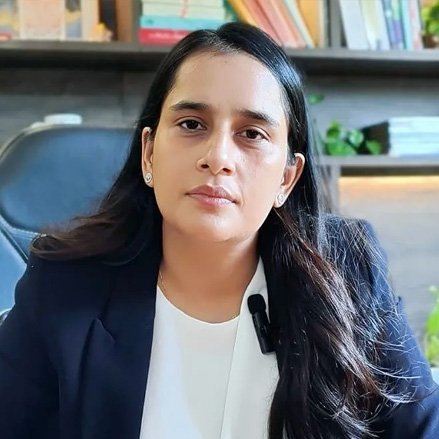
Dr. Sneha Sharma
Consultant Psychiatrist | De-Addiction Specialist
MBBS, MD (Psychiatry)
VIEW PROFILEDr. Sneha Sharma
Consultant Psychiatrist | De-Addiction Specialist
MBBS, MD (Psychiatry)
Experience: 14+ Years
TALK TO US
info@anvayahealthcare.com
+91-9810659825
Just like the Gym is for your body, Therapy is for your Mind
Dr. Sneha Sharma
Psychiatrist, Anvaya Healthcare
Psychiatrists and psychologists trained at AIIMS, LHMC, and NIMHANS provide evidence-based sleep disorder treatment in Mumbai. Consult experienced mental health professionals for confidential, personalized care tailored to your unique needs.
📅 Book Consultation
Sleep is not a luxury or a sign of laziness — it’s a biological necessity, as essential to health as food and water. Yet millions of Indians struggle to get the rest they need, and far too many treat poor sleep as something to simply push through or an unavoidable part of a busy life. Persistent sleep problems are not something to endure; they are treatable medical conditions, and getting help for them can transform a person’s health, mood, energy, and daily functioning.
A sleep disorder is a condition that repeatedly disrupts the quality, timing, or amount of a person’s sleep, to the point that it affects their health and daily life. This is different from the occasional bad night everyone has after a stressful day. A sleep disorder is persistent, and its effects ripple through everything — concentration, mood, physical health, relationships, and safety.
There are several recognised types. Insomnia is difficulty falling or staying asleep despite the opportunity to sleep, and it’s the most common of all. Obstructive sleep apnea involves repeated pauses in breathing during sleep, often signalled by loud snoring, and carries real risks to heart health if left untreated. Restless legs syndrome is an uncomfortable urge to move the legs that disrupts sleep. Circadian rhythm disorders involve the body’s internal clock being out of step with the day, common among shift workers. And sleep problems very often accompany mental health conditions like anxiety and depression, each worsening the other in a cycle that’s hard to break without help.
Indian research has found insomnia affecting around a quarter of adults, obstructive sleep apnea presents in roughly one in ten, and a national survey suggesting about a third of Indians are at risk of sleep apnea. Sleep problems are especially common in cities, where stress, screen use, and demanding schedules all take a toll, and they’re increasingly linked to conditions like diabetes and heart disease. Confidential specialist consultations now make expert sleep care accessible to people across Mumbai without repeated clinic visits, so poor sleep no longer has to be something people simply live with.
Studies suggest that around 1 in 4 Indian adults struggle with insomnia, making it one of the country's most common sleep disorders.
Approximately 1 in 10 Indians are affected by obstructive sleep apnea, a condition associated with breathing interruptions and increased cardiovascular risk.
National survey findings indicate that about one-third of Indians may be at risk of sleep apnea and could benefit from timely evaluation and treatment.
A psychiatrist is a medical doctor (MBBS, MD in Psychiatry) trained to diagnose and treat the connection between sleep problems and mental health conditions. They can help manage insomnia linked to anxiety or depression, excessive sleepiness (hypersomnia) associated with bipolar disorder, and sleep disturbances caused by psychiatric medications. When medication is required, such as short-term sleep aids or prescription treatment for restless legs syndrome, only a qualified psychiatrist can evaluate your condition and prescribe the appropriate medication.
A licensed clinical psychologist with an M.Phil. degree and RCI registration provides Cognitive Behavioral Therapy for Insomnia (CBT-I), the internationally recognized gold-standard treatment for chronic insomnia. CBT-I includes evidence-based techniques such as sleep restriction, stimulus control, and cognitive restructuring to address the underlying causes of persistent sleep problems—not just provide temporary wellness advice.
Lying awake for long stretches at night, unable to switch off, night after night, often while worrying about not sleeping
Waking repeatedly through the night and struggling to fall back asleep, so sleep never feels restorative however long you spend in bed
Feeling persistently tired, drowsy, or fighting to stay awake during the day, regardless of time in bed, which can be dangerous when driving or working
Heavy snoring, gasping, or pauses in breathing during sleep, often noticed by a partner, which can signal sleep apnea and shouldn't be ignored
An uncomfortable urge to move the legs, especially in the evening, that makes falling asleep difficult
The daytime consequences of disrupted sleep: difficulty focusing, memory lapses, irritability, and low energy that affect work and relationships
Persistent difficulty falling or staying asleep, often driven and maintained by stress, worry, and unhelpful sleep habits that build up over time, such as spending long hours awake in bed. It's the most common sleep disorder and responds very well to the right treatment, particularly CBT-I.
Repeated interruptions in breathing during sleep, associated with snoring, daytime sleepiness, and longer-term risks to heart health and blood pressure. It needs proper medical assessment and often a sleep study to diagnose, rather than being managed as ordinary insomnia.
An uncomfortable, hard-to-ignore urge to move the legs, usually worse in the evening and at rest, which interferes with falling asleep and can be linked to other health factors
A mismatch between the body's internal clock and the demands of daily life, common in shift workers and those with irregular schedules.
Sleep difficulties driven by anxiety, depression, or chronic stress, where the sleep problem and the mental health condition feed each other and need to be treated together. This is one of the most common patterns seen in urban populations like Mumbai, where high stress and disturbed sleep frequently go hand in hand.
Irregular routines, late-night screen use, caffeine, and the pressures of demanding urban lives, all of which disrupt healthy sleep. In a fast-paced city like Mumbai, long working hours, late commutes, and constant connectivity make these factors especially common drivers of poor sleep.
Schedule an appointment with our team at a convenient time, including evening and weekend slots, for your initial consultation.
Our specialists conduct a detailed evaluation of your sleep concerns, sleep patterns, lifestyle, stress levels, medical history, and mental health to identify the root causes of your sleep disorder.
Based on your assessment, we create an individualized treatment plan that may include Cognitive Behavioural Therapy for Insomnia (CBT-I), lifestyle recommendations, psychological support, and medication only when clinically appropriate.
Regular follow-up sessions help track your progress, refine your treatment plan as needed, and support long-term improvements in your sleep and overall well-being through our integrated care team in Mumbai.
The following are the treatment options available at Anvaya Healthcare:
The gold-standard treatment for chronic insomnia, and more effective than sleeping pills for lasting results. It addresses the thoughts and habits that keep insomnia going and rebuilds healthy sleep, and its structured, skills-based format is well suited to regular sessions.
Practical guidance on the routines, environment, and habits that support good sleep, tailored to the person's actual life rather than generic advice that's easy to find but hard to apply.
Methods that calm the racing mind and physical tension that so often stand between a person and sleep, usable independently once learned.
Assessment and oversight where sleep problems are linked to anxiety, depression, or other conditions that need addressing alongside the sleep difficulty, since treating one without the other rarely resolves either.
Where medication has a role, it's prescribed and monitored carefully, with the aim of using it appropriately for a defined period rather than indefinitely.
Addressing the daily habits, stress, and routines that undermine sleep, which is often where lasting improvement genuinely begins.
Where a condition like obstructive sleep apnea is suspected, we arrange referral for a sleep study, since these conditions need proper medical diagnosis and sometimes physical treatment rather than therapy alone.
Consultant Psychiatrist | De-Addiction Specialist
MBBS, MD (Psychiatry)
VIEW PROFILEConsultant Psychiatrist | De-Addiction Specialist
MBBS, MD (Psychiatry)
Experience: 14+ Years
TALK TO US
Clinical Psychologist
PsyD, RCI (Psychology)
Experience: 3+ Years
TALK TO US
Clinical Psychologist
M.A & M.Phil (Clinical Psychology)
Experience: 3+ Years
TALK TO US
Child Psychologist
M.A (Psychology)
Experience: 9+ Years
TALK TO US
Psychiatrist
MBBS, MD (Psychiatry)
Experience: 6+ Years
TALK TO US
Consultant Psychiatrist
MBBS, MD (Psychiatry)
Experience: 15+ Years
TALK TO US
Counselling Psychologist & Behavioral Therapist
MA - Psychology
Experience: 13+ Years
TALK TO US
Psychiatrist
MBBS, DNB (Psychiatry)
Experience: 8+ Years
TALK TO US
Clinical Psychologist
MA & M.Phil (Clinical Psychology)
Experience: 3+ Years
TALK TO US
Counselling Psychologist
M.Phil.Ed, M.S.Ed
Experience: 4+ Years
TALK TO US
Clinical Psychologist
MA & M.Phil (Clinical Psychology)
Experience: 7+ Years
TALK TO US
Clinical Psychologist
MA (Clinical Psychology), RCI Registered
Experience: 5+ Years
TALK TO US
Clinical Psychologist
M.Phil. | MA | PG Diploma in Counselling & Family Therapy
VIEW PROFILEClinical Psychologist
M.Phil. | MA | PG Diploma in Counselling & Family Therapy
Experience: 3+ Years
TALK TO US
Psychiatrist & De-Addiction Specialist
MBBS | DPM (Psychiatry) | DNB (Neuropsychiatry)
VIEW PROFILEPsychiatrist & De-Addiction Specialist
MBBS | DPM (Psychiatry) | DNB (Neuropsychiatry)
Experience: 8+ Years
TALK TO US
Clinical Psychologist
M.Phil (Clinical Psychology)
Experience: 15+ Years
TALK TO US
Counselling Psychologist
M.A. Clinical Psychology | PG Diploma in Guidance & Counselling (PGDGC)
VIEW PROFILECounselling Psychologist
M.A. Clinical Psychology | PG Diploma in Guidance & Counselling (PGDGC)
Experience: 3+ Years
TALK TO US
Sleep problems are exhausting, and being able to seek help without adding a stressful journey across Mumbai suits a person who's already running on too little rest
No clinic waiting room, and the ease of discussing a personal health concern from your own space
Sessions fitted around work and commitments, at times that suit Mumbai's demanding schedules, including evenings
Mumbai residents can consult specialists at India's leading institutions without those specialists needing to be physically based nearby, and without being limited to whichever clinic is local
Removing the commute across Mumbai makes attending regular sessions genuinely sustainable, which matters for treatment that works through consistency
For Mumbai residents who travel or relocate, treatment continues without the disruption of finding a new specialist and starting over
Affordable pricing. Learn about sleep disorder treatment price and access confidential care.
Sleep problems sit at the meeting point of the psychological and the physical, and treating them well requires genuine expertise in both. Our specialists are trained at India’s leading institutions, including AIIMS, NIMHANS, and IHBAS, and hold RCI or MCI/NMC registration.
The integrated psychiatry and psychology team matters here. Chronic insomnia is often intertwined with anxiety or depression, and treating one without the other rarely works — having both disciplines together means the whole picture is addressed. And where a sleep problem points to a physical condition like sleep apnea, we recognise that and arrange the right medical assessment rather than treating it as insomnia.
Every plan at Anvaya Healthcare is personalised. Insomnia driven by stress, a circadian rhythm problem from shift work, and sleep difficulty tied to depression each call for a different approach, and treatment is shaped around the individual and the actual cause of their sleep problem rather than a one-size-fits-all remedy.
Treatment is evidence-based, with CBT-I and related approaches favoured over long-term dependence on sleeping pills, which is a genuine concern for many people who’ve relied on them for years and want to move away from them safely. The goal is always sustainable, natural sleep rather than a lifelong prescription.
For Mumbai residents comparing options, government services are important but typically carry long waiting times and limited session length — constraints that make the consistent, structured work sleep treatment requires difficult to deliver. In a city where the pressures that disrupt sleep are constant, reliable access to the same specialist over time makes a real difference to whether a person’s sleep genuinely improves.
Consultations start from ₹1,500 per session, with pricing varying by the specialist’s experience and seniority. Physical centres in Delhi NCR are available for in-person care where preferred, with ongoing progress monitoring throughout the full course of treatment.
For sleep disorders at the clinical level — particularly where insomnia overlaps with depression, anxiety, or medication effects — the training these institutions provide is what makes an accurate assessment possible.
Treatment is built around the individual. Shift-work-driven insomnia looks completely different from insomnia that developed after a period of grief and never resolved. The approach reflects that. Confidential. Easy to book. Available across India.
Consult from home. The dismissal of sleep disorders in Mumbai runs deep—branded as laziness, weakness, or simply "not trying hard enough." Privacy is a clinical necessity, not just a feature.
When both work in coordination, outcomes are substantially better. At Anvaya, that coordination actually happens — both are within the same clinical setting.
A family in Kanpur, Bhopal, or any smaller city gets the same quality of psychiatric expertise as someone in South Delhi. That's the whole point.
Yes. The core treatment for chronic insomnia — CBT-I — was developed as a structured, skills-based therapy that works well in regular sessions, and research supports its delivery beyond the clinic. Assessment, therapy, and follow-up are all effective, with referral arranged where a physical sleep condition needs in-person tests.
CBT-I is Cognitive Behavioural Therapy for Insomnia, the leading treatment for chronic insomnia. It works by changing the thoughts, worries, and habits that keep insomnia going — such as anxiety about sleep and time spent lying awake in bed — and rebuilding the body’s natural capacity to sleep. It’s more effective than sleeping pills for lasting improvement, and unlike medication, its benefits continue after treatment ends rather than stopping when the pills do.
Yes — for chronic insomnia, CBT-I is more effective than medication in the long run and is the recommended first-line treatment. Sleeping pills have a role in some situations, but the goal is healthy, sustainable sleep rather than long-term dependence on medication.
A sleep study is typically needed where obstructive sleep apnea or certain other physical sleep conditions are suspected, for example, with loud snoring, breathing pauses, or severe daytime sleepiness.
Yes — consultations are available for people anywhere in India, including all of Mumbai. Contact us to book an initial assessment, and the Anvaya Healthcare team will match you with the right specialist for your situation and explain how treatment would work for your particular sleep problem.
Chats continue on WhatsApp. Please avoid sharing clinical details here.