

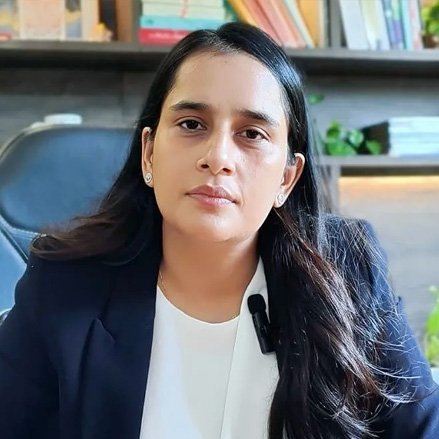
Dr. Sneha Sharma

Just like the Gym is for your body, Therapy is for your Mind

Dr. Sneha Sharma
Psychiatrist, Anvaya Healthcare

Home Assessments ADHD Assessment for Children

ADHD Assessment for Children

An ADHD assessment for children is designed to test whether children have any symptoms of ADHD. The testing pattern is different from that of adults

Attention-Deficit Hyperactivity Disorder (ADHD) in children is quite common in many Indian families. Studies show the global rate at roughly 7.6% among children between ages 3 and 12. India isn’t far behind: a systematic review of Indian studies found a pooled prevalence of about 7.1% among children and adolescents, which translates to an estimated 10 million affected children in the country at any given point.

Child interacting with psychiatrist during ADHD assessment test

What is ADHD Assessment for Children?

An ADHD assessment for children is a structured mental health evaluation that looks at how a child pays attention, his/her behavior, impulses, and activity levels and whether those patterns cross into territory that warrants a diagnosis.

Types of ADHD Tests for Children

Several well-validated tools are used by child psychologists to assess ADHD namely.

The Conner’s Rating Scale (CRS) is the most widely used globally. It gathers ratings from both parents and teachers on a range of behaviors- inattention, hyperactivity, oppositional tendencies — and allows the clinician to compare responses across settings. The Vanderbilt ADHD Diagnostic Rating Scale is particularly popular in Indian research and clinical settings; it’s built around DSM criteria and also screens for conditions that commonly co-exist with ADHD, like anxiety or conduct issues.

The Child Behavior Checklist (CBCL) takes a broader view, assessing emotional and behavioural functioning beyond just ADHD symptoms. DSM-5 framework is the gold standard for clinical diagnosis — which requires at least six symptoms of inattention and/or hyperactivity-impulsivity to be present consistently, across two or more settings, for at least six months, with a clear impact on functioning.

Common Tests Used by Professionals

In practice, a good ADHD evaluation rarely leans on just one tool. Child psychologists typically layer several tests- for example pairing the CRS with the Vanderbilt, or adding neuropsychological tests that directly measure things like working memory, sustained attention, and response inhibition. They also use DSM-5 criteria and CBCL as and when needed

For younger children — particularly those between 4 and 6 — structured play observation often gives more reliable information than paper-based tests. A child in a play session  gives a more accurate picture in real life setting since they are not told about the assessment.

At Anvaya Healthcare’s branches across Dwarka, Vasant Vihar, and Gurugram, assessments are designed around the child’s specific age and presentation. The tools chosen aren’t fixed — they’re matched to what the clinical picture calls for.

Purpose & Benefits

Who Should Take It?

ADHD assessment can be taken by all children however, children with poor focus who zone out occasionally aren’t automatically candidates — but when that pattern holds across months, at home and in school, it’s worth looking into. Same goes for hyperactivity that disrupts daily life, impulsive behavior that keeps getting them into trouble with peers, or learning difficulties that don’t match their apparent intelligence.

School complaints are another flag parent shouldn’t brush off. If teachers are repeatedly flagging that your child can’t sit still, won’t follow instructions, or is disruptive in class — that’s the child’s environment telling you something. Difficulty following instructions at home, too, especially multi-step ones, is a pattern that shows up consistently in children who later receive an ADHD diagnosis.

Benefits of ADHD Assessment for Children

The immediate benefit of ADHD Assessment for children is early detection — knowing what you’re dealing with before years of struggle pile up. From there, timely intervention becomes possible, whether that’s therapy, classroom modifications, or parent coaching.

Children who get properly assessed and supported tend to show improved academic performance over time — not because ADHD goes away, but because they’re finally working with strategies that suit how their brain functions. Better behavior management follows, and so does something that often gets overlooked: enhanced social skills. When a child understands why they act impulsively and has tools to manage it, friendships get easier. Parental guidance is also part of the package — parents leave with a clearer understanding of their child and a plan that actually makes sense.

Symptoms Checked in Child ADHD Assessment

ADHD assessment test assess across two main domains. Inattention covers things like forgetfulness, difficulty concentrating on tasks, losing belongings, and distraction issues — the kind that pull a child out of a lesson mid-sentence and into their own world.

The second domain is hyperactivity and impulsivity — restlessness that won’t settle, blurting out answers, struggling to wait a turn, moving constantly when stillness is expected. Poor time management is also commonly observed: children who genuinely cannot estimate how long something will take or sequence their tasks without help. Six or more symptoms across either domain, present in multiple settings for at least six months, is what clinically counts.

How Tests are Conducted

ADHD assessment test assess across two main domains. Inattention covers things like forgetfulness, difficulty concentrating on tasks, losing belongings, and distraction issues — the kind that pull a child out of a lesson mid-sentence and into their own world.

The second domain is hyperactivity and impulsivity — restlessness that won’t settle, blurting out answers, struggling to wait a turn, moving constantly when stillness is expected. Poor time management is also commonly observed: children who genuinely cannot estimate how long something will take or sequence their tasks without help. Six or more symptoms across either domain, present in multiple settings for at least six months, is what clinically counts.

Online vs Clinical Assessment

Online screening tools have grown significantly in India, and they do have a role. Convenient access is their main advantage — a parent in a part of Delhi NCR with limited specialist options can at least get a preliminary read on whether their child’s behaviour warrants further investigation.

But online tools have a ceiling. A clinical assessment is more detailed by nature — it involves expert observation of the child in real time, input from multiple informants, and the ability to probe responses that a questionnaire can’t follow up on. Higher accuracy comes from that depth. And a personalized evaluation means the recommendations at the end are actually built around this specific child, not a generic profile generated by an algorithm. At Anvaya Healthcare, we offer both the options. The online test can be accessed via our website and clinical test can be availed at any of our clinics in Delhi NCR.

Duration & Price

Online Screening
20–40 Mins
Clinical Evaluation
1–2 Hours
 Price Range
₹1200 – ₹5000+

Are ADHD Tests for Children Accurate?

Yes — when done properly. The tools used, like the Conner’s Rating Scale and the Vanderbilt Assessment, are scientifically validated instruments with strong reliability data across multiple countries including India. The AIIMS-modified INDT-ADHD tool, developed specifically for Indian clinical settings, showed 100% sensitivity and 90% specificity in trials.

That said, accuracy depends on the input by the parent/teacher. An assessment built on incomplete teacher feedback or conducted during an unusually stressful period in the child’s life may not reflect the full picture. Expert interpretation required isn’t a caveat — it’s the whole point. The tools generate data; the clinician makes sense of it. Used well, these assessments are reliable for diagnosis support and form the foundation of a sound intervention plan.

What Happens After ADHD Assessment for Children?

After ADHD assessment, families receive a detailed report within a few hours, a readable document that explains what was found and the probable causes of it. If ADHD is confirmed, the diagnosis if applicable comes with a clear explanation of the subtype and how it’s showing up in this child specifically.

From there, therapy recommendations are tailored to the child’s profile — behavioural therapy, CBT, or other approaches depending on the test results. Behavioral strategies for home are shared with parents alongside parental counseling to help them shift how they’re responding to their child’s behaviour. School support recommendations are included too — what to ask for, and how to communicate the diagnosis to teachers. Follow-up sessions are scheduled to track progress and adjust the plan as the child develops.

ADHD Assessment Support by Anvaya Healthcare

Anvaya Healthcare has experienced child psychologists across its three Delhi NCR branches — Dwarka, Vasant Vihar, and Gurugram — who conduct ADHD assessments under the guidance of Dr. Sneha Sharma. The child-friendly assessment methods used here are designed to put young patients at ease, because a child who’s anxious or performative in a clinical setting isn’t going to give you an accurate picture.

The process is fully confidential, and families can choose between online and offline consultations depending on what works for them. Reports are personalized — written for parents, not just filed for records — and the follow-through includes therapy and behavioral support so the assessment doesn’t just end with a document. At Anvaya, the diagnosis is the beginning of the support, not the conclusion of it.

Book ADHD Assessment for Children With Our Therapists

Dr. Sneha Sharma

Dr. Sneha Sharma

Consultant Psychiatrist | Co-Founder

13+ Years Hindi, English
₹2,500 / for 20 mins
Expertise
Child & Adolescent Psychiatry General Psychiatry Psychotherapy & Counselling Mental Health Awareness & Advocacy Women’s Mental Health Cognitive Behavioral Therapy (CBT) Dialectical Behavior Therapy (DBT) and mindfulness-based techniques.
Choose Location
Dr. Poulami Basu

Dr. Poulami Basu

Psychiatrist

6+ Years Hindi, English, Bengali
₹1,500 / for 30 mins
Expertise
Cognitive Behavioral Therapy (CBT) Dialectical Behavior Therapy (DBT) Exposure and Response Prevention (ERP) Relapse Prevention Therapy Geriatric Psychiatry Forensic Psychiatry Child and Adolescent Psychiatry De-addiction and Substance Use Management Suicide Prevention and Workplace Mental Wellness.
Choose Location
Dr. Kampila Kardam

Dr. Kampila Kardam

Psychiatrist & Addiction Specialist

8+ Years Hindi, English
₹1,500 / for 30 mins
Expertise
Cognitive Behavioral Therapy (CBT) Dialectical Behavior Therapy (DBT) Exposure and Response Prevention (ERP) Relapse Prevention Therapy Geriatric Psychiatry Forensic Psychiatry Child and Adolescent Psychiatry De-addiction and Substance Use Management Suicide Prevention and Workplace Mental Wellness.
Choose Location
Dr. Palak Patel

Dr. Palak Patel

Psychiatrist

7+ Years Hindi, English, Gujarati
₹1,500 / for 30 mins
Expertise
Anxiety and Depression Bipolar Disorder Obsessive-Compulsive Disorder (OCD) De-Addiction Psychosis and Schizophrenia Attention-Deficit/Hyperactivity Disorder (ADHD) Autism Spectrum Disorder Substance Use and Addiction Stress Management Women’s Mental Health Children and Adolescents Psychotherapy
Choose Location
Ms. Kiran Tevtiya

Ms. Kiran Tevtiya

Child Psychologist

9+ Years Hindi, English
₹3,500 / for 90 mins
Expertise
Behavior management of Toddlers and Preschoolers Teenage/Adolescent Counseling Parenting guidance "Working with schools day care and nannies for behavior management support" Shadow teacher training
Choose Location
Ms. Arpita Vij

Ms. Arpita Vij

Clinical Psychologist

3+ Years of Experience Hindi, English, Punjabi
₹1,500 / for 50 mins
Expertise
Anxiety & Stress Management Depression & Mood Disorders Trauma & Emotional Distress Behavioral & Adjustment Difficulties Schizophrenia & Affective Disorders Support Child & Adolescent Mental Health Family & Relationship Concerns Psycho-oncology Support Neuropsychological Rehabilitation Crisis Intervention & Risk Assessment
Choose Location
Ms. Ananya Singh

Ms. Ananya Singh

Clinical Psychologist

3+ Years Hindi, English
₹1,500 / for 60 mins
Expertise
Behavioural Therapy Cognitive Behaviour Therapy (CBT) Dialectical Behaviour Therapy (DBT) Motivational Enhancement Therapy (MET) Family Therapy Grief Counselling Stress Management and Psychological Assessment and Diagnosis
Choose Location
Mr. Manish Kumar

Mr. Manish Kumar

Clinical Psychologist

3+ Years Hindi, English
₹1,500 / 60 mins
Expertise
Behavioural Therapy Cognitive Behaviour Therapy (CBT) Dialectical Behaviour Therapy (DBT) Motivational Enhancement Therapy (MET) Family Therapy Grief Counselling Stress Management and Psychological Assessment and Diagnosis
Choose Location

FAQs

A structured clinical process to evaluate attention, hyperactivity, and impulsive behavior in children — using rating scales, observation, and input from parents and teachers — to determine whether ADHD is present and what support is needed.

Usually from age 4–5 years, depending on symptoms and how clearly, they're presenting. Most assessments happen between ages 6 and 12, once school-based patterns become more visible.

Reliable when conducted by professionals with proper inputs from both parents and teachers. The tools used are scientifically validated, and clinician interpretation is what turns data into a meaningful diagnosis.

Anywhere from 20 minutes for a basic screening to 2 hours for a full clinical evaluation, depending on depth. Some comprehensive assessments span two sessions.

Yes for screening — online tools can flag whether a full evaluation is warranted. For a formal diagnosis, a detailed evaluation recommended in person or via a structured video-based clinical session.

Yes, completely safe and child-friendly. No invasive procedures — just observation, conversation, and structured questionnaires in an environment designed to be low-pressure for children.

Parents receive a written report, therapy guidance, and school recommendations. If ADHD is diagnosed, a follow-up plan covering behavioural strategies and ongoing support is put in place.

₹1,200 to ₹5,000 or more, depending on provider and test type. Basic screenings sit at the lower end; comprehensive clinical evaluations with full reports and therapy recommendations at the higher end.

Your Path to Balance Begins Here

Schedule a professional consultation or visit our clinics in Delhi NCR today.