

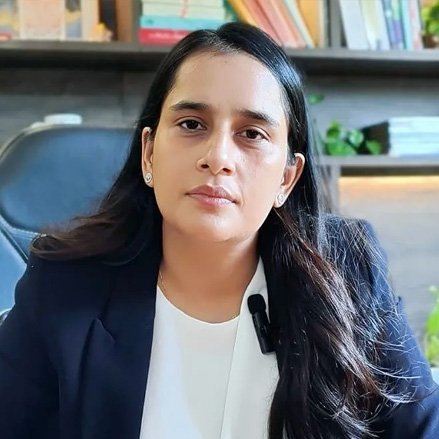
Dr. Sneha Sharma
Consultant Psychiatrist | De-Addiction Specialist
MBBS, MD (Psychiatry)
VIEW PROFILEDr. Sneha Sharma
Consultant Psychiatrist | De-Addiction Specialist
MBBS, MD (Psychiatry)
Experience: 14+ Years
TALK TO US
info@anvayahealthcare.com
+91-9810659825
Just like the Gym is for your body, Therapy is for your Mind
Dr. Sneha Sharma
Psychiatrist, Anvaya Healthcare
Consult experienced psychiatrists and psychologists from AIIMS, NIMHANS, and LHMC for depression treatment in Mumbai. Access confidential, evidence-based care through secure online consultations or in-person appointments, with flexible scheduling to suit your needs.
📅 Book Consultation
Sadness is a normal human response to difficult circumstances — a loss, a setback, a hard period. It comes, it’s painful, and it passes. Depression is different. It doesn’t necessarily need a trigger, it doesn’t pass on its own timeline, and it doesn’t lift just because circumstances improve. Depression changes how the brain processes mood, motivation, and energy, and it requires treatment in the way any other medical condition does.
The line between low mood and clinical depression is crossed when the symptoms persist for two weeks or more, when they’re significantly affecting daily functioning — work, relationships, basic self-care — and when they don’t respond to the things that would normally help: rest, a good weekend, time with people you care about.
The scale of depression in India is well documented, and it’s higher than most people assume. The Chennai Urban Rural Epidemiology Study, one of India’s largest population-based studies, found depression prevalence of 15.1% in an urban South Indian population, rising to 15.9% when age-adjusted. The study found depression was significantly more common in women (16.3%) than men (13.9%), and notably more common in lower-income groups (19.3%) compared to higher-income groups (5.9%) — a pattern that reflects how financial stress and depression compound each other. A Lancet study estimated close to 197 million people in India live with a mental health disorder, with depression among the most prevalent.
For Mumbai’s working population, depression often goes unaddressed simply because the city doesn’t leave room for it — between long hours, long commutes, and a culture that frequently treats persistent low mood as something to push through rather than treat. The financial pressure that’s a known driver of depression is also particularly acute in Mumbai, where the cost of living relative to income runs higher than in most Indian cities, adding another layer to an already significant risk.
Large population-based research found that approximately 15.1% of adults experience depression, making it one of the country's most common mental health conditions.
When feelings of sadness, hopelessness, or loss of interest continue for two weeks or longer, it may be a sign of clinical depression that requires professional care.
According to The Lancet, nearly 197 million people in India are affected by mental health conditions, with depression being among the most prevalent.
A psychiatrist is a medical doctor (MBBS, MD Psychiatry) who specializes in diagnosing and treating depression. They assess your symptoms, prescribe medication when appropriate, and monitor your progress throughout treatment. If you're experiencing moderate to severe depression, or if therapy alone hasn't provided sufficient relief, consulting an experienced psychiatrist in Mumbai is an important first step toward recovery.
A licensed clinical psychologist (M.Phil./PsyD with RCI registration) provides evidence-based depression therapy in Mumbai using approaches such as Cognitive Behavioural Therapy (CBT), Behavioural Activation, and Psychodynamic Therapy. While psychologists do not prescribe medication, therapy alone can be highly effective for many individuals with mild to moderate depression, leading to meaningful and long-term recovery.
Feeling sad, empty, or flat most of the day, nearly every day, regardless of what's actually happening around you
Things that used to bring pleasure or satisfaction no longer do, and there's little motivation to engage with them at all, even hobbies or relationships that once felt important.
A heaviness that makes even small tasks feel disproportionately difficult, not explained by lack of sleep or physical illness. This is one of the symptoms most commonly mistaken for ordinary tiredness, particularly among Mumbai's working population already managing long hours and commutes.
Sleeping significantly more or less than usual, or eating significantly more or less, in either direction.
Trouble focusing at work, making decisions, or following through on tasks that used to be straightforward.
A sense that things won't improve, that effort doesn't matter, or that the future looks bleak. When this extends to thoughts of self-harm or not wanting to be alive, that's an urgent signal requiring immediate professional attention, not something to wait out.
Depression rarely has a single cause. It usually emerges from a combination of factors:
Prolonged, unmanaged work stress is one of the most common precursors to depression in working adults across India, and Mumbai's high-pressure professional culture intensifies this further. Burnout that isn't addressed early frequently progresses into clinical depression, and the line between the two can be difficult to identify without a proper clinical assessment.
Marital conflict, family breakdown, or significant relationship loss are major risk factors, particularly when the support that would normally help process them isn't available or accessible.
The death of someone close, the end of a significant relationship, or other major losses can trigger depression, particularly when grief isn't given adequate space or time to be processed properly.
Depression has a meaningful hereditary component. A family history of depression or other mood disorders increases an individual's risk significantly, even when current circumstances seem otherwise manageable.
Depression is more common in people managing chronic physical illness, partly due to the burden of the illness itself and partly due to biological links between certain conditions and mood regulation.
Difficult past experiences, as well as major transitions like job loss, relocation, or significant financial change, can all trigger depressive episodes, particularly when they happen in combination or in quick succession without adequate recovery time between them.
Reach out to our team to schedule an appointment. Based on your concerns, we'll help you connect with the right specialist—whether a psychiatrist, psychologist, or both. No prior diagnosis is needed.
Your first session includes a detailed evaluation of your symptoms, medical history, lifestyle, and emotional wellbeing. This thorough assessment helps us understand the root cause and severity of your depression.
After the assessment, our specialists establish a clinical diagnosis and create a customised treatment plan. Depending on your needs, this may include evidence-based therapy, medication, or a combination of both.
Begin treatment through regular online or in-person sessions. Our team continuously monitors your progress, adjusts your treatment plan when needed, and provides ongoing support to help you achieve long-term recovery.
The most extensively researched psychological therapy for depression. Works on identifying and changing the negative thought patterns and behaviours that maintain depressed mood, building skills the person can use well beyond the end of treatment.
Focuses specifically on the relationships and life transitions that are contributing to depression — grief, role changes, relationship conflict — and works through these directly rather than addressing thought patterns alone.
A broader, more exploratory approach for understanding the deeper patterns underlying recurrent or long-standing depression, useful for people who want to address root causes rather than just manage symptoms.
A structured approach to gradually re-engaging with activities and routines that depression has stripped away. Often more effective earlier in treatment than insight-based approaches, because action can precede motivation rather than waiting for it.
Particularly useful for recurrent depression, building the capacity to notice and respond differently to the early signs of a depressive episode before it deepens.
For moderate to severe depression, or where therapy alone isn't producing sufficient improvement, psychiatric evaluation and medication can make a meaningful difference. This is a clinical decision made jointly with the patient, not a default first step.
Consultant Psychiatrist | De-Addiction Specialist
MBBS, MD (Psychiatry)
VIEW PROFILEConsultant Psychiatrist | De-Addiction Specialist
MBBS, MD (Psychiatry)
Experience: 14+ Years
TALK TO US
Clinical Psychologist
PsyD, RCI (Psychology)
Experience: 3+ Years
TALK TO US
Clinical Psychologist
M.A & M.Phil (Clinical Psychology)
Experience: 3+ Years
TALK TO US
Psychiatrist
MBBS, MD (Psychiatry)
Experience: 6+ Years
TALK TO US
Consultant Psychiatrist
MBBS, MD (Psychiatry)
Experience: 15+ Years
TALK TO US
Counselling Psychologist & Behavioral Therapist
MA - Psychology
Experience: 13+ Years
TALK TO US
Psychiatrist
MBBS, DNB (Psychiatry)
Experience: 8+ Years
TALK TO US
Clinical Psychologist
MA & M.Phil (Clinical Psychology)
Experience: 3+ Years
TALK TO US
Clinical Psychologist
MA & M.Phil (Clinical Psychology)
Experience: 7+ Years
TALK TO US
Clinical Psychologist
MA (Clinical Psychology), RCI Registered
Experience: 5+ Years
TALK TO US
Clinical Psychologist
M.Phil. | MA | PG Diploma in Counselling & Family Therapy
VIEW PROFILEClinical Psychologist
M.Phil. | MA | PG Diploma in Counselling & Family Therapy
Experience: 3+ Years
TALK TO US
Psychiatrist & De-Addiction Specialist
MBBS | DPM (Psychiatry) | DNB (Neuropsychiatry)
VIEW PROFILEPsychiatrist & De-Addiction Specialist
MBBS | DPM (Psychiatry) | DNB (Neuropsychiatry)
Experience: 8+ Years
TALK TO US
Clinical Psychologist
M.Phil (Clinical Psychology)
Experience: 15+ Years
TALK TO US
Clinical Psychologist
M.Phil in Clinical Psychology (IHBAS, Delhi University)
VIEW PROFILEClinical Psychologist
M.Phil in Clinical Psychology (IHBAS, Delhi University)
Experience: 2+ Years
TALK TO US
Counselling Psychologist
M.A. Clinical Psychology | PG Diploma in Guidance & Counselling (PGDGC)
VIEW PROFILECounselling Psychologist
M.A. Clinical Psychology | PG Diploma in Guidance & Counselling (PGDGC)
Experience: 3+ Years
TALK TO US
Clinical Psychologist
M.Phil. Clinical Psychology (IHBAS)
Experience: 3+ Years
TALK TO US
Particularly valuable for depression, where low energy and motivation can make even the act of getting to a clinic feel insurmountable. Online removes that barrier at the exact point where it matters most
No waiting room, no risk of being seen, which matters significantly given the stigma that still surrounds depression in many Indian families and workplaces
Evenings and weekends, fitting around work rather than requiring leave to be taken
Mumbai residents can consult psychiatrists and psychologists trained at India's leading institutions without those specialists needing to be physically based in the city
For someone already struggling with low energy, removing the commute can be the difference between attending a session and cancelling it
For Mumbai residents who travel for work or relocate, online treatment continues without disruption
Our psychiatrists and psychologists are trained at India’s most rigorous institutions — AIIMS, NIMHANS, IHBAS, Lady Hardinge Medical College, and VIMHANS — holding the appropriate MCI/NMC or RCI registration required to practise in India. This is the standard every clinician on our team meets, without exception.
Treatment is evidence-based, combining therapy approaches with proven clinical research backing them, and medication management where clinically appropriate — never a generic wellness response to a clinical condition.
Every care plan at Anvaya Healthcare is personalised to the individual’s specific presentation, history, and circumstances. Depression in a 28-year-old IT professional managing burnout looks clinically different from depression in a 55-year-old managing grief after bereavement, and the treatment reflects that difference rather than applying a single template to both.
Our multidisciplinary mental healthcare team means psychiatrists and psychologists work together where needed, rather than a patient being passed between disconnected providers who don’t communicate with each other. Sessions are conducted on a fully secure, confidential online platform.
For Mumbai residents weighing their options, it’s worth understanding that government mental health services, while important, are often constrained by long waiting times and limited time per consultation — conditions that make sustained, attentive depression treatment difficult to deliver consistently. Anvaya Healthcare is built around consistent access to the same specialist, with adequate time for genuine clinical work, and ongoing progress monitoring throughout treatment.
Online consultations start from ₹1,500 per session, with pricing varying by the specialist’s experience and seniority. Centres in Dwarka, Vasant Vihar, and Gurugram remain available for in-person care where needed.
Depression affects everyone differently, which is why experienced clinical expertise matters. Beyond standard treatment protocols, our specialists provide personalised, evidence-based care tailored to your symptoms, circumstances, and recovery goals—ensuring you receive the support that's right for you.
Depression affects everyone differently, which is why treatment should never be one-size-fits-all. At Anvaya Healthcare, every treatment plan is personalised based on your symptoms, diagnosis, life circumstances, and recovery goals. From the type of therapy and medication (when needed) to the frequency of sessions, every aspect of your care is tailored to support your individual journey toward better mental health.
Receive expert depression care from the comfort of your home. Our online consultations provide confidential, convenient, and evidence-based support, making it easier to begin treatment and stay consistent with your recovery.
With psychiatrists and psychologists working together under one roof, your care is coordinated and seamless. This collaborative approach ensures comprehensive treatment, better communication between specialists, and improved outcomes for individuals with complex mental health needs.
Book a depression consultation in Mumbai with experienced mental health specialists. Choose secure online therapy from the comfort of your home or visit us for an in-person consultation, with flexible appointments to fit your schedule.
If you’ve experienced persistent low mood, loss of interest in things you usually enjoy, fatigue, sleep or appetite changes, or difficulty concentrating for two weeks or more, and these are affecting your daily functioning, it’s worth getting a proper clinical assessment rather than guessing. Self-diagnosis based on online checklists isn’t a substitute for speaking to a trained professional.
Yes. Research consistently shows that online delivery of CBT and other evidence-based therapies for depression produces outcomes comparable to in-person treatment. What matters most is consistent attendance and a treatment plan suited to the individual’s specific presentation.
This varies by severity. Mild to moderate depression often shows meaningful improvement within 8 to 16 sessions of structured therapy. More severe or recurrent depression typically requires longer treatment, sometimes alongside medication, with ongoing follow-up beyond the initial course.
Yes, for many people — particularly with mild to moderate depression, therapy alone is often sufficient and is typically tried first. For moderate to severe depression, or where therapy alone isn’t producing enough improvement, medication alongside therapy tends to produce better outcomes. This is always a clinical decision made together with the patient.
Yes — online consultations are available for people anywhere in India, including all of Mumbai. Contact us to book an initial assessment, and the team will match you with the appropriate specialist for your situation.
Chats continue on WhatsApp. Please avoid sharing clinical details here.