
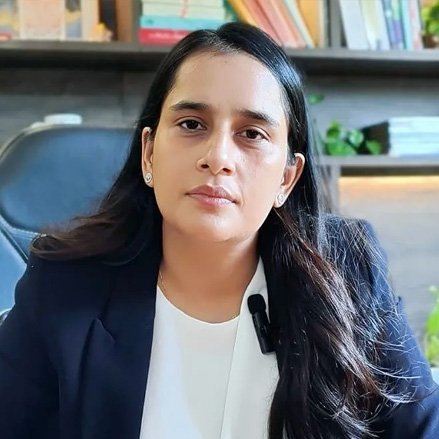
Just like the Gym is for your body, Therapy is for your Mind
Dr. Sneha Sharma
Psychiatrist, Anvaya Healthcare
Every family faces challenges—but you don’t have to navigate them alone. Our online family therapy services are designed to help families resolve conflicts, improve communication, and rebuild stronger emotional connections from the comfort of home.
Helped
Specialists
Online Access
Satisfaction Rate
Every family faces challenges—but you don’t have to navigate them alone. Family counselling is an effective way to resolve conflicts with your loved ones and build healthier relationships.
If you are looking for online family therapy, we are here to help. Anvaya Healthcare is a trusted platform where our team works remotely to provide professional and compassionate family counselling services.
Led by experienced and certified online family therapists, we offer structured, confidential, and evidence-based support for a wide range of family issues—including relationship conflicts, parenting struggles, marital stress, and emotional disconnect. Whether you’re dealing with a specific family problem or looking to strengthen your bond, our sessions are tailored to meet your family’s unique needs.
With affordable online family counselling, flexible scheduling, and pan-India access, getting professional help has never been easier. Start your journey toward a healthier, happier family today.
Sessions are conducted by certified family therapists who specialize in resolving complex family dynamics, relationship conflicts, and emotional challenges.
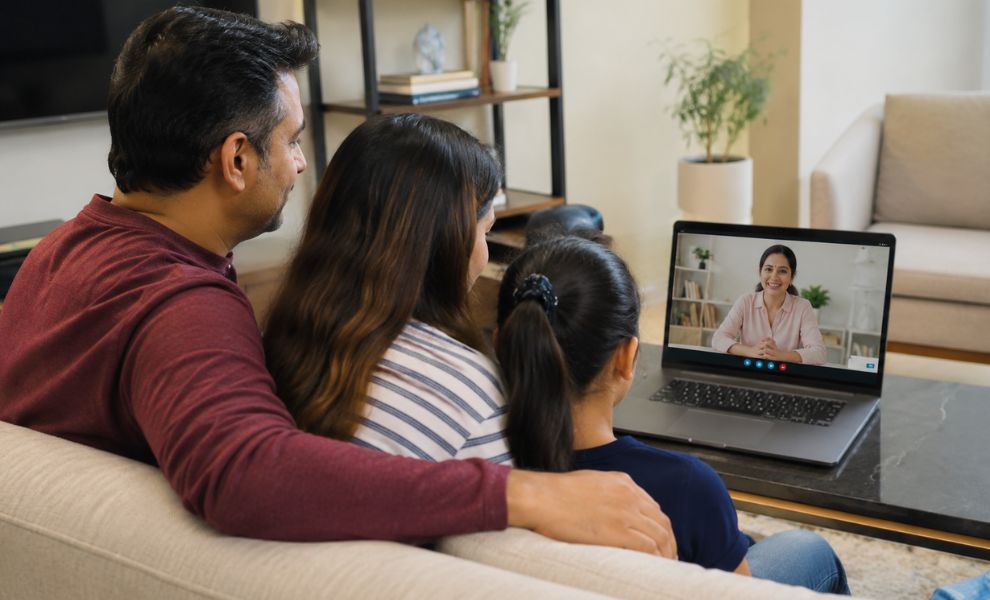
Online family therapy allows you to connect with a professional therapist from anywhere, making it easier for all family members to participate without location barriers.
Our structured online sessions are private, secure, and designed to fit your schedule—helping families communicate better and build stronger relationships from the comfort of home.
Counselling Psychologist & Behavioral Therapist
Counselling Psychologist
Consultant Psychiatrist | Co-Founder
Psychiatrist
Psychiatrist & Addiction Specialist
Psychiatrist
Clinical Psychologist
Loading booking form…
A psychiatrist (MBBS + MD in Psychiatry) becomes relevant when a family member has a diagnosed psychiatric condition — severe depression, bipolar disorder, schizophrenia, substance use disorder — that is significantly affecting the family system. In those cases, managing the psychiatric condition is part of the family work, with the psychological and relational dimensions addressed in parallel.
A clinical psychologist (M.Phil. + RCI registration) trained in family and systemic therapy is the primary provider for most family therapy presentations. Systemic approaches — understanding how family members influence each other, how roles develop and persist, how communication patterns maintain conflict — are at the core of family therapy. Specific evidence-based models include Structural Family Therapy, Strategic Family Therapy, and Narrative Therapy.
A counselling psychologist focuses on everyday life challenges like relationship issues, parenting stress, emotional conflicts, etc. They provide online family counselling services and help families build better understanding and coping strategies.
A family therapist is specifically trained in family systems and relationship dynamics. They work with multiple family members together and focus on improving interaction patterns, communication, and emotional bonds.
family members who can’t talk without it escalating, or who have stopped talking at all. These patterns are almost always about more than communication style — they reflect relationship structure, conflict history, and unspoken rules about what can and cannot be said.
the parent who can’t reach their teenager, the adult child whose relationship with parents is still structured around childhood dynamics, the family where one child’s behaviour has become the focus of ongoing tension.
communication breakdown, recurring conflict, the aftermath of infidelity, preparing for separation, managing co-parenting. Couples are worked with as part of the broader family system, not separately from it.
step-relationships, divided loyalties, the grief of family dissolution alongside the complexity of reconstitution. Emotional and behavioural issues in children that are best addressed through family work because the behaviour is usually a communication about something in the family system.
You can book an online CBT session at Anvaya Healthcare by phone or through the website. The starting point depends on your condition, ensuring the right professional guides the assessment and treatment process from the beginning.
Book your session online or call us to get started. Our platform supports multiple participants, allowing two or more family members to join sessions easily from different locations.
The first session focuses on understanding the family system—who is involved, what each member perceives as the problem, and the history behind it. Different perspectives are welcomed, as they form the foundation of therapy.
Goals are set collaboratively with all members. Family therapy focuses on understanding patterns, not assigning blame. A structured plan is created to improve communication, resolve conflicts, and strengthen relationships.
Sessions may involve the full family, smaller groups, or individuals as needed. Progress is tracked based on agreed goals—like improved communication and reduced conflict. Follow-ups help reinforce changes, with sessions gradually reducing over time.
Family therapy views the family as a connected system, where each member influences the other. Therapists identify patterns, roles, and dynamics that keep problems ongoing—even when no one wants them.
Focuses on improving how family members express and understand each other. It addresses common issues like misunderstandings, assumptions, and feeling unheard, while teaching practical communication skills.
Helps families manage disagreements in a healthier way. The goal is not to eliminate conflict, but to change how it is handled—reducing escalation and improving mutual understanding.
Targets specific behaviour patterns and family roles. By changing actions and recognizing roles (like “peacekeeper” or “responsible child”), families can break unhealthy cycles and create positive change.
Geography stops being an obstacle. A family where members are in different cities — or different countries — can participate in the same session. That makes family therapy available to families it was previously inaccessible to. Privacy matters. Family conflict is personal, and the fear of being seen seeking help — or of any family member being identified as “the problem” — keeps many families from accessing support. An online session at home, invisible to anyone outside the family, changes what people are willing to try.
Flexible scheduling fits around the reality that coordinating multiple people’s schedules is already difficult. Affordable compared to equivalent in-person specialist family therapy. Accessible across India through Anvaya Healthcare, including in regions where family therapists with specific training don’t exist. Continuous support between sessions is built in — the family leaves each session with specific things to try, and the next session reviews what happened.
Family therapy sessions at Anvaya Healthcare typically run ₹1,500 to ₹8,000 per session, depending on the therapist’s experience and the number of participants.
The clinical psychologists and psychiatrists at Anvaya Healthcare trained at AIIMS, NIMHANS, IHBAS, Lady Hardinge Medical College, and VIMHANS. Family and systemic therapy is a specialised orientation within clinical psychology — it requires additional training beyond the standard M.Phil. curriculum. Not all clinical psychologists have that training. The therapists at Anvaya Healthcare who deliver family therapy do. Treatment is personalised. A blended family navigating step-parent relationships is a different clinical situation from a nuclear family where a child’s mental health condition has reorganised the entire family system. The approach is built around the specific family — their structure, their history, their goals.
We don’t treat individuals in isolation. Family therapy looks at patterns — how communication, roles, and reactions between members shape the problem and keep it going.
Every family is different. Whether it’s parenting challenges, marital conflict, or step-family dynamics, therapy is tailored to your structure, history, and goals — not a fixed method.
Learn practical tools to express concerns without blame, listen effectively, and break cycles of arguments, silence, or misunderstanding.
Family discussions can be sensitive. Sessions are conducted in a structured, non-judgmental environment with complete privacy and professional guidance.
Join sessions from home — even if family members are in different cities. Online therapy makes it easier for everyone to participate consistently.
Before the first session, identify the two or three issues that feel most pressing. Be specific: “we can’t talk about money without it becoming a fight” is more useful than “we don’t communicate well.” Involve all family members relevant to the presenting issues. Family therapy with one person representing the system has limited reach — the patterns only become visible when the system is present.
Prepare a rough history of how the conflict developed. When did it start? Was there a specific event? What has already been tried? That context helps the therapist understand the pattern faster. Private, low-distraction environment for each participant. If members join from different locations, everyone needs their own quiet space — not gathered around one screen, which changes the session dynamics.
Come prepared to hear things that are uncomfortable. Family therapy often means discovering the problem looks different from other perspectives. That discomfort is usually where the most useful work begins.
Yes. Research supports online family therapy producing comparable outcomes to in-person for communication difficulties, conflict, parent-child issues, and relational work. The platform accommodates multiple participants, which is what family therapy requires.
Each family member joins via their own device or shares a screen. The logistics are discussed when booking — the session format is adjusted to include whoever needs to be present.
A standard family therapy session runs 60 to 90 minutes. Longer than individual therapy, because working with multiple people requires more time for everyone's perspective to be heard and for the therapeutic work to unfold. Initial assessment sessions are typically at the longer end.
Yes, counselling is confidential. Your information is kept private and secure.
Family conflict, communication breakdown, parent-child difficulties, marital issues, blended family challenges, a family member's mental health condition affecting the family system, and child behavioural issues best addressed through family work.
Through Anvaya Healthcare's website or by calling any of the three branches — Dwarka, Vasant Vihar, or Gurugram. Online and in-clinic options are both available.
Second floor, Plot No 28,
Sector-12A Rd, Block A,
Sector 12 Dwarka
Call Now: +91-9810659825
Ground Floor, Plot No. - E-7/5, Block E,
Vasant Vihar, South Delhi
Call Now: +91-9650277301
1 in every 5 individuals
suffers from some form of mental health illness