Between local train commutes that stretch across hours, twelve-hour workdays, the density of the city itself, and the particular kind of loneliness that can exist in a place with over twenty million people — the conditions that drive people toward needing support are exactly the conditions that make accessing it difficult.
Online mental health therapy changes that equation. Instead of adding a clinic visit to an already-exhausting schedule, a person in Andheri, Bandra, Thane, or Navi Mumbai can speak with an experienced therapist from wherever they are — at home, during a lunch break, or after the children are asleep. The session happens; the commute doesn’t.
The need is real. Urban India has a mental health disorder prevalence of 13.5%, compared to 6.9% in rural areas — a pattern that reflects the specific pressures of city life. A NIMHANS study found mental health disorders in 20% of Indian women and 10% of men, with urban populations among the most affected. A Practo survey found a 66% year-on-year increase in mental health consultations in 2022, with Mumbai consistently ranking among the top cities for mental health help-seeking in India. And yet, the gap between need and access remains wide.
Mental Health Concerns Our Online Therapists Work With
Anxiety and depression — the most common reasons people seek therapy across India, and particularly prevalent in urban environments where work pressure, financial stress, and social comparison all converge. Anxiety that makes daily functioning feel overwhelming. Depression that makes it hard to get through the day. Both respond well to structured, specialist-delivered therapy.
Stress and burnout — Mumbai’s professional culture produces some of the most severe burnout we see. People who’ve been running on empty for months or years, who’ve lost the ability to recover between working days, and who can no longer tell where the exhaustion ends and something more clinical begins.
Relationship and family issues — marital difficulties, communication breakdowns, conflict between partners or between generations. The particular complexity of relationships in a city where both partners are working long hours under significant pressure, often in limited living space, sometimes with extended family under the same roof.
OCD, PTSD, and trauma — obsessive-compulsive patterns consuming increasing daily time and energy, post-traumatic responses to difficult experiences, and unprocessed trauma showing up in current relationships and functioning.
Grief and emotional wellbeing — loss doesn’t wait for convenient moments. Online sessions provide the space to process what’s difficult without adding to an already heavy load.
Child, adolescent, and adult therapy — from children whose parents have noticed concerning changes, to teenagers under board exam pressure, to adults managing the accumulated weight of life demands. We work with all age groups online, with care plans specific to each.
How Online Therapy Works at Anvaya Healthcare?
The process is designed to be straightforward — the complexity is in the clinical work, not the logistics:
Booking an appointment — contact our team directly. No lengthy online forms or uncertain waiting times. You speak to someone, confirm availability, and a time is set that works for your schedule, including evenings and weekends.
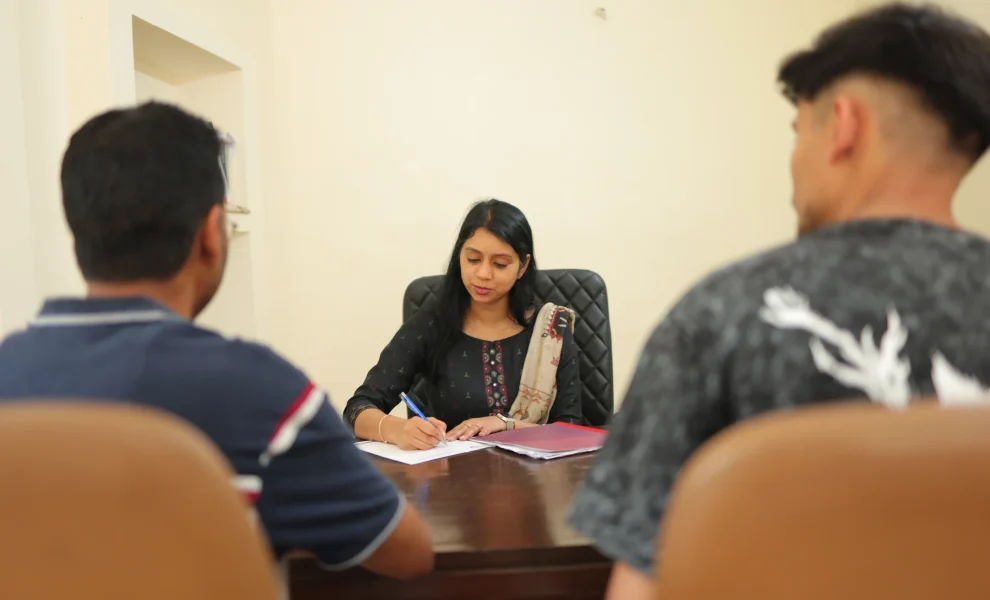
The initial assessment — a thorough first-session conversation covering what’s been happening, how long it’s been going on, what’s already been tried, and what you’re hoping to change. This typically lasts 60 to 90 minutes for a full assessment. Not a tick-box process; a genuine clinical conversation that shapes everything that follows.
Personalised treatment planning — based on the assessment, a plan is built around your specific situation. Not a generic programme applied to everyone who books; a plan that reflects your concern, your life, and what kind of support will actually work.
Video consultation sessions — conducted via a secure platform, at the agreed time, from wherever you are in Mumbai. Residents have used our service from homes in Powai and Juhu to offices in Lower Parel and BKC. All you need is a device with a camera and a reasonably private space.
Follow-ups and monitoring — regular sessions with progress tracked throughout, allowing the plan to be adjusted as things change.
Security and confidentiality — sessions are private, the platform is secure, and what’s discussed stays between you and your therapist. This matters particularly in Mumbai, where privacy in shared living spaces can feel difficult to guarantee.
Types of Therapy Available Online
Our team brings a range of therapeutic approaches, and which is used depends on the presenting concern and the individual:
Cognitive Behavioural Therapy (CBT) — the most widely researched therapy for anxiety, depression, and a range of other concerns. Works on the connection between thoughts, feelings, and behaviours, and builds practical skills for use between sessions.
Dialectical Behaviour Therapy (DBT) — particularly effective for emotional dysregulation, self-harm concerns, and situations where feelings arrive fast and are difficult to manage. Translates well to online delivery.
Psychotherapy — a broader, more exploratory form of therapy that looks at patterns across time, the impact of early experiences, and the deeper drivers of current difficulties.
Couple and family therapy — working with the relationship or family system rather than just the individual. Online sessions remove the logistical challenge of getting multiple people to a clinic — particularly relevant in a city where everyone’s schedule is different.
Child and adolescent counselling — adapted for younger clients, using approaches that fit the developmental stage. Parents are involved in ways that support the child without undermining the therapeutic space.
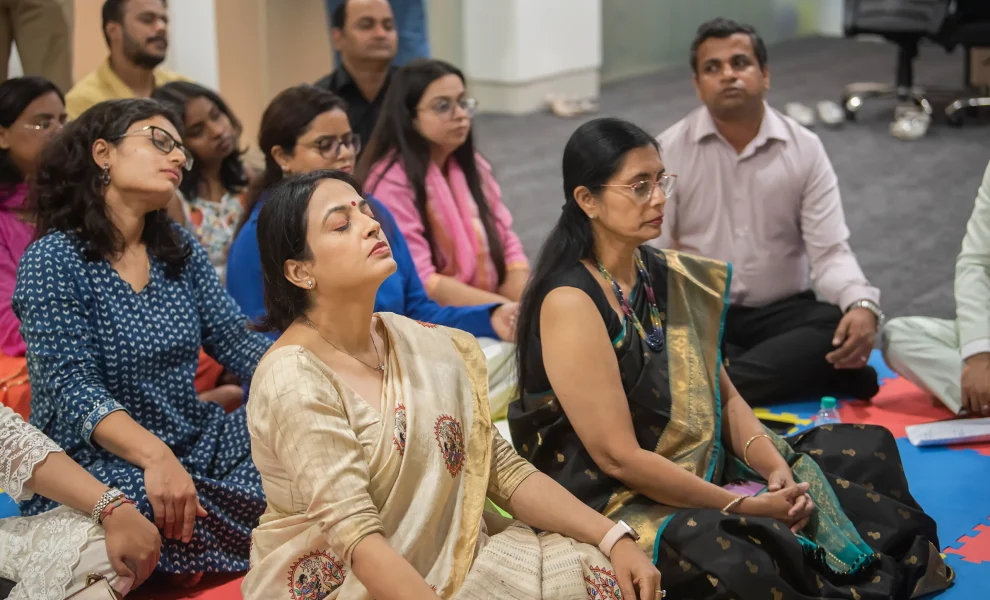
Mindfulness-based interventions — structured practices for managing stress, anxiety, and the mental overload that city life tends to produce. Practical, teachable, and usable independently between sessions.
Why Online Therapy Specifically Makes Sense in Mumbai?
This is worth saying directly rather than implying through a list of generic benefits.
Mumbai is a city where time is both scarce and consumed entirely by logistics. A 60-minute therapy session in a clinic can easily require three hours of a person’s day once travel, the Western or Harbour line during rush hour, parking, waiting, and the journey back are factored in. For someone who’s already exhausted, that’s often the thing that stops them from going at all. They intend to make an appointment; the logistics defeat them; the concern continues to worsen.
Online therapy removes that obstacle. The session happens because it fits into the day rather than requiring the day to be reorganised around it.
Privacy also matters differently in Mumbai. Many people live in close quarters — with parents, in-laws, housemates, or in buildings where neighbours are a thin wall away. Online sessions, with headphones, from a private corner or during a lunch break, can offer more real privacy than a clinic in a familiar neighbourhood. The concern that a colleague or relative will see you walking into a mental health clinic is a genuine barrier for many people. Online removes it.
Accessibility across the city matters too. Mumbai’s mental health specialists are concentrated in certain areas. A family in Vasai or Navi Mumbai faces a very different access situation from someone in Dadar. Online sessions level this out completely — the same specialist is equally reachable from anywhere in the city, at evening and weekend times that don’t require taking leave from work.
Why Anvaya Healthcare And What Is The Difference in Quality?
Finding a therapist in Mumbai isn’t the problem. The problem is finding one you can trust with something this important.
Most people seeking mental health support in India have two options: government-run mental health services, or private practitioners. Government services are important and accessible, but the reality for many people is long waiting times, limited session durations, overburdened clinicians seeing very high volumes of patients, and limited privacy in shared clinical spaces. For someone dealing with something as personal as depression, relationship breakdown, or trauma, these conditions make genuine therapeutic work difficult. The clinician may be qualified and well-intentioned; the system they’re working in doesn’t allow for the time, the continuity, or the confidentiality that therapy requires.
Private care varies enormously. A certificate from an unrecognised course and an Instagram following is not the same as a clinical psychology degree from a recognised university, a supervised internship, and years of specialist practice. The difference matters, and it’s not always easy to tell from a website.
At Anvaya Healthcare, every psychiatrist and psychologist on our team holds qualifications from institutions that are recognised as India’s highest standard in mental health training — AIIMS, NIMHANS, IHBAS, Lady Hardinge Medical College, and VIMHANS. These are not general practitioners who also see mental health cases; they are specialists whose entire clinical training and practice has been in mental health. Each holds the appropriate RCI or MCI certifications, which are the regulatory requirements for practising as a psychologist or psychiatrist in India. Treatment is evidence-based — meaning what happens in sessions is grounded in research, not improvised or adapted from generic wellness content.
For someone in Mumbai who needs to trust that they’re talking to someone genuinely qualified — not just someone who presents well — this matters. Especially for online care, where the platform is secondary to the person on the other side of the screen.
Price of Online Therapy in Mumbai
Online consultations at Anvaya Healthcare start from ₹1,500 per session. The price varies depending on the experience and qualification of the specialist — a session with a senior psychiatrist or a highly experienced clinical psychologist is priced higher than an initial session with a psychologist earlier in their career. The initial assessment, which is the most detailed session and forms the foundation of everything that follows, is priced to reflect the clinical time it requires.
For context: this is the price of specialist mental health care from a team trained at India’s top institutions — AIIMS, NIMHANS, IHBAS — delivered at a time that suits your schedule, from wherever you are in Mumbai. Many people find it comparable to, or less than, what they spend on a single dinner out, yet they postpone accessing mental health support for months or longer. The delay tends to make things harder, not easier.
Compare this to in-person specialist private care in Mumbai, where you’d also need to factor in the travel time, the consultation fee, and in many cases, longer waits for appointments with experienced practitioners.
For couple therapy or family sessions involving more than one person, pricing reflects the additional clinical time involved. The specific price for your situation — what type of specialist, how frequently, for how long — can be confirmed when you contact the team before you book anything.
There are no mandatory bundles or pre-paid packages. You pay for the sessions that happen. If your situation or schedule changes, you’re not committed to a block of sessions you can’t use.





 TALK TO US