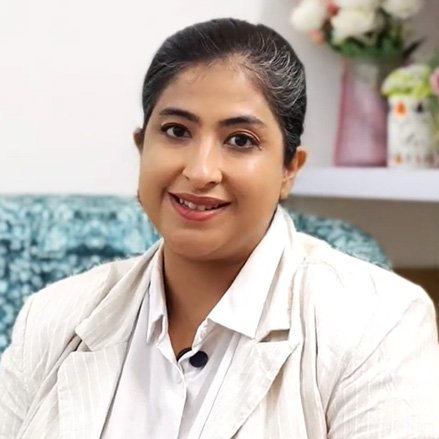


Dr. Purva Agarwal
Clinical Psychologist
PsyD, RCI (Psychology)
Experience: 3+ Years
TALK TO US
info@anvayahealthcare.com
+91-9810659825
Just like the Gym is for your body, Therapy is for your Mind
Dr. Sneha Sharma
Psychiatrist, Anvaya Healthcare
Experienced occupational therapists, psychiatrists, and psychologists trained at leading institutions such as AIIMS, LHMC, and NIMHANS provide evidence-based occupational therapy in Mumbai. Receive personalised assessments, individualised therapy plans, and compassionate support to improve daily living skills, sensory processing, motor coordination, cognitive function, and independence through online and in-person therapy.
📅 Book Consultation
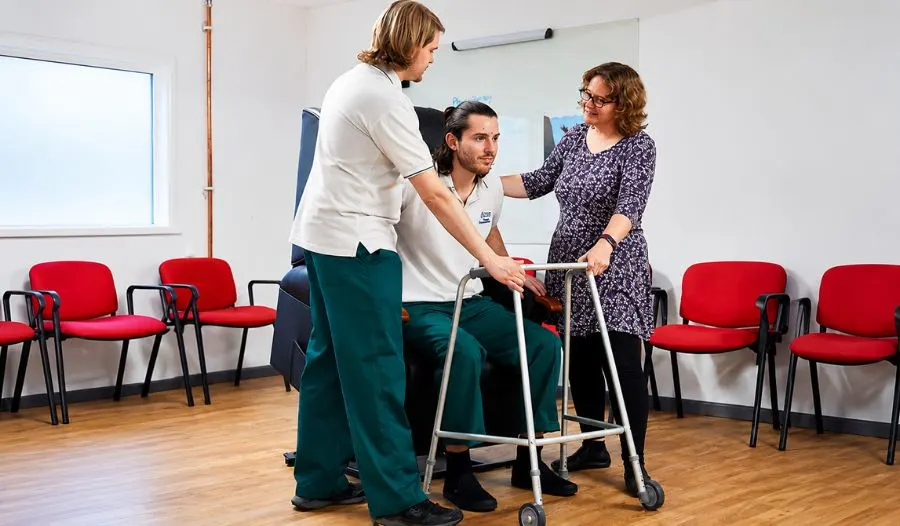
The word “occupational” throws a lot of people off. Occupational therapy isn’t about jobs — it’s about the “occupations” of everyday life: the ordinary but essential activities a person needs to do to live, learn, work, and play. For a child, that means holding a pencil, buttoning a shirt, sitting still enough to learn, and coping with a noisy classroom. For an adult recovering from injury or illness, it means regaining the ability to manage daily tasks independently.
For children in particular, occupational therapy is one of the most valuable and least understood supports available. A child who can’t hold a pencil properly, who melts down at certain sounds, who struggles with buttons and shoelaces long after their peers, or who can’t sit still to complete a task may be dismissed as careless, clumsy, or difficult — when in fact they need specific, skilled support that occupational therapy provides. The frustration this causes, often eases considerably once the underlying difficulty is understood and the right help is in place.
Autism affects around 1 in 100 Indian children under the age of 10, according to the INCLEN Trust study, and ADHD prevalence in Indian school children has been found as high as 11.3% in some studies — both conditions where occupational therapy plays an important role. Sensory processing difficulties, developmental delays, and fine-motor challenges affect many more children who never receive an assessment, often because families simply don’t know that skilled help exists, or because the nearest specialist feels out of reach.
Occupational therapy makes much of this support accessible without repeated clinic visits. While some hands-on work is best done in person, a great deal of OT — including assessment, parent coaching, home programmes, and many skill-building activities — can be delivered effectively. For families in Mumbai, where reaching a specialist clinic can mean a long, tiring journey across the city with a child who may already find travel difficult, therapy provides skilled support in a way that fits around school, work, and daily life.
Approximately 1 in 100 Indian children under 10 are affected by Autism Spectrum Disorder (ASD), where occupational therapy plays a vital role in developing daily living, sensory, and motor skills.
Studies report that up to 11.3% of Indian school children have ADHD, making occupational therapy an important part of improving attention, organisation, and everyday functioning.
Occupational therapy helps children strengthen fine motor, sensory processing, self-care, learning, and daily living skills, enabling greater independence at home, school, and beyond.
Struggling with age-appropriate tasks like dressing, eating, or self-care long after peers have managed them
Difficulty with precise hand movements: holding a pencil, using scissors, doing up buttons, or manipulating small objects
Messy, laboured, or slow handwriting, difficulty forming letters, or avoidance of writing tasks
Strong reactions to sounds, textures, lights, or movement, or the opposite — seeking out intense sensory input constantly
Clumsiness, frequent bumping or falling, or difficulty with activities that need balance and body awareness
Difficulty sustaining attention, staying organised, or managing the routines of daily life independently
Difficulties that show up as struggles in the classroom, particularly with writing, organisation, and staying on task
OT helps autistic children with sensory processing, daily-living skills, motor coordination, and emotional regulation, forming a key part of the multidisciplinary support autism requires.
For children with attention and impulse difficulties, OT supports the self-regulation, organisation, and motor skills that help them function better at school and at home.
Where a child is behind on developmental milestones, OT helps build the underlying skills needed to catch up in movement, self-care, and daily function.
One of the core areas of OT. Children who are over- or under-sensitive to sensory input — sound, touch, movement — are helped to process and respond to the world more comfortably and with less distress.
Difficulties with the small, precise movements needed for writing, drawing, using cutlery, and managing fasteners, all of which OT directly addresses.
OT supports the motor, visual-processing, and organisational skills that underpin learning, complementing educational and psychological support.
Schedule an initial consultation with our occupational therapy team at a convenient time, including evenings and weekends, to discuss your concerns and therapy goals.
Our therapist evaluates daily challenges, developmental history, functional skills, sensory processing, motor coordination, self-care abilities, and attention to understand strengths and areas requiring support.
Based on the assessment, we create a tailored treatment plan with practical goals such as improving handwriting, dressing independently, sensory regulation, coordination, and everyday functional skills.
Participate in engaging online therapy sessions with guided home activities and regular follow-ups. We continuously monitor progress, adjust the treatment plan, and provide ongoing support to help achieve lasting improvements.
Structured activities that help a child process and respond to sensory input more comfortably, adapted for the home setting with the therapist's guidance and the family's own materials.
Targeted activities to build the precise hand and finger movements needed for writing, self-care, and everyday tasks, using simple materials available at home rather than specialised clinic equipment.
Exercises and games that develop the larger movements, balance, and coordination that underpin physical confidence and participation in play and sport.
Structured work on the specific components of handwriting — grip, letter formation, spacing, and control — one of the most common reasons children are referred for OT, and one that translates well to online guidance.
Building independence in daily-living tasks like dressing, grooming, and eating, broken into achievable steps the child can master one at a time.
Supporting attention, planning, sequencing, and organisation, the underlying skills that help a child manage tasks and routines independently.
Teaching parents the techniques and activities to use throughout the day, which is where much of the real, lasting progress in OT is built. For Mumbai parents managing busy schedules, this turns everyday home routines into opportunities for their child's development rather than requiring separate dedicated therapy time.
Clinical Psychologist
PsyD, RCI (Psychology)
Experience: 3+ Years
TALK TO US
Clinical Psychologist
M.A & M.Phil (Clinical Psychology)
Experience: 3+ Years
TALK TO US
Child Psychologist
M.A (Psychology)
Experience: 9+ Years
TALK TO US
Counselling Psychologist & Behavioral Therapist
MA - Psychology
Experience: 13+ Years
TALK TO US
Clinical Psychologist
MA & M.Phil (Clinical Psychology)
Experience: 3+ Years
TALK TO US
Counselling Psychologist
M.Phil.Ed, M.S.Ed
Experience: 4+ Years
TALK TO US
Clinical Psychologist
MA & M.Phil (Clinical Psychology)
Experience: 7+ Years
TALK TO US
Clinical Psychologist
MA (Clinical Psychology), RCI Registered
Experience: 5+ Years
TALK TO US
Clinical Psychologist
M.Phil. | MA | PG Diploma in Counselling & Family Therapy
VIEW PROFILEClinical Psychologist
M.Phil. | MA | PG Diploma in Counselling & Family Therapy
Experience: 3+ Years
TALK TO US
Clinical Psychologist
M.Phil (Clinical Psychology)
Experience: 15+ Years
TALK TO US
Clinical Psychologist
M.Phil in Clinical Psychology (IHBAS, Delhi University)
VIEW PROFILEClinical Psychologist
M.Phil in Clinical Psychology (IHBAS, Delhi University)
Experience: 2+ Years
TALK TO US
Counselling Psychologist
M.A. Clinical Psychology | PG Diploma in Guidance & Counselling (PGDGC)
VIEW PROFILECounselling Psychologist
M.A. Clinical Psychology | PG Diploma in Guidance & Counselling (PGDGC)
Experience: 3+ Years
TALK TO US
Clinical Psychologist
M.Phil. Clinical Psychology (IHBAS)
Experience: 3+ Years
TALK TO US
Children are more relaxed in their own environment, and the therapist sees the child in the real setting where skills need to be used, with the family's own materials to hand. This often gives a more accurate picture than a clinic visit does
Sessions fitted around school and both parents' work, at times that suit Mumbai's demanding schedules, without pulling a child out of school for clinic visits across the city
No clinic waiting room and no commute across Mumbai, which is particularly valuable for children who find travel and new places stressful
Online OT naturally puts parents at the centre, which is exactly where the work is most effective, since so much of OT happens in everyday routines rather than in the session itself
Mumbai families can consult skilled occupational therapists without those specialists needing to be physically based nearby, widening access well beyond whichever clinic happens to be local
For families who relocate away from Mumbai or travel frequently, online OT continues without the disruption of finding a new therapist and starting the assessment over
Transparent pricing for occupational therapy in Mumbai. Review our consultation fees before booking an appointment with an experienced occupational therapist. Treatment includes comprehensive assessments, sensory integration, motor skill development, self-care training, parent guidance, personalised therapy plans, and ongoing follow-up to improve daily functioning and independence.
Our occupational therapists work within a genuinely multidisciplinary team — alongside child psychiatrists and psychologists — which matters, because the children who need OT often have needs that span several areas. A child with autism, ADHD, or a learning difficulty benefits from OT that’s joined up with the rest of their care rather than delivered in isolation, and our team is built to provide exactly that coordination. Instead of a family having to piece together separate providers who never speak to each other, the different strands of a child’s support are held together in one place.
Interventions are evidence-based. Occupational therapy, like autism support, attracts a fair amount of unproven approaches and quick-fix claims, and families under pressure are vulnerable to them. What we offer is grounded in established OT practice and genuine clinical evidence, not fashionable but unsupported methods that promise more than they deliver.
Every plan at Anvaya Healthcare is personalised. OT is never one-size-fits-all — the assessment builds a detailed picture of the individual child’s specific profile, and the plan is shaped around it and reviewed regularly as the child develops and new goals come into focus.
For Mumbai families comparing options, government developmental and rehabilitation services are important but typically carry long waiting times and limited session frequency — constraints that are especially costly in OT, where consistent, regular practice is what drives progress. A child who is seen only occasionally, with long gaps between sessions, makes far slower progress than one who has reliable, regular support. Consistent access to the same therapist over time makes a real difference to outcomes.
Everyday independence starts with the right support. Experienced occupational therapists provide personalised, evidence-based care to help children and adults develop essential motor, sensory, self-care, and daily living skills for greater confidence and independence.
Every individual has unique strengths and challenges. Occupational therapy is personalised to each person's developmental needs, functional abilities, daily routines, and goals, ensuring practical support that builds independence and confidence in everyday life.
Your privacy and confidentiality are our priority. Every assessment, therapy session, and discussion is handled with complete professionalism and discretion, creating a safe, supportive, and non-judgemental environment where children, adults, and families can openly discuss challenges, participate in therapy, and work towards meaningful improvements in everyday life and independence.
At Anvaya Healthcare, our occupational therapists work closely with psychiatrists, psychologists, and other mental health professionals to provide coordinated, evidence-based care tailored to each individual's functional goals and developmental needs.
Same quality of psychiatric care wherever you are, with continuity over years.
Yes, for many aspects of OT — particularly assessment, parent coaching, home programmes, handwriting work, and skill-building activities that can be guided remotely. Research supports tele-occupational therapy for a range of needs. Some hands-on work is better done in person, and the Anvaya Healthcare team will advise clearly where an in-person session would help, so families always know what suits their situation rather than being promised that everything works equally well online.
OT helps children with autism, ADHD, developmental delays, sensory difficulties, coordination problems, and handwriting or fine-motor challenges, as well as adults recovering from injury or neurological conditions. Anyone struggling with the practical activities of daily life because of a developmental, sensory, or physical difficulty may benefit from an assessment.
This depends on the child’s needs and goals. OT is usually an ongoing process rather than a fixed course, with regular sessions over a period of months and the focus shifting as skills develop. The plan is reviewed regularly and adjusted to the child’s progress rather than following a set number decided in advance.
Yes — and for children, parent participation is essential rather than optional. Much of OT is delivered through equipping parents to carry out activities at home, and online sessions make consistent parent involvement easier than clinic visits often allow for busy Mumbai families.
Yes — online occupational therapy is available for families anywhere in India, including all of Mumbai. Contact us to book an initial assessment, and the team will guide you through the process and what support would suit your child.
Chats continue on WhatsApp. Please avoid sharing clinical details here.