

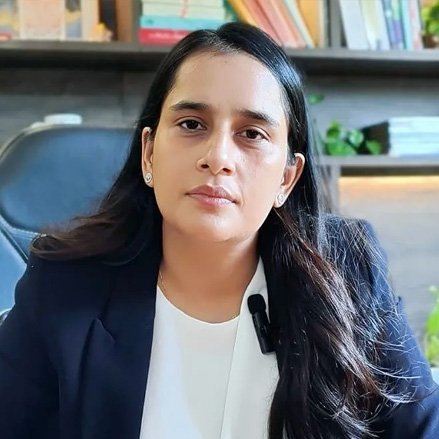
Just like the Gym is for your body, Therapy is for your Mind
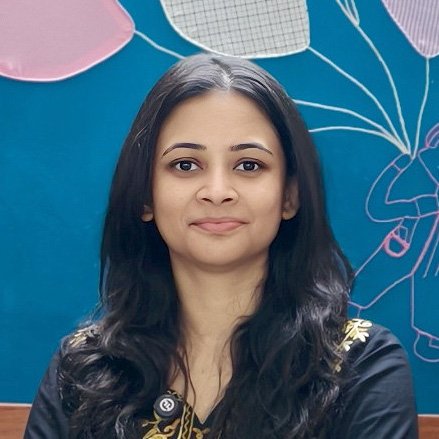
Dr. Sneha Sharma
Psychiatrist, Anvaya Healthcare
Get expert online OCD treatment from Anvaya Healthcare. We have an experienced team of psychologists and psychiatrists trained at AIIMS, Lady Hardinge Medical College, and NIMHANS. Access therapy, counselling, and medication support from the comfort of your home, anywhere in India. Enjoy 100% personalized care that is confidential, secure, and insurance-covered.
Patients Helped
Specialists
Online Access
Satisfaction Rate
OCD gets misrepresented more than almost any mental health condition. Most people hear “OCD” and think of someone who likes things neat. The actual experience is nothing like that — it’s intrusive, exhausting, and quietly takes over large portions of a person’s life without anyone around them understanding what’s happening.
Globally, OCD affects roughly 1 to 2% of the population. A large-scale study among college students in Kerala found a point prevalence of 3.3% among young adults. The average time between first symptoms and a proper diagnosis is 14 to 17 years — most of adolescence and early adulthood spent managing an untreated condition.
OCD responds well to treatment. ERP — Exposure and Response Prevention — is among the most effective psychological interventions in psychiatry. Medication helps many people alongside it. Getting to the right treatment requires the right professional, and platforms like Anvaya Healthcare make that accessible to people across India.
OCD affects roughly 1 to 2% of the population globally.
Average time between first symptoms and a proper diagnosis is 14 to 17 years. Most of adolescence and early adulthood spent managing an untreated condition.
Psychiatrists can legally prescribe antipsychotics online under India's Telemedicine Guidelines 2020
A psychiatrist (MBBS + MD in Psychiatry) assesses severity, diagnoses OCD, and manages medication where appropriate. For moderate to severe OCD — where the rituals and obsessions are consuming several hours a day — SSRIs prescribed by a psychiatrist significantly reduce symptom intensity and make engagement with therapy more manageable. Only a psychiatrist can prescribe.
A clinical psychologist (M.Phil. + RCI registration) delivers ERP, which is the gold-standard therapy for OCD. ERP requires skill to calibrate correctly — move too fast and the patient overwhelmed, too slow and nothing changes. That calibration is clinical work, not something that can be self-guided effectively.
For OCD specifically, medication and therapy working in coordination consistently outperform either alone — which is why integrated care between psychiatrist and psychologist matters.
The thing about OCD: the person experiencing it usually knows their obsessions are irrational.
The person experiencing it usually knows their obsessions are irrational. That's part of what makes it so distressing. They know checking the lock twice doesn't change whether it's locked. They know the intrusive thought doesn't reflect who they are. And they can't stop. Obsessions are unwanted intrusive thoughts — fears of contamination, harm, doing something terrible, getting things wrong. They attach to things that don't warrant that level of attention and refuse to let go.
Compulsions are the behaviours that temporarily relieve the anxiety: checking, counting, cleaning, arranging, seeking reassurance. Temporary is the key word. The relief lasts briefly, the anxiety returns, and the cycle repeats. Severe OCD can consume several hours daily. Work suffers. Relationships suffer. The person withdraws rather than explain, because they know it sounds strange. If any of this sounds familiar — for yourself or someone you care about — a proper assessment is the right next step.
You book a session. At Anvaya Healthcare, you can start with a psychiatrist or a psychologist. For most OCD cases, starting with a psychiatric assessment helps determine severity and whether medication is needed.
Book your session online or by phone. Our team guides you on whether to begin with a psychiatrist or psychologist. For OCD, a psychiatric assessment is often recommended first.
A detailed evaluation covering obsessions, compulsions, duration, daily impact, and past treatment. The assessment follows DSM-5 criteria and is never rushed.
Diagnosis is established clinically. Medication, such as SSRIs, is introduced when required and prescribed legally under India’s Telemedicine Practice Guidelines (2020).
Therapy focuses on ERP (Exposure and Response Prevention). Regular follow-ups track progress, reduction in compulsions, and ability to resist them—ensuring long-term improvement.
ERP — Exposure and Response Prevention — is the treatment of choice for OCD. You expose yourself to what triggers the obsession. You resist the compulsion. You let the anxiety rise and fall on its own, learning through repeated experience that the feared outcome doesn’t happen and the discomfort is survivable. Over time, the anxiety response weakens. The compulsive urge reduces. It requires a skilled therapist who can build an exposure hierarchy that’s challenging but not overwhelming, and who can support the person through sitting with uncertainty
SSRIs at higher doses than typically used for depression are effective for OCD and often prescribed alongside ERP. They reduce obsession intensity enough that therapy becomes more manageable. For most people, the combination outperforms either alone.
Psychoeducation comes first — helping the person and their family understand what OCD is, why reassurance-seeking reinforces the cycle rather than breaking it, and what treatment involves. No two people’s OCD looks the same, and the therapy plan needs to reflect that.
Consultant Psychiatrist | Co-Founder
Psychiatrist
Psychiatrist & Addiction Specialist
Psychiatrist
Consultant Psychiatrist
Clinical Psychologist
Loading booking form…
Privacy is particularly meaningful for people with OCD. The content of obsessions is often deeply embarrassing — taboo thoughts, fears of harming loved ones, sexual intrusive thoughts. A significant number of people with OCD have never told anyone what their obsessions actually involve. Consulting from home, privately, makes it easier to be fully honest in a way that changes the quality of the assessment and the therapy. Convenience matters for long-term treatment — OCD therapy, especially ERP, takes time. Online sessions that fit around work and family make it realistic to sustain. Affordability compared to private in-person care in major cities is real. Pan India reach via Anvaya Healthcare means people outside Delhi, Mumbai, and Bengaluru can access therapists with actual ERP expertise — which is rarer than it should be even in the metros. Continuous support between sessions is part of the process, not an optional extra.
Insurance coverage for outpatient psychological therapy is improving under the Mental Healthcare Act 2017, though OPD coverage varies across policies. Check the relevant clause in your plan before assuming you’re fully self-funding.
₹1500 – ₹2,500 per session
₹1,500 – ₹5,500 per session
The clinical team at Anvaya Healthcare trained at AIIMS, NIMHANS, IHBAS, Lady Hardinge Medical College, and VIMHANS. NIMHANS in Bengaluru has been one of India’s most active centres for OCD research — having that clinical lineage in the team matters when specific ERP expertise is what the condition requires.
Treatment is evidence-based and calibrated to the individual. OCD severity varies enormously — from someone spending 30 minutes daily on rituals to someone nearly disabled by the condition. The approach reflects that. Confidential, easy to book, available across India. Psychiatry and psychology within the same clinical setting means medication and therapy decisions are made with awareness of each other.
For OCD, where medication management over years requires careful clinical judgement, training depth matters in ways that are hard to overstate.
Treatment is built around the individual — history, symptoms, family context, and goals for recovery. Not a standard protocol applied to everyone.
Consult from home. The stigma around OCD in India is among the harshest. Privacy is a clinical necessity, not just a feature.
When both work in coordination, outcomes are substantially better. At Anvaya, that coordination actually happens — both are within the same clinical setting.
A family in Kanpur, Bhopal, or any smaller city gets the same quality of psychiatric expertise as someone in South Delhi. That's the whole point.
Before the first session, track your obsessions and compulsions for a few days. Write down what the obsession involves, what the compulsion is, roughly how long each cycle takes, and what situations trigger it. This specificity helps the clinician assess accurately from the start. Bring your medical and therapy history — any previous OCD diagnoses, medications tried, therapy attempted. Whether previous therapy specifically included ERP matters — many people with OCD have had general counselling that wasn’t ERP, and the clinician needs to know that.
List your main triggers and patterns. What reliably sets things off? What does a bad day look like? The more specific, the better the treatment plan. Private, stable environment for the session. And come ready to actively participate in therapy — ERP is not passive. The exposures work because the person does them. The therapist guides, supports, and calibrates, but can’t do the hard part for you. Arriving prepared and committed makes a real difference to outcomes.
Yes. ERP delivered online has been shown to produce comparable outcomes to in-person delivery across multiple studies. The key is working with a therapist specifically trained in ERP, not just general CBT.
Yes. The psychiatrists are qualified medical doctors, registered with state medical councils, and legally permitted to prescribe SSRIs and other medications via online consultation under India's Telemedicine Practice Guidelines (2020).
A typical ERP course runs 16 to 20 sessions, sometimes longer for severe presentations. Many people see meaningful improvement within 12 weeks. Maintenance sessions may continue afterwards.
Yes. ERP works well in an online format — the exposures typically happen in the person's own environment anyway, which can actually make the online format advantageous.
Yes, It is confidential.
For mild to moderate OCD — start with a psychologist trained specifically in ERP. For moderate to severe, or where medication may help — start with a psychiatrist, or see both. Therapist experience in OCD specifically matters more here than general mental health experience.
Second floor, Plot No 28,
Sector-12A Rd, Block A,
Sector 12 Dwarka
Call Now: +91-9810659825
Ground Floor, Plot No. - E-7/5, Block E,
Vasant Vihar, South Delhi
Call Now: +91-9650277301
1 in every 5 individuals
suffers from some form of mental health illness