

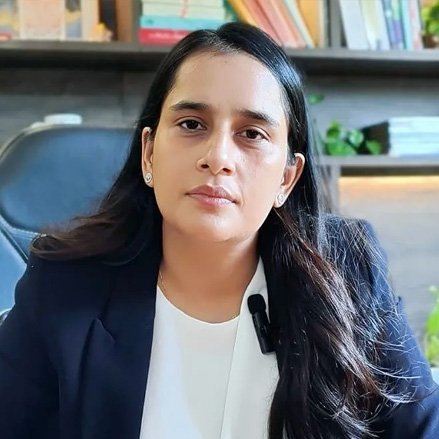
Dr. Sneha Sharma
Consultant Psychiatrist | De-Addiction Specialist
MBBS, MD (Psychiatry)
VIEW PROFILEDr. Sneha Sharma
Consultant Psychiatrist | De-Addiction Specialist
MBBS, MD (Psychiatry)
Experience: 14+ Years
TALK TO US
info@anvayahealthcare.com
+91-9810659825
Just like the Gym is for your body, Therapy is for your Mind
Dr. Sneha Sharma
Psychiatrist, Anvaya Healthcare
Expert schizophrenia treatment from psychiatrists, clinical psychologists, and mental health professionals trained at AIIMS, NIMHANS, and IHBAS. From comprehensive psychiatric evaluation and accurate diagnosis to personalised treatment planning, medication management, psychotherapy, family support, rehabilitation strategies, and ongoing monitoring, we provide comprehensive, evidence-based care online across Mumbai. Our confidential and compassionate approach focuses on reducing symptoms, improving daily functioning, preventing relapse, and supporting long-term recovery, helping individuals with schizophrenia lead healthier, more independent, and fulfilling lives.
📅 Book Consultation
Schizophrenia is among the most misunderstood mental health conditions in India. The images most people associate with it — extreme behaviour, danger, permanent incapacity — don’t reflect the reality of how most people with schizophrenia actually live, particularly when the condition is properly diagnosed and managed. With consistent treatment, many people with schizophrenia maintain meaningful relationships, hold jobs, and live largely ordinary lives.
What schizophrenia involves is a disruption in how the brain processes reality — through hallucinations, delusions, disorganised thinking, and a flattening of emotional expression and motivation. It is not the same as having a “split personality,” a common misconception that damages how families understand and respond to the condition. Schizophrenia is a chronic but manageable psychiatric condition, distinct from brief psychotic episodes that can occur in the context of extreme stress, substance use, or other conditions.
The scale in India is significant. India’s National Mental Health Survey found a lifetime prevalence of schizophrenia spectrum disorders at 1.41%, with a current prevalence of 0.42%, and a treatment gap of 72% nationally. An estimated 3.5 million Indians are affected by schizophrenia, the majority receiving inadequate or no treatment. Those who do access care often do so through traditional healers or religious institutions before reaching medical care, typically after years of untreated illness. The consequences of delayed treatment are well-documented: the longer schizophrenia goes untreated, the harder stability and recovery become.
For Mumbai families supporting a relative with schizophrenia, the practical barriers to consistent psychiatric care are significant — time, travel, stigma, and the difficulty of bringing someone who may be resistant to care to a clinic repeatedly over months and years. Virtual consultation doesn’t replace all in-person psychiatric care for schizophrenia, but it makes a meaningful portion of that care — regular follow-ups, medication reviews, psychoeducation, and family support — genuinely accessible for Mumbai residents who would otherwise struggle to maintain the consistency that good schizophrenia management requires.
India's National Mental Health Survey reported that approximately 1.41% of the population experiences schizophrenia spectrum disorders during their lifetime, highlighting the substantial need for accessible psychiatric care and long-term support.
Despite effective treatments being available, an estimated 72% of people living with schizophrenia in India do not receive adequate mental health care, often due to stigma, lack of awareness, delayed diagnosis, or limited access to specialist services.
An estimated 3.5 million people in India live with schizophrenia. Early diagnosis, evidence-based treatment, medication management, psychotherapy, and family support can significantly improve long-term outcomes and quality of life.
A psychiatrist (MBBS + MD in Psychiatry) plays a central role in the diagnosis and treatment of schizophrenia. They conduct a comprehensive psychiatric evaluation, assess symptoms such as hallucinations, delusions, disorganised thinking, and negative symptoms, and develop an individualised treatment plan. Medication is often a key component of schizophrenia treatment, helping to reduce psychotic symptoms, prevent relapse, and improve overall functioning. Psychiatrists also provide ongoing monitoring, medication adjustments, and long-term management to support recovery and stability.
A clinical psychologist (M.Phil. with RCI registration) provides evidence-based psychological interventions that complement psychiatric treatment. Therapy focuses on helping individuals understand their condition, improve coping skills, manage distress associated with symptoms, and enhance daily functioning. Clinical psychologists also work with families through psychoeducation and support programmes, helping caregivers better understand schizophrenia, improve communication, and create a supportive environment that promotes recovery and reduces the risk of relapse.
A family member noticing several of these changes, particularly in combination and over several weeks, should seek psychiatric evaluation promptly. Early intervention in schizophrenia produces significantly better outcomes than delayed treatment.
Hearing voices that others can't hear is the most common form, but hallucinations can involve any sense. The voices are often critical or commanding, and the person experiencing them perceives them as entirely real
Fixed beliefs that aren't based in reality: that someone is persecuting them, that they have a special mission or identity, that others can read or broadcast their thoughts. These beliefs are held with certainty and aren't changed by evidence or reassurance
Speech that jumps between unrelated ideas, responses that don't follow the conversation, difficulty completing a chain of thought. This is often the first thing family members notice, even before hallucinations become apparent
Pulling away from friends, family, and activities, sometimes as a consequence of hallucinations or delusions (believing others mean them harm), sometimes as a symptom in its own right
A flattening of affect; the person's face and voice convey less than usual, they seem less engaged with what's happening around them, they lose interest in things they previously cared about
Problems with memory, concentration, and planning that affect the ability to manage daily life, hold a job, or study
A progressive drop from the person's previous level of functioning in work, self-care, or relationships, particularly in a young person in their late teens or twenties
Schizophrenia has a significant hereditary component. A first-degree relative with schizophrenia increases an individual's risk, though the majority of people with schizophrenia have no family history of the condition.
Disruptions in dopamine and glutamate neurotransmitter systems, and differences in brain structure that may develop during foetal development, are consistently implicated. This is a biological condition with neurological roots.
Beyond genetics, family environments with high chronic stress, or early exposure to significant adversity, are associated with higher risk, particularly in those already genetically predisposed.
Urban environments are associated with higher rates of schizophrenia, with the mechanism thought to involve chronic social stress, social isolation, and early-life adversity. Mumbai's high-density, high-pressure urban environment is specifically the type of setting that research links to elevated risk.
Cannabis use, particularly during adolescence and in heavy, regular patterns, is one of the most consistently documented environmental risk factors for triggering schizophrenia in genetically vulnerable individuals. Other substance use can also precipitate or worsen psychosis.
A period of declining functioning, increasing social withdrawal, and unusual or magical thinking often precedes the first full psychotic episode by months or years. Identifying and intervening during this period — before psychosis develops — can significantly alter the trajectory.
What consultation does very well in schizophrenia:
The first consultation involves a detailed psychiatric history taken with family members present. In schizophrenia, the family's account of symptoms and progression is often the most reliable clinical information available. This assessment helps our specialists understand symptom patterns, functional difficulties, medical history, and treatment needs before developing a care plan.
Establishing the correct diagnosis and distinguishing schizophrenia from other psychotic disorders, brief psychotic episodes, or substance-induced psychosis is essential, as these distinctions significantly influence treatment. Antipsychotic medication is the primary treatment for schizophrenia, and finding the right medication and dose is one of the most important clinical decisions. Regular psychiatric follow-up consultations allow ongoing monitoring of medication effectiveness, side effects, and dosage adjustments without requiring frequent clinic visits.
Helping the person with schizophrenia and their family understand the condition what it is, how it progresses, what treatment can achieve, and how to recognise early signs of relapse is a critical part of recovery. Family therapy and support sessions focus on improving communication, managing caregiving stress, responding appropriately to symptoms, and creating a supportive environment that promotes long-term stability and independence.
Relapse prevention is a crucial component of long-term schizophrenia management. Our specialists work with individuals and families to identify personal early warning signs of relapse, understand potential triggers, and develop a clear action plan for responding to emerging symptoms. Ongoing follow-up and monitoring help support recovery and reduce the risk of future episodes.
The foundation of schizophrenia treatment. Establishing diagnosis, initiating and adjusting medication, and providing ongoing psychiatric oversight.
Choosing the right antipsychotic, starting at an appropriate dose, and monitoring response and side effects over time. This requires consistent psychiatric follow-up and is one of the most effective uses of psychiatric consultation for schizophrenia.
An adapted form of CBT specifically designed for psychosis, which helps the person develop a different relationship with their hallucinations and delusions rather than simply suppressing them. It reduces distress and improves functioning, and can be delivered online.
Structured education for the person and their family about schizophrenia, its course, and its treatment. Consistently shown to improve medication adherence and reduce relapse rates.
A personalised plan built around this person's specific early warning signs, with clear steps for what to do and when.
Guidance on returning to daily functioning, occupational activity, and social engagement, provided alongside medication management.
Consultant Psychiatrist | De-Addiction Specialist
MBBS, MD (Psychiatry)
VIEW PROFILEConsultant Psychiatrist | De-Addiction Specialist
MBBS, MD (Psychiatry)
Experience: 14+ Years
TALK TO US
Clinical Psychologist
PsyD, RCI (Psychology)
Experience: 3+ Years
TALK TO US
Clinical Psychologist
M.A & M.Phil (Clinical Psychology)
Experience: 3+ Years
TALK TO US
Psychiatrist
MBBS, MD (Psychiatry)
Experience: 6+ Years
TALK TO US
Consultant Psychiatrist
MBBS, MD (Psychiatry)
Experience: 15+ Years
TALK TO US
Psychiatrist
MBBS, DNB (Psychiatry)
Experience: 8+ Years
TALK TO US
Clinical Psychologist
MA & M.Phil (Clinical Psychology)
Experience: 3+ Years
TALK TO US
Clinical Psychologist
MA & M.Phil (Clinical Psychology)
Experience: 7+ Years
TALK TO US
Clinical Psychologist
MA (Clinical Psychology), RCI Registered
Experience: 5+ Years
TALK TO US
Clinical Psychologist
M.Phil. | MA | PG Diploma in Counselling & Family Therapy
VIEW PROFILEClinical Psychologist
M.Phil. | MA | PG Diploma in Counselling & Family Therapy
Experience: 3+ Years
TALK TO US
Psychiatrist & De-Addiction Specialist
MBBS | DPM (Psychiatry) | DNB (Neuropsychiatry)
VIEW PROFILEPsychiatrist & De-Addiction Specialist
MBBS | DPM (Psychiatry) | DNB (Neuropsychiatry)
Experience: 8+ Years
TALK TO US
Clinical Psychologist
M.Phil (Clinical Psychology)
Experience: 15+ Years
TALK TO US
Affordable and transparent pricing for schizophrenia treatment. View our consultation fees before booking an appointment with an experienced psychiatrist or psychologist in Mumbai.
Our psychiatrists are trained at AIIMS, NIMHANS, IHBAS, Lady Hardinge Medical College, and VIMHANS, and hold MCI/NMC registration. Managing schizophrenia requires psychiatrists with specific experience in psychotic disorders — understanding which antipsychotics suit which presentations, how to manage side effects, how to assess relapse risk, and how to engage a person who may have limited insight into their own condition. This is specialist clinical work, and not all practitioners are equipped for it.
Every plan at Anvaya Healthcare is personalised and multidisciplinary — psychiatrist-led medication management working alongside psychological support and family therapy rather than in isolation. For Mumbai families managing a relative with schizophrenia, this coordination across disciplines means the clinical picture is never fragmented across providers who don’t communicate.
Online consultations start from ₹1,500 per session, with pricing varying by the specialist’s experience and seniority. Government psychiatric services in Mumbai serve important functions but carry long waiting times, high patient volumes, and limited continuity of care with the same clinician — exactly the consistency that schizophrenia management requires most. For families who need their relative seen by the same psychiatrist across multiple months, virtual private psychiatric care provides something government services under strain cannot reliably offer.
Centres in Dwarka, Vasant Vihar, and Gurugram are available for in-person assessment when clinically needed, with a seamless transition from virtual to in-person care when the clinical situation requires it. For Mumbai families, this means virtual follow-up most of the time, with an in-person option when something needs direct clinical assessment.
For schizophrenia treatment, effective symptom management, relapse prevention, and long-term recovery require the expertise, clinical judgement, and personalised care of experienced mental health professionals.
Schizophrenia treatment is personalised to your symptoms, illness severity, treatment history, daily functioning, support needs, and recovery goals—ensuring care that is tailored to your unique circumstances rather than a one-size-fits-all approach.
Consult from the comfort of your home. Schizophrenia treatment offers confidential care, convenient access to experienced mental health professionals, and ongoing support to help manage symptoms and promote long-term recovery.
When psychotherapy and psychiatric care work together, recovery is often faster and more effective. At Anvaya Healthcare, our integrated team provides coordinated, evidence-based care tailored to your needs.
Same quality of psychiatric care wherever you are, with continuity over years.
Virtual consultation is appropriate for psychiatric assessment, medication management, psychoeducation, family support, and regular follow-up — which together make up most of schizophrenia’s ongoing care. Active psychosis requiring urgent intervention is best handled in person. Our clinical team will advise clearly when in-person care is clinically necessary.
For the majority of schizophrenia management — particularly ongoing medication review, family sessions, and psychoeducation — yes. The critical caveat is that the person needs to be sufficiently settled to engage with a video session. Our team assesses this on a case-by-case basis.
In the early stages of treatment or following a medication change, fortnightly follow-up is typically recommended. For stable patients on a consistent medication plan, monthly follow-up is often appropriate. The frequency is determined by the clinical picture and adjusted over time by the psychiatrist.
Yes — and for schizophrenia specifically, family involvement is not just helpful but often essential. Family members’ observations about symptoms, behaviour, and changes since the last session are central to good psychiatric monitoring. They can join from anywhere in India.
Yes — online consultations are available for families anywhere in India, including all of Mumbai. Contact us to arrange an initial assessment and the Anvaya Healthcare team will guide you through what virtual care would look like for your situation.
Chats continue on WhatsApp. Please avoid sharing clinical details here.