
Just like the Gym is for your body, Therapy is for your Mind
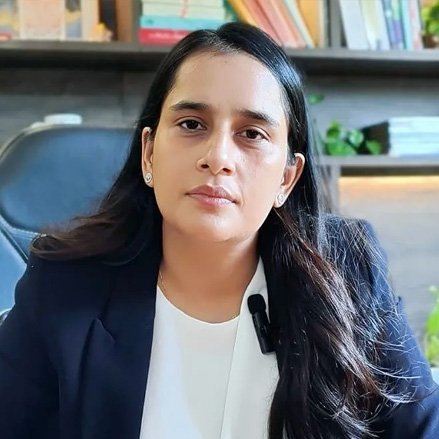
Dr. Sneha Sharma
Psychiatrist, Anvaya Healthcare
Clinical Psychologists & Counselling Psychologists trained at leading institutions such as AIIMS, LHMC & NIMHANS. Evidence-based child behaviour therapy, including CBT, delivered online across India — confidential, structured, and accessible from home.
Patients Helped
Specialists
Online Access
Satisfaction Rate
Every child gets angry. That’s not the problem. The problem is when anger stops being a response to something specific and starts running on its own schedule — when a child explodes over small things, multiple times a week, and the explosions are affecting school, friendships, and family life in ways that are starting to close doors.
What anger management therapy builds isn’t the absence of anger. It builds the gap between feeling angry and acting on it — the split second of regulation that lets a child respond instead of react. That capacity is a learnable skill. It responds to intervention. And the earlier it’s addressed, the less automatic the explosive pattern becomes.
In India, child psychology specialists are concentrated in a small number of metro cities. Families outside those cities often have no realistic path to qualified support. Online child therapy through Anvaya Healthcare puts structured, evidence-based intervention within reach of families across the country, without requiring a clinic visit.
Children learn to pause, manage anger, and respond calmly instead of reacting impulsively.
Therapy helps prevent anger patterns from affecting school, friendships, and family life.
CBT-based child therapy improves coping skills, emotional control, and behaviour management.
Access qualified child specialists from home, no matter where you live in India.
A child/clinical psychologist (M.Phil. + RCI registration) leads the therapeutic work for most presentations — behaviour modification, CBT adapted for children, emotional regulation training, parent training. For the majority of children presenting with anger and behavioural challenges, the psychologist is the right starting point and the primary treating professional throughout.
A psychiatrist (MBBS + MD in Psychiatry) becomes essential when the anger has a clinical driver. ADHD, oppositional defiant disorder, anxiety, mood disorders, trauma — these conditions change how anger presents and whether it responds to psychological intervention alone. Anger that doesn’t shift after several weeks of behavioural work almost always has an underlying picture that needs psychiatric assessment. At Anvaya Healthcare, both professionals are within the same clinical setting — no separate referral, no repeating the history from scratch.
Outbursts that are frequent — several times a week — and intense enough to be hard to de-escalate. Physical aggression: hitting, biting, throwing objects, destroying things. Verbal aggression beyond what the age warrants. A child who seems to be sitting at a lower baseline of frustration tolerance most of the time, not just in difficult moments. The child who is always one small thing away from exploding, and everyone around them is walking on eggshells because of it. The impact is the clearest signal. Teachers reporting it consistently. Friendships damaged or lost. Siblings fearful. A child being excluded from activities because of how their anger presents — socially, academically, in structured settings. When the anger is narrowing the child’s world, that’s when support becomes necessary rather than optional. Age changes the picture. Physical aggression is more common in younger children. Verbal escalation, defiance, and sullen withdrawal tend to dominate in older children and adolescents. The clinical approach is different at each stage — what looks like an anger problem in a seven-year-old and what looks like one in a twelve-year-old require different assessment and different techniques.
Repeated emotional explosions over small situations, such as being told “no” or facing minor frustration. These outbursts may happen several times a week and can become difficult for parents or teachers to calm. When anger reactions feel extreme for the situation, professional support may help identify emotional or behavioural triggers.
Aggressive behaviour like hitting, biting, kicking, pushing, throwing objects, or damaging things during anger episodes. Physical reactions can affect safety at home, school, or social settings and may increase if emotional regulation skills are not developed early through structured therapy and counselling support.
Some children struggle to calm themselves once upset and may react impulsively without thinking. They can become overwhelmed quickly, cry intensely, shout, or stay angry for long periods. Therapy helps children recognise emotions, improve self-control, and build healthier coping responses during stressful situations.
Anger-related behaviour may start affecting academics, friendships, sibling relationships, or classroom participation. Teachers may report repeated behavioural concerns, while family members may avoid certain situations to prevent conflict. When anger begins impacting daily life, structured intervention becomes important.
A child may appear frustrated, easily annoyed, or emotionally reactive most of the time, even without major triggers. They may seem “on edge” throughout the day and struggle with frustration tolerance. Persistent irritability can affect confidence, relationships, and emotional development if left unaddressed.
You can book an online CBT session at Anvaya Healthcare by phone or through the website. The starting point depends on your condition, ensuring the right professional guides the assessment and treatment process from the beginning.
Book online or call us for child anger treatment. We’ll guide you to a Clinical/Counselling Psychologist for CBT-based therapy or a psychiatrist if needed. Therapy is often the first step for child behaviour concerns.
If needed, a psychiatrist may assess whether medication is appropriate for severe anger, aggression, emotional dysregulation, or related behavioural and mental health concerns.
Therapy for child anger treatment focuses on identifying emotional triggers, improving self-control, and using structured CBT techniques to build healthier behaviour and coping skills.
Behaviour modification maps the full chain: what precedes the outburst, what the outburst looks like, what follows. Once visible, the chain can be interrupted at multiple points. This is specific — not a generic reward chart, but a precisely built plan around what this child responds to. CBT adapted for children targets the thought patterns that fuel explosions. “They always do this.” “It’s not fair and nothing will ever change.” These interpretations convert minor triggers into major episodes. The cognitive work uses concrete examples and simplified sequences at the child’s level — the goal is a habit of pausing between stimulus and response, not abstract self-reflection.
Emotional regulation training starts with physical awareness: what does building anger feel like in the body? Where is it? What are the first signs? That body-level recognition is the prerequisite for any coping skill to land before the peak. Problem-solving and coping skills give the child something to do instead of exploding — alternatives for the moment, ways to express anger without damage. Practised in sessions, transferred to real contexts with parent support. Positive reinforcement shapes the new pattern deliberately. Specific, immediate reinforcement when the child uses a coping skill — not for not being angry, but for handling it differently.
This technique identifies what triggers the anger, how the child reacts, and what happens afterward. Therapists create structured behaviour plans tailored to the child’s responses, helping reduce aggressive reactions and build healthier behaviour patterns over time.
CBT helps children recognise negative thought patterns that increase anger, such as feeling things are “unfair” or believing problems will never improve. Therapy teaches children to pause, think differently, and respond more calmly during frustrating situations.
Children learn to identify early physical signs of anger, such as muscle tension, fast heartbeat, or feeling overheated. Recognising these signals early helps them apply calming techniques before emotions become overwhelming or difficult to control.
Therapy teaches children practical alternatives to shouting, aggression, or emotional outbursts. They learn communication skills, calming strategies, and healthy ways to handle frustration, disappointment, and conflict in real-life situations.
Positive reinforcement encourages children to repeat healthy emotional behaviours. Instead of rewarding “perfect behaviour,” therapists and parents reinforce moments where the child successfully uses coping skills or handles anger in a safer, calmer way.
Consultant Psychiatrist | Co-Founder
Psychiatrist
Psychiatrist & Addiction Specialist
Psychiatrist
Consultant Psychiatrist
Clinical Psychologist
Counselling Psychologist & Behavioral Therapist
Clinical Psychologist
Counselling Psychologist
Clinical Psychologist
Child Psychologist
Loading booking form…
Affordable, transparent pricing. The Mental Healthcare Act 2017 mandates insurance parity for mental health — check your policy’s OPD clause.
₹1,500 – ₹5,500 per session
₹1,500 – ₹2,500 per session
Getting a child with anger concerns to a clinic appointment involves transitions, waiting, new environments — all potential triggers before the session starts. Online removes that. Flexible scheduling. Affordable. Accessible across India through Anvaya Healthcare, where child psychology specialists reach families who otherwise have no specialist within reach.
The clinical team trained at AIIMS, NIMHANS, IHBAS, Lady Hardinge Medical College, and VIMHANS. Childhood anger spans a wide clinical range — from straightforward emotion regulation difficulties to ADHD, ODD, anxiety, and trauma-driven behaviour. Getting the clinical picture right at the outset is what separates therapy that moves from therapy that stalls. Treatment is personalised: a six-year-old with sensory-driven anger needs a different approach from a ten-year-old whose anger is bound up with peer rejection and low self-esteem.
For online child anger treatment, the therapist’s clinical training matters. Structured CBT and behaviour therapy require careful assessment, age-appropriate techniques, and consistent guidance over time.
Child anger treatment is personalised around the child’s behaviour patterns, emotional triggers, family environment, and developmental needs — not a one-size-fits-all approach.
Get child anger treatment from home. Online therapy offers a private, comfortable, and practical way for children and parents to access professional support.
When both work in coordination, outcomes are substantially better. At Anvaya, that coordination actually happens — both are within the same clinical setting.
A family in Kanpur, Bhopal, or any smaller city gets the same quality of psychiatric expertise as someone in South Delhi. That's the whole point.
Track the anger for a week. Write it down — time of day, immediate trigger, what the episode looked like, how long it lasted, what ended it. That’s the raw material — it goes directly into the assessment and shapes the treatment plan from session one. Write out the behavioural history: how long this has been a concern, whether anything specific triggered the change, what school has reported, what’s been tried at home and what happened when it was tried. Include anything that seems to help, even slightly — that information is as useful as what makes things worse.
Prepare the environment for the session. The child should be in a familiar, relatively calm state — not immediately after a difficult episode if it can be avoided. Private, with minimal distractions. Then prepare to participate actively. Anger management with children only works when strategies are applied consistently at home — every time, not most times. The parent is the co-therapist between sessions. Walking in knowing that role, and being ready to take it on, is better than discovering it in session three.
Yes. Behavioural therapy, CBT, and parent training for childhood anger transfer well to online delivery. The home setting often produces more authentic behaviour than a clinic — which improves assessment accuracy.
Parent involvement is built into every session structure. Younger children often have parents present throughout. For older children, a dedicated parent training component runs alongside the child's sessions.
Standard sessions run 45 to 60 minutes. Initial assessment sessions are typically 60 to 75 minutes — the behavioural history takes time to map properly.
Yes. Parents are kept appropriately informed as part of the treatment process, but professional ethical guidelines apply throughout.
Behaviour modification, CBT adapted for children, emotional regulation training, problem-solving and coping skills, positive reinforcement. Parent training is central to all of them.
Through Anvaya Healthcare's website or by calling any of the three branches — Dwarka, Vasant Vihar, or Gurugram. Online and in-clinic options available.
Second floor, Plot No 28,
Sector-12A Rd, Block A,
Sector 12 Dwarka
Call Now: +91-9810659825
Ground Floor, Plot No. - E-7/5, Block E,
Vasant Vihar, South Delhi
Call Now: +91-9650277301
1 in every 5 individuals
suffers from some form of mental health illness