Counselling & psychotherapy
Talking therapies that help you understand and change the thoughts and habits that keep depression going.
- Cognitive behavioural therapy (CBT)
- Interpersonal therapy
- Family and relationship support

info@anvayahealthcare.com
+91-9810659825

Just like the Gym is for your body, Therapy is for your Mind
Dr. Sneha Sharma
Psychiatrist, Anvaya Healthcare
Depression is more than feeling low for a few days. It is a common, treatable medical condition that affects how you feel, think and manage everyday life. This guide explains every aspect of it — and how our psychiatrists and psychologists can help.
Book Consultation
Depression (major depressive disorder) is a mood disorder that causes a persistent feeling of sadness and a loss of interest in things you once enjoyed. It changes the way you think, sleep, eat and function — at work, at home and in relationships.
It is not a sign of weakness, and it is not something you can simply “snap out of”. Depression is a medical condition, and like other medical conditions it responds to proper treatment.
Symptoms vary from person to person and range from mild to severe. A diagnosis is usually considered when several of these are present most of the day, nearly every day, for at least two weeks.
If these symptoms have lasted more than two weeks, or are affecting your work, studies or relationships, speak to a mental health professional. Early treatment leads to better recovery.
Depression rarely has a single cause. It usually develops from a combination of biological, psychological and social factors.
Changes in neurotransmitters and hormones, and a family history of depression, increase risk.
Loss of a loved one, relationship or financial difficulties, trauma, or prolonged stress.
Low self-esteem, strong self-criticism and a tendency to dwell on negative thoughts.
Chronic illness, thyroid problems, certain medicines, and alcohol or drug use.
Intense symptoms lasting at least two weeks that interfere with daily life.
Milder but long-lasting low mood that continues for two years or more.
Depression that begins during pregnancy or in the months after childbirth.
Low mood that returns in a seasonal pattern, most often in winter.
Depressive episodes that alternate with periods of unusually high mood or energy.
There is no single blood test for depression. A psychiatrist or clinical psychologist makes the diagnosis through a structured evaluation.
A detailed conversation about symptoms, duration, history and daily functioning.
Validated questionnaires such as the PHQ-9 help measure severity.
Physical conditions such as thyroid problems are checked when needed.
Your plan depends on the type and severity of your symptoms. Most people do best with one or a combination of the following.
Talking therapies that help you understand and change the thoughts and habits that keep depression going.
A medical evaluation, with antidepressant medication prescribed and monitored when it is needed.
For moderate to severe depression, your psychiatrist and psychologist work together on a single plan.
Meet the psychiatrists and psychologists at Anvaya who work with depression every day.
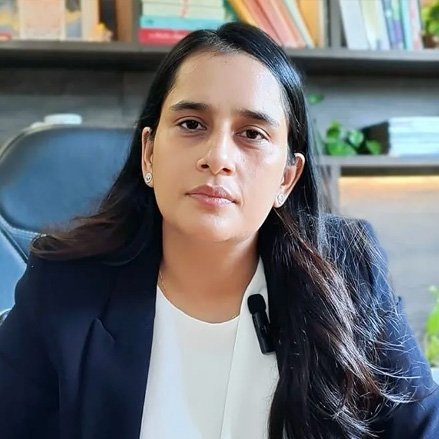
Consultant Psychiatrist | De-Addiction Specialist
MBBS, MD (Psychiatry)
Consultant Psychiatrist | De-Addiction Specialist
MBBS, MD (Psychiatry)
Experience: 14+ Years
Consultation Psychiatrist
MBBS, MD (Psychiatry)
Experience: 6+ Years

Psychiatrist & De-Addiction Specialist
MBBS | DPM (Psychiatry) | DNB (Neuropsychiatry)
Psychiatrist & De-Addiction Specialist
MBBS | DPM (Psychiatry) | DNB (Neuropsychiatry)
Experience: 8+ Years
Consultant Psychiatrist
MBBS, MD (Psychiatry)
Experience: 15+ Years
Clinical Psychologist
M.A & M.Phil (Clinical Psychology)
Experience: 3+ Years

Clinical Psychologist
M.Phil. | MA | PG Diploma in Counselling & Family Therapy (LHMC)
Clinical Psychologist
M.Phil. | MA | PG Diploma in Counselling & Family Therapy (LHMC)
Experience: 3+ Years
Counselling Psychologist
B.Sc, MA - Psychology
Experience: 4+ Years
Clinical Psychologist
MA & M.Phil (Clinical Psychology)
Experience: 3+ Years
Call, WhatsApp or book online. Choose a clinic visit or an online session.
Your specialist listens to your concerns and evaluates your symptoms in detail.
Therapy, medication or both — explained clearly, decided together with you.
Ongoing therapy sessions and medication reviews, with progress tracked.
Relapse-prevention skills and follow-ups so the improvement lasts.
Depression is highly treatable. With therapy, medication or both, most people recover and return to their normal lives. Some may need longer-term support to prevent symptoms returning.
A psychologist provides therapy; a psychiatrist is a medical doctor who can also prescribe medication. If you are unsure, book a consultation and we will guide you to the right specialist.
It differs for each person and depends on severity. Your specialist will discuss a realistic timeline after the first assessment.
Antidepressants are not considered addictive, but they should be started, adjusted and stopped only under a psychiatrist's guidance.
Yes. Online therapy and consultation work well for many people and are available with our specialists.
Listen without judgement, encourage them to seek professional help, and offer to accompany them to the first appointment.
Medical disclaimer: The information on this page is for educational purposes only and is not a substitute for professional diagnosis or treatment. Please consult a qualified mental health professional about your individual situation.
Second floor, Plot No 28,
Sector-12A Rd, Block A,
Sector 12 Dwarka
Call Now: +91-9810659825
Ground Floor, Plot No. - E-7/5, Block E,
Vasant Vihar, South Delhi
Call Now: +91-9650277301

1 in every 5 individuals
suffers from some form of mental health illness
Chats continue on WhatsApp. Please avoid sharing clinical details here.
 TALK TO US