
info@anvayahealthcare.com
+91-9810659825

Just like the Gym is for your body, Therapy is for your Mind
Dr. Sneha Sharma
Psychiatrist, Anvaya Healthcare
info@anvayahealthcare.com
+91-9810659825
Just like the Gym is for your body, Therapy is for your Mind
Dr. Sneha Sharma
Psychiatrist, Anvaya Healthcare
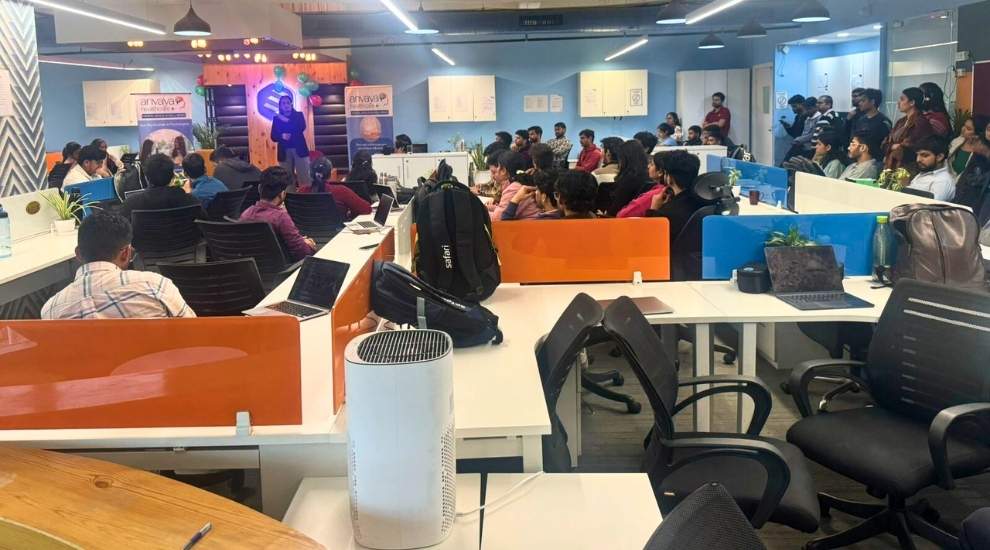
Raising awareness about mental health goes far beyond simply putting up posters or holding occasional conversations about wellness. It means giving employees the opportunity to connect, speak their minds, manage stress, and feel valued—all without the fear of judgment. From simple team-building activities and mindfulness sessions to interactive workshops and open dialogues, the right initiatives can make mental well-being an integral part of the everyday work culture.

A comfortable office chair, an air-conditioned workspace, and a stable salary—does that mean employees have nothing to worry about? Absolutely not.
Behind every office desk, someone is grappling with deadlines, performance pressure, demanding schedules, personal responsibilities, and sometimes, problems they never talk about. Corporate life may seem comfortable from the outside, but the mental pressure of constantly meeting expectations can take a toll on an employee’s health.
Consider an employee who used to come to the office with enthusiasm but now struggles to concentrate, avoids conversation, feels tired throughout the day, or simply works without enjoying their work. It may seem like a lack of motivation or decreased productivity, but sometimes, there’s a deeper story behind these changes.
Because when employees struggle mentally, it doesn’t just impact their personal lives—it can also impact teamwork, creativity, communication, and overall workplace performance.
This is where organizations need to look beyond targets, appraisals, and deadlines and start creating a workplace where mental health is as important as professional growth.
If you’re an HR professional, team leader, or business owner looking to build a happier, healthier, and more engaged workforce, mental health awareness activities can be a good place to start. From interactive team-building exercises and stress-management workshops to mindfulness sessions and open conversations about emotional well-being, these activities can help employees feel heard, supported, and connected.
In this article, we’ll explore mental health awareness activities for employees that organizations can initiate to promote meaningful participation, reduce workplace stress, strengthen team connections, and create a more supportive corporate culture.
The cost of silence is now measurable, and it is large. The World Health Organization and the International Labour Organization estimate that depression and anxiety alone cost about 12 billion working days every year worldwide, close to US$1 trillion in lost productivity (WHO, 2022).
India is not an exception. Deloitte’s 2022 survey of nearly 4,000 Indian employees found that around 80% had experienced mental health concerns in the past year, and poor employee mental health costs Indian employers roughly US$14 billion annually through absenteeism, presenteeism and attrition. Close to half of the respondents named workplace stress as the single biggest factor.
The most expensive part of that bill is not people taking leave. It is presenteeism: people who show up, log in, attend every meeting, and are quietly running on empty. You cannot see it on an attendance sheet. You see it in missed details, short tempers, rising conflicts, and good people resigning “for a better opportunity.”
Awareness activities are not about turning every manager into a therapist. They do four simpler, more powerful things:
In short, a mentally healthy workplace is not a perk. It is the foundation for productivity, retention and trust.
The best programmes mix four things: learning, conversation, everyday habits and access to professional care. We have grouped the activities the same way, so you can pick a few from each bucket instead of doing everything at once.
1. Expert-led awareness workshops. Invite a psychologist or psychiatrist for a 60 to 90 minute session on stress, anxiety, burnout and depression. Keep it practical: what the early signs look like, what helps, and when to seek support. A clinician answering real questions removes more stigma than any slide deck.
2. Mental health first aid training for managers. Managers are usually the first to notice when someone is struggling, and the last to know what to say. A half-day training teaches them to notice changes, start a gentle conversation, listen without fixing, and point to professional help. WHO now specifically recommends manager training as part of workplace mental health.
3. “Myth vs Fact” quiz sessions. Run a 15-minute quiz during lunch or on Slack. “Therapy is only for serious illness: myth or fact?” Small prizes, big conversations. People learn without feeling lectured.
4. Burnout self-check week. Share a simple, anonymous self-reflection checklist (energy, sleep, detachment, sense of achievement). Follow it with a short talk on what to do with the results. The aim is self-awareness, not diagnosis.
5. Monthly theme calendar. Give each month one focus: sleep in January, financial stress in March, exam season and parenting in April, World Mental Health Day on 10 October. Themes keep the conversation alive all year instead of once a year.
6. Leadership storytelling sessions. Ask a senior leader to share a real moment when they struggled and what helped. This single activity often does more for stigma than an entire policy document. Vulnerability from the top gives permission to everyone else.
7. Weekly team check-in circles. Start one team meeting a week with a two-minute round: “One word for how you’re really doing.” No fixing, no follow-up questions in the room. Leads can quietly check in later if someone seems low.
8. Anonymous “How are we really doing?” boards. A physical board in the pantry or a digital form where people post worries, ideas or appreciation without their name. Review it monthly and respond visibly to what comes up.
9. Peer support champions. Train a few volunteers from different teams as listening champions. They are not counsellors. They are approachable colleagues who know how to listen and where to direct someone for help.
10. “Walk and talk” one-on-ones. Move some one-on-ones out of the conference room and into a walk around the campus or block. Side-by-side conversations feel less like an interrogation and people open up more easily.
11. Guided mindfulness and breathing breaks. Ten minutes, twice a week, led by a trained facilitator or a recorded audio. Short, regular practice helps more than an annual retreat.
12. Movement challenges. A step challenge, desk-stretch breaks or a Friday yoga session. Physical activity is one of the most reliable mood lifters, and team challenges add connection.
13. Gratitude and appreciation wall. Let people publicly thank colleagues for specific help. Feeling noticed is a powerful buffer against stress and isolation.
14. Digital detox hours. Agree on one meeting-free, notification-light block each week, or a “no emails after 8 pm” norm. Awareness means little if the culture rewards being always online.
15. Creative expression sessions. Art jamming, journaling workshops, music circles or a short storytelling evening. Creative activities give people a different way to process emotions that they may not want to talk about.
16. Sleep and nutrition clinics. Short sessions with a sleep or nutrition expert on how rest, caffeine, screen time and meals affect mood and focus. Practical and relatable for almost everyone.
17. Confidential counselling days. Bring a psychologist on-site or online for pre-booked, private 30-minute sessions. Many employees take their first step towards therapy this way because it feels low-risk.
18. Employee assistance programme (EAP) awareness drive. If you already have an EAP or counselling partner, most employees probably don’t know how to use it. Put the helpline, booking steps and confidentiality promise on ID card backs, desktop wallpapers and onboarding kits.
19. Mental health days and flexible leave policy talk. Explain clearly that leave can be taken for mental health, just like a fever. Then make sure managers actually approve it without questions.
20. Stress management for high-pressure roles. Sales, customer support, healthcare and tech teams with on-call duties face specific stressors. Run tailored sessions on boundary setting, handling difficult customers and recovering after intense periods.
21. Return-to-work support. For employees coming back after medical leave, maternity leave or a personal crisis, offer a gradual return plan and a check-in with HR or a counsellor. The first two weeks back are often the hardest.
22. Family and caregiver sessions. Many employees are caring for children, ageing parents or a family member with illness. A session on caregiver stress, with family members invited, acknowledges a weight people rarely talk about at work.
23. Volunteering days. Helping others is linked to a stronger sense of purpose. Partner with an NGO for a day of team volunteering.
24. Interest-based clubs. Book clubs, running groups, cooking clubs or gaming nights. Loneliness at work is real, especially in large or remote teams, and shared interests build friendships naturally.
25. World Mental Health Day campaign. On 10 October, run a full-day campaign: a leadership message, a workshop, an “ask the psychologist” hour, and a pledge wall where people commit to one small habit. Use it as the launch point for your yearly calendar.
Most of these ideas work for any team size or setup with small changes. Remote employees often face isolation and blurred work-home boundaries, so the focus shifts slightly.
| Team type | What works best | Tip |
|---|---|---|
| Fully remote | Virtual workshops, online counselling slots, camera-optional check-ins, async gratitude channels | Never make cameras or sharing mandatory in wellbeing sessions |
| Hybrid | Office-day workshops plus recorded versions, walk-and-talks on office days, digital detox norms | Schedule activities on days when most people are in |
| Small teams (under 50) | Monthly expert session, one trained manager, a counselling partner on call | Partner with a clinic instead of building everything in-house |
| Shift or field teams | Short audio sessions, WhatsApp-friendly resources, counselling slots at flexible hours | Bring the activity to their schedule, not the other way round |
You don’t need a big budget to begin. You need a clear first month that people can feel.
| Week | Focus | Activities |
|---|---|---|
| Week 1 | Listen | Anonymous pulse survey, leadership message announcing the initiative, share helpline and counselling details |
| Week 2 | Learn | Expert-led workshop on stress and burnout, Myth vs Fact quiz, manager briefing |
| Week 3 | Talk | Leadership storytelling session, start weekly check-in circles, launch the appreciation wall |
| Week 4 | Support | Confidential counselling day, mindfulness break series, share results of the pulse survey and next steps |
After the first month, move to one anchor activity per month based on what your survey and feedback show.
Book a consultation with our specialists for a professional assessment and personalised guidance.
Track a few signals every quarter rather than chasing perfect data:
Activities create awareness. Clinicians create safety and real outcomes. It is time to work with a professional partner when:
At Anvaya Healthcare, our team of psychiatrists and psychologists designs workplace programmes that go beyond one-off sessions: expert workshops, manager training, confidential counselling for employees and ongoing check-ins, built around your company’s culture and pressures. Explore our corporate mental wellness programs to see how we can support your teams.
Somewhere in your organisation right now, there is a Riya. She is smiling on calls, hitting most of her targets, and carrying something heavy that nobody has asked about.
You don’t need to get everything right on day one. Pick three activities from this list. Say out loud, from the top, that it’s okay not to be okay. Make sure that help is one confidential call away. Then keep showing up, month after month.
That is what mental health awareness really is. Not a campaign, but a promise your workplace keeps.
Ready to build a programme your employees will actually trust? Talk to Anvaya Healthcare about corporate mental wellness.
Second floor, Plot No 28,
Sector-12A Rd, Block A,
Sector 12 Dwarka
Call Now: +91-9810659825
Ground Floor, Plot No. - E-7/5, Block E,
Vasant Vihar, South Delhi
Call Now: +91-9650277301

1 in every 5 individuals
suffers from some form of mental health illness
Chats continue on WhatsApp. Please avoid sharing clinical details here.